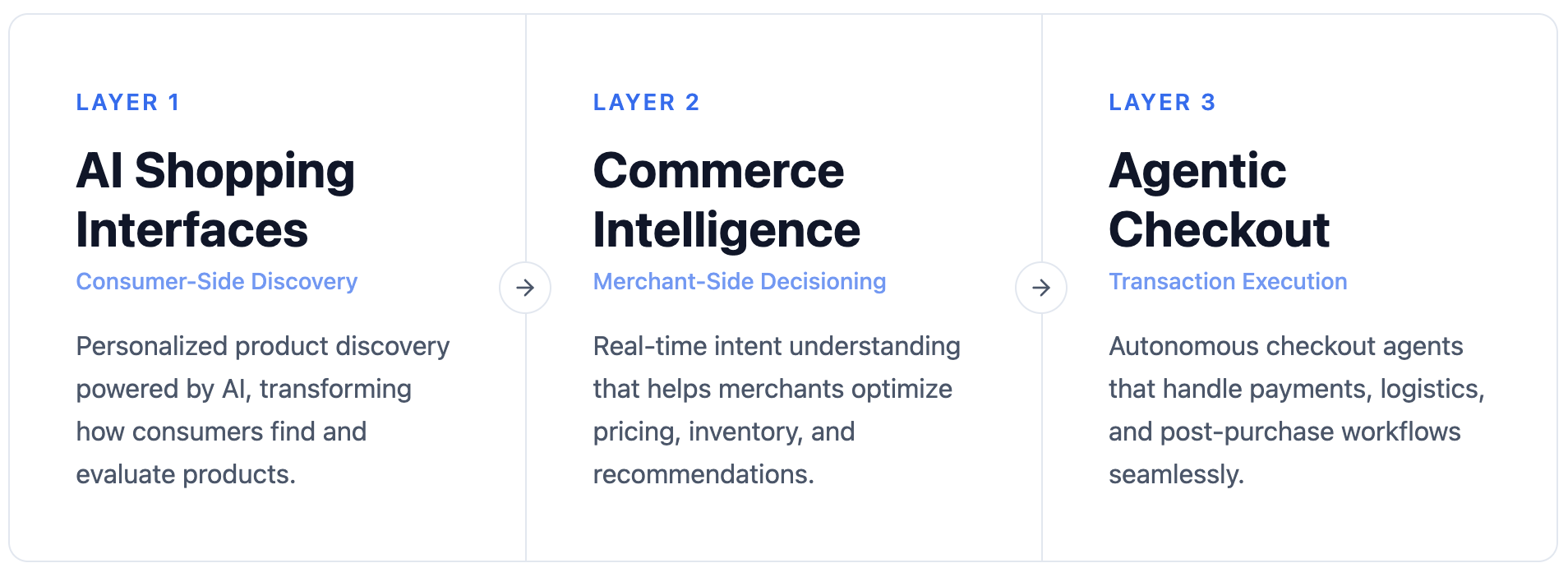
Transforming consumer discovery in AI shopping from search to guided intent
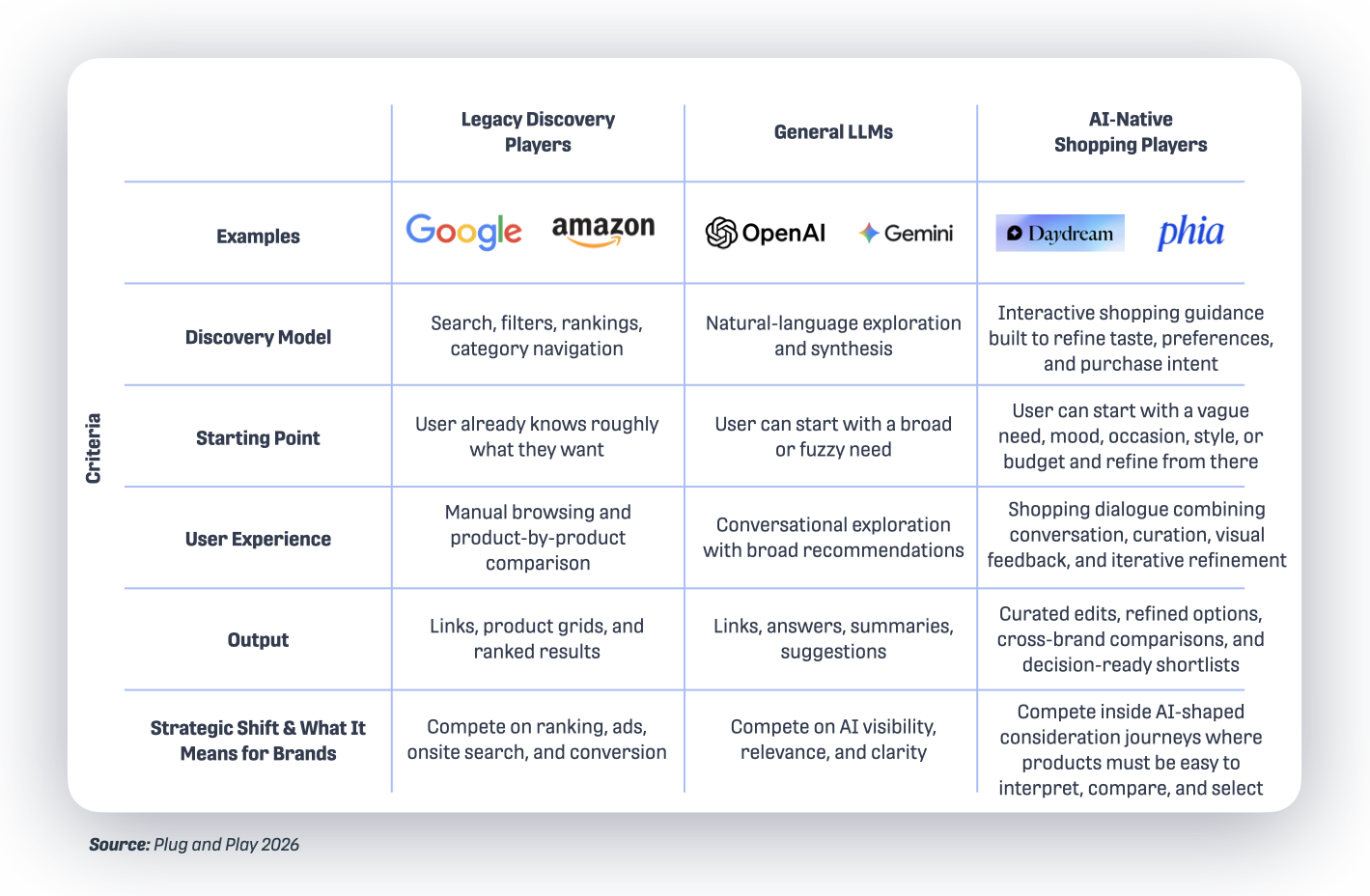
The first shift is happening before a shopper even reaches a merchant site. Shopping is moving toward guided, conversational, agent-like interfaces, which many are calling AI shopping assistants, that help users refine needs, compare options, and make decisions earlier in the journey. In practice, this includes AI shopping copilots that interpret natural language, tools suggesting alternatives across merchants, and visual or context-aware interfaces that turn browsing into guided decision support. Examples include AI shopping assistants like Daydream in fashion and Phia in price-aware style discovery, as well as other AI-native players in the space.
Rather than simply making a merchant’s catalog easier to browse, these players operate earlier in the journey and take a more active role in turning vague intent into a sharper purchase direction. They let users refine options dynamically through natural feedback and edits. This could mean asking for something more like a product they already see, adjusting the price point to a higher or lower one, requesting a different shape or textile, or changing specific attributes along the way. The result is a different AI product discovery model, where the shopper does less manual browsing, and the AI plays a more active role in shaping, editing, and narrowing consideration before the first merchant visit. Companies like Glance add another interesting angle, showing how discovery can also move earlier through ambient surfaces like the smartphone lock screen, where product exploration can start before the user has even opened an app or begun an active search.
Research mentions a 25% rise in shopping-related prompts on ChatGPT, while more than half of consumers were expected to use AI shopping assistants by the end of 2025. For corporates, this changes where influence happens. Brands are no longer only competing on who has the best onsite search, product pages, or paid acquisition funnel. They are increasingly competing on whether AI systems can understand, compare, and recommend them before the first click. We also found that 80% of consumers now rely on zero-click results in at least 40% of their searches, reducing organic web traffic by an estimated 15% to 25%. This could mean more product consideration is happening outside owned channels, and less discovery is controlled by the merchant directly.
There is also an upside. We have seen that customers arriving via AI agents are already 10% more engaged than traditional visitors, which suggests that AI-mediated discovery can improve traffic quality even as it reduces traffic ownership. For the user experience, this means potential customers may arrive with clearer intent, higher expectations, and less tolerance for friction or generic browsing flows. For brands, it raises the bar on how products are presented and explained. Clear value communication, strong product information, and experiences that help users validate a decision quickly become even more important as consumers enter the journey later and expect to move faster.
 Merchant-side intelligence, from static logic to live decisioning
Once intent is increasingly formed before the shopper even lands on a merchant site, the pressure shifts into the merchant stack, and this is where the second transformation begins. The old model was built around static merchandising logic with historical behavior, popularity rankings, fixed taxonomies, and rules-based recommendations. But that logic is increasingly misaligned with how shoppers now behave. Benchmarks show that 58% of desktop ecommerce sites and 78% of mobile sites still have poor-to-mediocre product list UX, while 65% of sites have mediocre or worse checkout performance. In parallel, Salesforce reports that 74% of customers expect online capabilities to match in-person or phone service. The implication is clear: shoppers expect digital journeys that react, guide, and adapt in the moment, while much of the merchant stack is still built for browsing but not live decisioning.
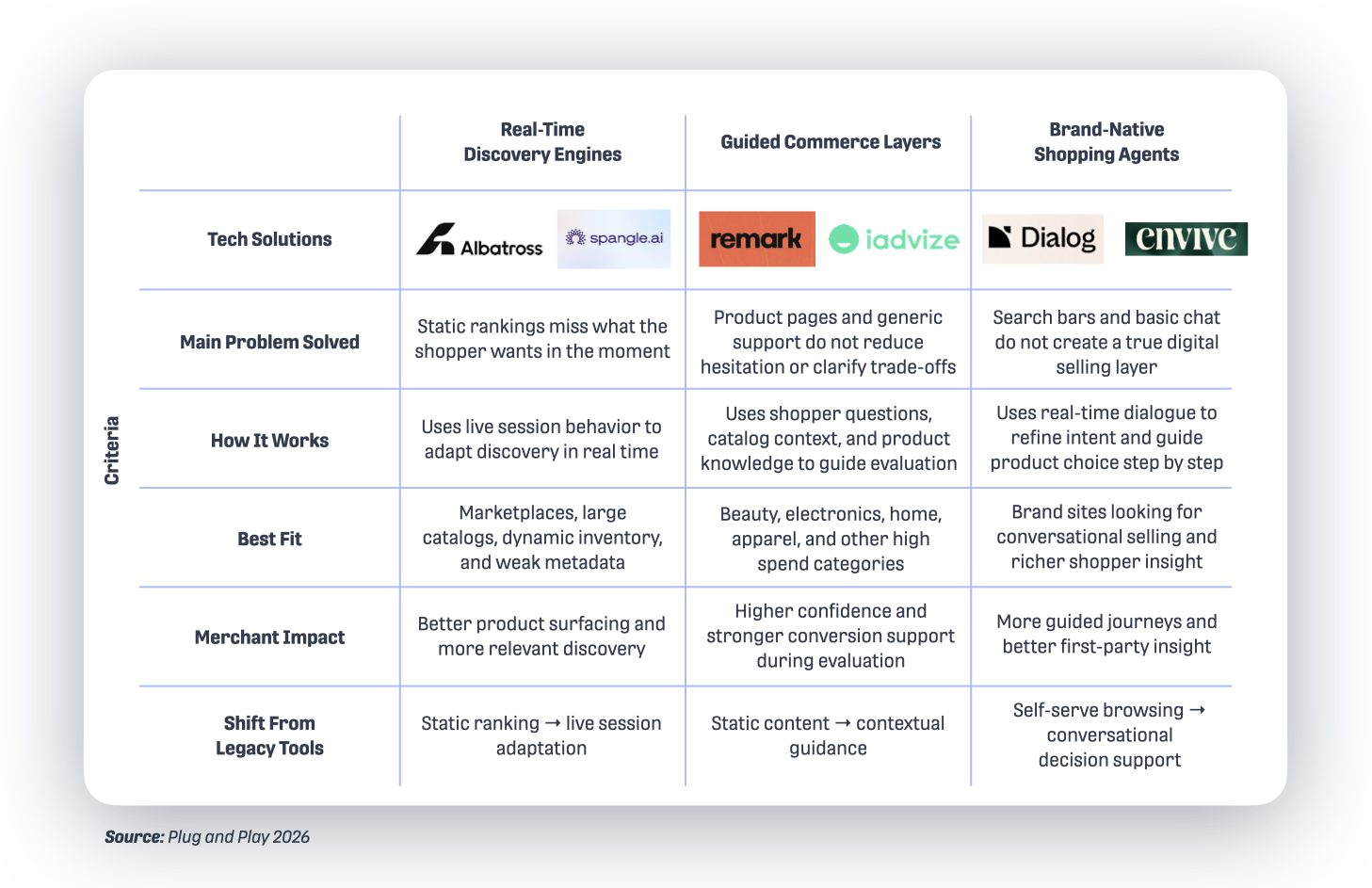
That is why merchant-side intelligence is starting to reorganize around three key complementary forms of live decisioning:
Real-time product recommendation engines
First, real-time discovery engines change what gets surfaced in session. Players like Albatross position this as continuous discovery adaptation based on live shopper behavior rather than relying on static rankings, popularity rules, or lookback logic. The goal is not just better personalization, but systems that respond to the shopper’s signals in real time while intent is still forming.
Guided commerce layers
Second, guided commerce layers change how products get evaluated. Remark positions its AI to provide product guidance, trained on catalog, policy, and brand information, to anticipate questions, recommend products, and support conversion. This layer matters because many shoppers drop off not because they failed to find a product, but because they are still unsure about fit, usage, or trade-offs. In other words, the value lies in resolving hesitation at the exact moment it appears, functioning like an AI shopping assistant embedded directly in the merchant experience.
Brand-native shopping agents
Third, brand-native shopping agents change how the final choice gets made. Dialog presents itself as an AI shopping agent that guides shoppers in real time, while Envive describes a broader commerce layer spanning search, sales, and conversion. This is the furthest expression of live decisioning because the site stops behaving like a static catalog and starts acting more like a digital seller that can refine intent, compare options, and move the shopper toward action.
Over time, this merchant-side layer is likely to become one of the most important control points in digital commerce. The winners will not simply have the best catalog or the most traffic; they will have the systems that are best at turning live intent into confident action. For corporates, this is more than a UX topic; it’s a question of merchandising logic, product knowledge, data readiness, and ownership of the digital decision layer. The merchants that move first will not just personalize better, they will build a much more responsive commercial engine.