How Smartup Is Building Central Asia's Distribution Operating System
Backing the Route-to-Market Infrastructure Layer for FMCG Distribution in Central Asia
Alfredo Gomez Soria
Connecting field, warehouse, cash, and shelf in one real-time platform for FMCG distributors across Central Asia
Smartup, an Uzbekistan-based enterprise software company, builds the route-to-market platform for FMCG and CPG distribution across Central Asia, connecting field, warehouse, cash, and shelf in one real-time loop. Distributors of PepsiCo, Nestlé, Colgate, and Samsung run their daily field operations on the platform, including International Beverages Tashkent, the PepsiCo bottler in Uzbekistan, which runs its national field operation of more than 800 licensed users on Smartup.
Smartup's product insight is structural. Instead of installing a separate system for each department, Smartup connects field, warehouse, finance, and trade marketing into one real-time loop across nine modules. A rep checks in by GPS and takes an order from an offline-first catalog. The warehouse ships against that order. Finance sees the receivable the moment it's created. Trade marketing verifies that every promotion actually ran at the point of sale.
The platform carries more than 30 integrations into 1C, SAP, NetSuite, warehouse and transport management systems, banks, and fiscalization rails, including track-and-trace for Central Asia's product marking system. A typical go-live takes about four weeks, compared with six to 18 months for a full ERP implementation. In 2026, Smartup launched a B2B marketplace in Uzbekistan connecting retail outlets directly with manufacturers, with integrated payments and outlet-level stock analytics that generate automatic replenishment orders. A 360-degree customer-scoring model, trained on historical data across suppliers, is in pilot to enable receivables financing through partner-bank rails.
Why Is This Problem Significant, & How Large Is Its Impact?
Government-mandated product marking is turning digital traceability into a legal requirement across Central Asia. Global brands increasingly demand shelf-level data from their distribution partners, and rising labor costs are making manual field processes unaffordable.
Industry benchmarks put the cost of running disconnected systems at 2% to 4% of annual turnover for a typical regional distributor. A typical distributor in the region runs three to six disconnected systems: a standalone SFA tool for reps, 1C for accounting, Excel for planning, chat apps for coordination, and paper for everything else. Because data crosses these system boundaries manually, decisions lag reality by days. Management doesn't know where reps are, what's on the shelf, or which receivables are quietly aging until it's too late to act.
An FMCG distributor with roughly 600 reps, previously running dedicated point tools, saw outlet coverage rise from 68% to 90%, on shelf stockouts fall from 18% to 6%, secondary sales grow 17%, and cash turnover accelerate by eight days, within three months of switching to Smartup.
There are 2,275 companies in Smartup's regional total addressable market, representing a $40 million serviceable software market within an $80 million total market (company estimate). On top of the software sits a transactional opportunity: an estimated $7.2 billion in gross merchandise value flows through Smartup's client base (company estimate), the monetization base for its marketplace and embedded financing business, with an estimated $36 million to $72 million in annual revenue potential at a 0.5% to 1% take rate. The operating layer for this mobile-first market of roughly 80 million people is being chosen in the next 36 months.
Why Now
We are seeing several converging forces make this the right moment to build this infrastructure.
The MCP protocol now counts over 97 million monthly SDK downloads and more than 10,000 active servers, with native support across every major AI platform including Claude, ChatGPT, Gemini, and Microsoft Copilot. Buyer behavior is already shifting fast: nearly half of global consumers now turn to AI for savings and investment decisions, and consumer acceptance of AI-assisted financial management is accelerating year over year. The agentic commerce infrastructure market is growing at 35.7% CAGR toward $65 billion by 2033. While retail currently dominates adoption, service verticals, including financial services, insurance, mortgage, lending, utilities, healthcare, and telecommunications, remain largely untapped.
Financial services and insurance alone account for approximately 20% of global GDP. GEO tools drive visibility but stop at discovery. Horizontal MCP infrastructure handles distribution without touching conversion or compliance. Customer service AI chases efficiency, not revenue. None of them owns the layer Waniwani has built.
Meet the Team Behind Smartup
Abdukakhkhor Tashmukhamedov, Founder & CEO, has built distribution software since 2012, when he founded Green White Solutions. He holds an Oracle Certified Expert credential and an MBA. Smartup, launched in 2019, is the product of that decade of implementation work in the sector.
Abdulaziz Akhmedov, Co-Founder & CFO, has 15 years of finance experience in the IT sector. He has run the financial discipline that carried Smartup to its current scale without external capital.
Valeriy Khan, CPO, has 14 years of experience in distribution and has led the product's evolution from sales force automation into AI-driven tools.
The broader leadership team includes COO Svetlana Tsoy and CTO Agabek Bozorboev, who each bring prior experience from Oracle, Colgate, and Carlsberg.
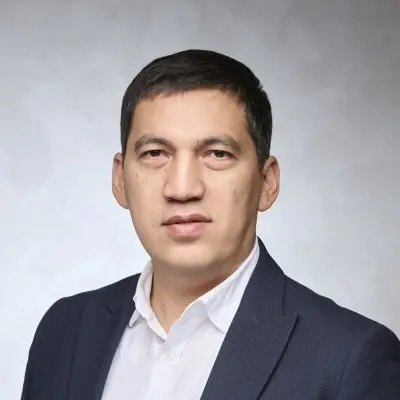
Founder & CEO
“I believe digital transformation with AI is how businesses in our region step onto the global stage. Every error we remove and every process we make transparent gives an entrepreneur back time and trust, and that changes lives, not just spreadsheets. We built Smartup on one conviction: improving lives by simplifying business. This round takes that conviction from Uzbekistan across Central Asia and into MENA.”
Why We’re Excited to Invest
Smartup owns the full route-to-market loop instead of one point tool. Local SFA vendors, 1C add-ons, and global platforms have each covered a slice of this cycle for Central Asian distributors. None connects field execution, warehouse fulfillment, finance, and trade marketing the way Smartup does, and daily operational dependency makes the platform hard to replace once it's deployed. Its localization depth, including fiscal marking, 1C integrations, and seven interface languages, is a build no global vendor has made for this region.
The founding team spent more than a decade building distribution software before turning Smartup into a product, and it has run the company profitably without outside capital since. That combination of domain depth and financial discipline is rare at this stage.
Smartup already serves more than 800 clients with more than 28,000 licenses, holds roughly 30% of the sales force automation market in Central Asia, and operates profitably, at roughly $4 million in ARR run-rate, built bootstrapped over its first decade. The economics support the thesis: 93% gross margins, approximately 99% recurring revenue, and a Rule of 40 score near 80.
Beyond capital, Smartup gains access to Plug and Play's ecosystem of corporate partners, FMCG and retail operators, financial institutions, and investors across Silicon Valley, EMEA, and Central Asia's fast-growing tech markets.
Plug and Play is one of the most active VCs globally. Our goal is to fund the teams building the defensible businesses of the future. Join our ecosystem today.

Regional Director, Plug and Play
“Smartup has already demonstrated strong execution in its home market in Uzbekistan. We're supporting the team's next phase of growth as it expands into MENA and builds a leading regional enterprise software company.”







Discover our global locations
We have a community of experts all over the world. We work as a bridge between Silicon Valley and the rest of the world, making innovation open to anyone, anywhere.