
There has been a marked and substantial increase in the global embrace of open innovation strategies by corporations in recent years. This shift can be attributed to various factors, such as the rising complexity of technological challenges that traditional methods struggle to address adequately. Additionally, the demand for quicker innovation cycles to keep up with rapidly evolving markets has pushed organizations towards embracing open innovation practices.
The globalization of markets has also played a crucial role in this trend, as companies seek to tap into diverse perspectives and expertise worldwide. We invite you to delve deeper into the profound impact of open innovation, exploring its effects and shedding light on its transformative influence across various industries.
Table of contents
-
What is open innovation?
-
Why open innovation is necessary
-
Differences from closed innovation
-
The three models of open innovation
-
Successful open innovation case studies
-
Achieving mutual success through open innovation
1. What is open innovation?
The term “open innovation” became widely known in the 2003 book Open Innovation: The New Imperative for Creating and Profiting from Technology by Henry Chesbrough, a professor at Harvard University at the time. In this book, Chesbrough defines open innovation as follows, “Open innovation is a paradigm that assumes that firms can and should use external ideas as well as internal ideas, and internal and external paths to market, as they look to advance their technology.”
In essence, the key to open innovation lies in exchanging technology, expertise, and resources both within and outside the organization. This exchange helps address challenges that the company could not solve on its own, thereby fostering the creation of innovations.
During his tenure as a professor, Chesbrough studied various business cases and discovered that companies integrating external expertise with their internal development processes could bring products to market faster and with a higher likelihood of success than those relying solely on in-house research and development. This observation led him to coin the term “open innovation” to describe this concept.
History of open innovation
The concept of leveraging external technology and collaboration existed well before the term “open innovation” was coined. A famous example is the interaction between Xerox’s Palo Alto Research Center (PARC) and Apple’s co-founder Steve Jobs. The ‘mouse and graphic technologies’ developed at PARC greatly inspired Jobs, leading to the creation of the Macintosh.
While such exchanges have long created new value, it was in the 1990s that large companies began systematically and strategically integrating external technologies and ideas. Renowned companies like General Electric, Procter & Gamble, LEGO, and Philips improved their performance by utilizing external resources. By the 2000s, major IT firms like Microsoft, Google, and Facebook (now Meta) expanded their businesses through mergers and acquisitions (M&A) — exemplifying open innovation.
The traditional innovation funnel with internal projects expands to include external contributions in open innovation. This model allows for the exchange of knowledge, skills, and resources between the firm and external parties, creating mutually beneficial collaborations. The concept of open innovation emphasizes leveraging both internal and external expertise to advance technology and effectively bring innovations to the market.
As companies explored the potential of open innovation in the late 1990s, the corporate landscape began to transform. The paradigm shift towards open innovation encouraged firms to tap into a broader pool of ideas and talent. This approach significantly departed from the closed innovation era, promoting a more inclusive and collaborative environment for driving technological advancements and market success.
Today, open innovation is essential for surviving in the fast-paced VUCA era, the age of volatility, uncertainty, complexity, and ambiguity. Many companies have established dedicated open innovation departments, engaging in business development through various means such as acceleration programs, corporate venture capital, and M&A.
2. Why open innovation is necessary
From the market-side contexts
Many companies, notably large ones, are increasingly adopting open innovation. To explore this, it’s vital to examine three perspectives within market-side contexts.

Product life cycle
With the rapid evolution of digital technology, the pace of research and development across various fields has accelerated significantly. New products and services are constantly emerging, and a single-hit product sustaining sales for years is becoming rare. In this environment, companies must continually develop new offerings swiftly. Relying solely on in-house expertise, technology, and ideas risks falling behind the competition.
This is particularly true in the IT sector, where AI, IoT, and blockchain advancements are progressing at a breakneck pace. Predicting tomorrow’s business environment has become increasingly challenging. Leveraging external resources flexibly has become indispensable for adapting quickly to these changes.
Diversifying needs of the consumers
Consumer lifestyles and preferences have become increasingly varied with the diversification of media, including social media. Consequently, many industries now require development based on a model of producing a wide variety of products in smaller quantities rather than the traditional mass production of a few types. Relying solely on internal ideas and conventional development processes risks missing consumers’ subtle and evolving needs and behaviors, leading to lost business opportunities.
To stay ahead of rapidly shifting trends, firms must incorporate flexible external ideas and expertise to construct a real-time system that captures these trends. Additionally, utilizing external resources is crucial for quickly turning identified needs into viable products and services.
Globalized competition
As the world becomes more interconnected through information and communication networks, business in all sectors transcends national boundaries. At the same time, this means that firms are now inclined to engage in highly globalized and high-intensity competition. Therefore, it is crucial for any firm to actively engage in open innovation and collaborate with other companies overseas with promising technologies to survive the rigorous cross-border competition.
Advantages of open innovation for corporations
While there are various merits, the four main advantages for firms to engage in open innovation are as follows:
Acquisition of technologies and know-how
One of the most significant advantages of open innovation is the opportunity to acquire technologies and know-how from other companies. Large corporations can significantly benefit from the innovative and unique technologies developed by startups and from research findings from universities in overcoming challenges that might be insurmountable using only in-house capabilities. Incorporating diverse perspectives and expertise can lead to breakthroughs and drive continuous organizational improvement and creativity.
Reduction in the R&D costs
Companies invest substantial budgets in research and development, with major corporations often spending billions of yen annually. Developing new technologies internally from scratch is extraordinarily expensive. By leveraging external research outcomes, companies can significantly reduce these costs.
Reduction in the development durations
Research and development require significant costs and considerable time. Additionally, after years of research, there is no guarantee that it will result in a viable business. By utilizing external research outcomes, companies can potentially shorten development periods significantly.
Transformation of the company culture
One byproduct of open innovation is its impact on corporate culture and organizational climate. Collaboration with promising startups, which often operate with a free-thinking approach and rapid decision-making, can introduce fresh perspectives and create momentum for change within traditionally structured organizations.
Disadvantages of open innovation for corporations
Although open innovation enables firms to develop products and services at low cost and quickly, some disadvantages may negate their interests.
Intellectual property (IP) and information security risks
Sharing information about your company’s challenges and new projects is essential in open innovation collaborations. Confidential information might also be necessary during the joint development process. Ensuring that this information does not leak to unauthorized parties requires meticulous attention.
Thorough planning is crucial before initiating collaboration to prevent potential leaks. This includes deciding how much information to disclose during the recruitment phase and determining the optimal timing for signing non-disclosure agreements (NDAs). When joint development or proof of concept (PoC) projects move forward, it is vital to formalize agreements on handling intellectual property and confidential information.
Risks regarding cost and profit sharing
When developing internally, a company bears all the costs and retains all the profits. However, collaborating with external organizations requires upfront agreements on sharing development expenses and profit distribution to avoid future disputes.
Increase in the workload
Collaborating with new partners, including in open innovation, often comes with challenges and increased workloads. To manage these challenges effectively, allocating the necessary resources and focusing on internal coordination are crucial. Proper planning and resource management are essential to integrating external partnerships and driving innovation.
3. Differences from closed innovation
Open innovation entails creating value through collaboration with external entities like startups, universities, and research institutions. In contrast, the closed innovation approach, which relies solely on internal resources, was prevalent across various industries globally from the late 1980s to the early 2000s. This strategy aimed to secure profits and safeguard IP.
However, with the rapid changes in the market and intensified global competition, the limitations of closed innovation have become apparent. So, what advantages does open innovation offer over closed innovation?
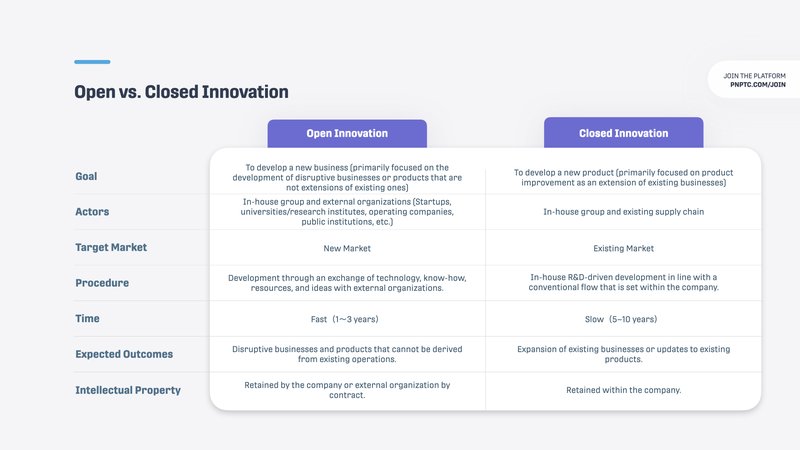
Opting for open innovation methods would be advisable if the firm is searching for a non-continuous innovation rather than merely extending existing businesses.
4. The three models of open innovation
There are three primary types of open innovation, each distinguished by the approach to external collaboration employed. These are represented by three models: the inbound model, the outbound model, and the cooperation model. Each type plays a crucial role in fostering collaboration with external partners and leveraging diverse perspectives to drive organizational innovation.
Inbound Model — (Technology Exploratory Type)
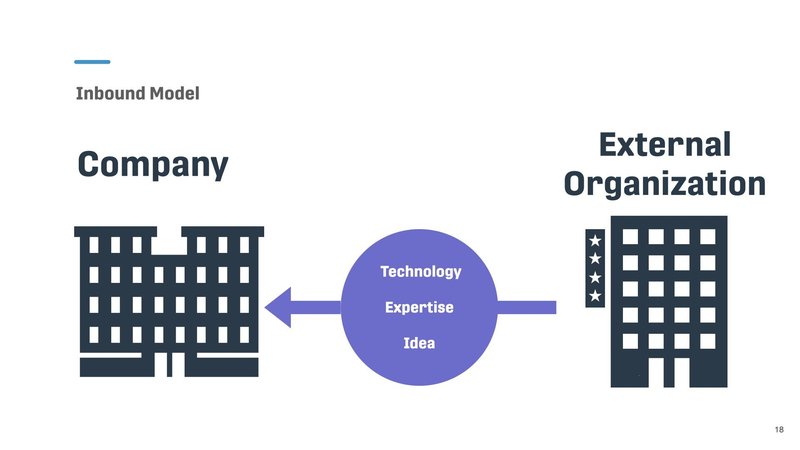
The Inbound Model involves integrating external technologies, expertise, and ideas into one’s resources to foster innovation. This method proves effective when a company has clearly defined challenges or seeks to fill missing pieces in its product and service development.
Outbound Model — (Technology Provision Type)
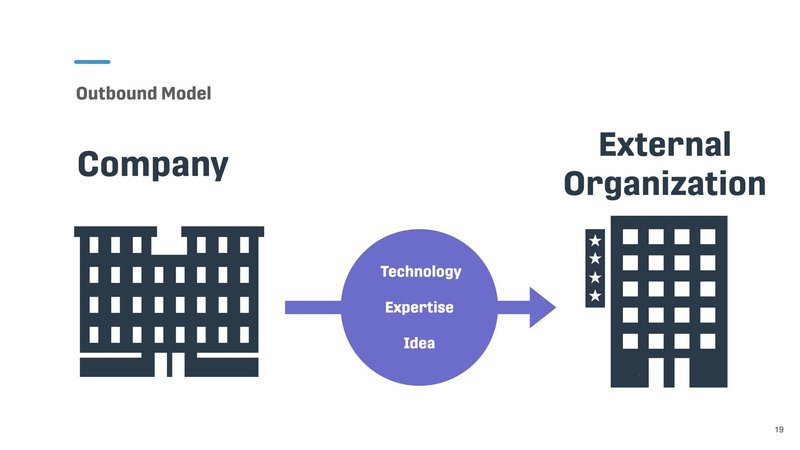
The Outbound Model involves leveraging a company’s technologies and expertise by opening them up to external entities, leading to the generation of new business innovations. Within large corporations and research institutions, research outcomes often have not been directly linked to business during years of research and development. The firm can create new value by harnessing these assets with an external perspective. One of the outbound strategies is “licensing out,” where partnering entities are given access to licenses owned by the company for mutual benefit.
Cooperation Model
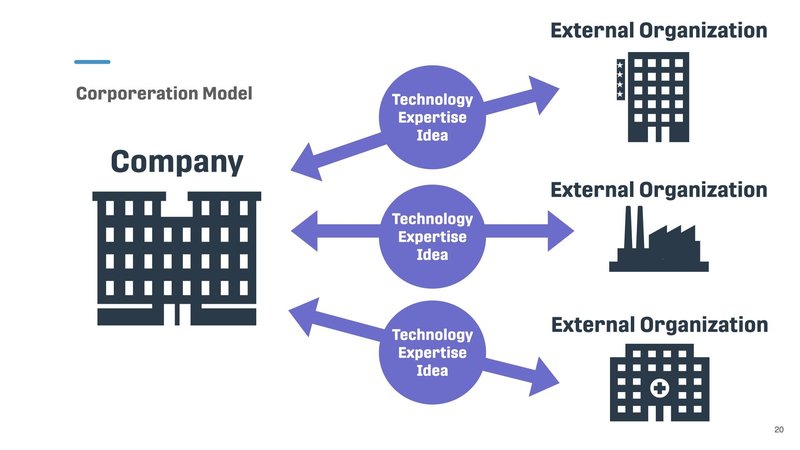
The collaborative approach, known as the Cooperation Model, aims to create businesses by combining inbound and outbound strategies mutually offering technologies, expertise, and ideas. Joint ventures launched by multiple companies and hackathons where engineers compete to develop solutions are examples of the collaborative approach.
5. Successful open innovation case studies
Visa & Plug and Play
LEARN MORE: See How Plug and Play's Global Collaboration With Visa is Innovating Money Movement Experiences
Visa and Plug and Play’s open innovation strategy is a prime example of synergy within the tech industry. It is centered on fostering collaboration, driving innovation, and supporting diverse founders. The cornerstone of their strategy was to leverage each other’s strengths to unlock growth potential, develop market presence, and nurture emerging talent in various regions.
Key programs implemented as a result of the partnership include the Fintech Fast Track Program, Crypto & Digital Assets vertical at Plug and Play, Visa Accelerator Program Singapore, Visa Inclusive Fintech Accelerator, and Visa Accelerator Program Africa. These initiatives served as channels for empowering fintech companies through access to resources, mentorship, networking opportunities, and industry expert collaboration. Notably, these strategies played a pivotal role in creating inclusive platforms that drove innovation, stimulating a conducive environment for growth.
The benefits of the Visa-Plug and Play partnership are numerous, expanding global influence and making a lasting impact on the fintech industry. The partnership has been instrumental in shaping the future of digital payments, driving meaningful change, and fostering a culture of collaboration. Additionally, it significantly contributed to Visa’s growth by leveraging its global network, expertise, and resources to advance the mission of fintechs and make money movement easy.
Togg & Bareways
EXPLORE MORE: See Additional Case Studies From Togg and Plug and Play's Partnership That's Driving Smart Device Innovation
The primary goal of the collaboration between Togg and Bareways was to develop a cutting-edge navigational tool that simplified road travel and assisted in reducing the carbon footprint of every journey. The secondary goal was to incite a cultural shift towards more environmentally conscious travel.
Togg and Bareways accomplished these goals by utilizing the ICE vehicle database and developing personalized route recommendations. By integrating Bareways’ advanced API into Togg’s Go product, users could dynamically calculate fuel consumption and CO2 emissions for each route. This strategy, underpinned by open innovation, allowed for a seamless user experience that dramatically increased the Go product’s value proposition.
This approach drove technological innovation and fostered a culture of collaboration between Togg and Bareways. The partnership allowed both companies to leverage their respective areas of expertise, accelerating the development process and delivering a superior product to the market faster.
Check out more Togg's case studies with mobility startups:

Toshiba × NearMe
The Toshiba Group, which operates in the energy, infrastructure, and electronics industries, is advancing its “Toshiba Open Innovation Platform” to leverage its assets and foster innovation through external collaboration. As part of this initiative, in April 2023, Toshiba conducted a pilot project to create a tour ticket linked with the Tokyo Metro Marunouchi Line’s transportation tickets. While Toshiba has a history of manufacturing station ticket gates, the company has been exploring the utilization of digitized travel tickets in anticipation of the widespread adoption of QR code-compatible gates.
To this end, Toshiba partnered with NearMe, a startup specializing in shared mobility services, through a match facilitated by Plug and Play Japan. By integrating NearMe’s mobility services with Toshiba’s open platform for transportation tickets, they were able to launch this pilot project. By analyzing data related to “mobility” obtained from this experiment, Toshiba aims to develop more effective services and create a new transportation demand.
6. Achieving mutual success through open innovation
In the dynamic and challenging VUCA era, open innovation is key to fostering rapid business growth and adaptation to market shifts. This article has explained the benefits and effective approaches to open innovation. For large corporations looking to thrive in this realm, it is imperative to cultivate a collaborative ecosystem that emphasizes equality among partners, promotes transparent communication, and strives for mutually beneficial outcomes that create lasting value for all involved stakeholders.
Elevate your innovation and drive exponential growth with Plug and Play. Discover what open innovation is and seek guidance from our seasoned experts to craft a robust corporate innovation strategy tailored to your unique needs.