
articleApr 30, 2025
Mobility & Physical AI

Autonomous Vehicles Insurance, All You Need to Know

With self-driving technology becoming increasingly available and popular, more and more people are opting to ditch their own cars and ride aboard autonomous vehicles instead. This phenomenon is disrupting the insurance industry, and many experts wonder how companies will keep up with the changing landscape.

Autonomous vehicles insurance, key points

Auto insurance premiums are currently based on the risk of accidents, but what happens when the risk is significantly reduced? Will premiums decrease or go up? And who exactly is at fault when an accident does occur? These questions remain uncertain as the insurance industry scrambles to anticipate and adjust to this new reality. Furthermore, self-driving vehicles create other several other issues that insurers must grapple with. For example, if a vehicle is part of a fleet company — who pays for repairs in case of damage? Some of these questions are being answered already, but many remain unknown as the world moves closer toward widespread adoption of autonomous driving.

A brief look at insurance costs for non autonomous vehicles

Auto insurance premiums are currently tiered and vary depending on various factors. These include the driver's age, gender, driving record, type of vehicle, credit score, and more. Generally, younger drivers tend to pay higher rates due to their lack of experience, while older drivers may receive discounts because of their increased safety awareness and a lower likelihood of engaging in risky behaviors while driving. In addition, people who live in areas with higher population density or drive sports cars typically pay more than those who live in rural areas or drive more family-friendly vehicles. That being said, there is new legislation in some states that aim to prohibit these factors, such as credit score or zip code affecting rates.
One of the biggest trends in car insurance of the past few years has been telematics — which provides drivers with more accurate, tailored premiums. With the rise of autonomous and connected vehicles, telematics is even more important as these new systems need to effectively monitor and report data related to driving behavior. As such, telematics technology has now become an integral part of the new wave of vehicles, allowing insurers to accurately calculate premiums based on a driver's actual behavior rather than just speculation.

Companies with autonomous vehicles are driving down ownership in the US

Vehicle ownership in the US has been trending down as of late, with the number of registered vehicles decreasing by over 25 million between 2012 and 2019. As fewer people own cars, fewer people need to buy auto insurance, leading to a decrease in demand for a traditionally significant source of revenue for insurers. This is becoming even more pronounced as autonomous vehicles become more prevalent on roads around the country. Autonomous vehicles are driving down the cost of car ownership, further reducing the number of people who will feel the need to own their own car. This, in addition to the increased options for ride-sharing, pose significant challenges to traditional insurers, who must adapt and find other revenue sources to remain relevant and competitive in this new era.
In response, many insurers have begun investing in technology that focuses on services like predictive analytics or telematics-based usage-based insurance (UBI). These services provide value beyond insurance policies, allowing customers access to online tools that will enable them to monitor their driving performance or help them save on fuel expenses. Insurers can also use data from UBI programs to understand customer behavior better and generate more accurate pricing models for premiums. With all these changes, it's clear that the decrease in vehicle registration numbers is having a considerable impact on the traditional auto insurance model, and insurers must be prepared for this shift as autonomous vehicles continue gaining acceptance across the U.S. Check out the video below to see how certain companies like KRUZR are re-imagining auto insurance based on these factors.

Rise of autonomous vehicle companies will likely shift insurance responsibility

The widespread adoption of autonomous vehicles will likely revolutionize the insurance industry by reducing claims, fraud, and premiums. Autonomous vehicles are equipped with advanced features, such as radar and various sensors, that can detect potential dangers around the vehicle. This technology allows the vehicle's computer to react in real-time to potential hazards and take appropriate action to avoid an accident. As a result, accidents caused by human error would be reduced significantly, leading to fewer claims in the insurance industry. For context, according to autonomous driving technology company Waymo, 94% of accidents in the U.S. result from human error, including things such as alcohol, distraction, drowsiness, or speeding — all of which are mainly irrelevant for autonomous vehicles.

 
autonomous vehicles like this blue semi tractor trailer

Fraudulent activities associated with insurance can also be tackled with the help of autonomous vehicles. With sophisticated sensors and cameras, these vehicles can always collect data about their surroundings. This data is analyzed by artificial intelligence algorithms that can detect suspicious activity. By finding fraudulent activities quickly, it will be possible for insurers to reduce their losses from fraudulent claims and consequently lower premiums for those customers who don't engage in any suspicious activities.
In addition, autonomous vehicles have a better understanding of local road regulations than humans; this comes from their ability to scan their environment for road signs and traffic rules constantly. As a result, drivers using autonomous cars are less likely to break traffic regulations; further reducing liability claims on behalf of insurers which will also help them keep premiums low.
Overall, autonomous vehicles offer an excellent opportunity for insurers to reduce costs. At Plug and Play's 2022 November Summit, CEO, CTO, and co-founder of Cogo Insurance, Al Bagiro, Ph.D., highlighted this topic. Thanks to Cogo Insurance's proprietary AI technology, Bagiro says that they've been "able to better underwrite the risk, cut down on fraud, increase profitability, and prepare for the driverless trucks of tomorrow." Thus, costs may be reduced by having fewer claims filed due to increased safety features and the detection of fraudsters in real-time. This leads to fewer fraudulent activities and lower premiums for customers who abide by traffic regulations while driving an autonomous car.

How will self-driving vehicles affect liability auto insurance?

The advent of autonomous vehicles is causing a seismic shift in liability from individual drivers to the vehicle itself. This means that car manufacturers and technology companies will become liable for design shortcomings rather than solely being responsible for accidents or incidents. This is because autonomous vehicles must make decisions based on algorithms and computer-generated data instead of relying on human judgment. Moreover, as the technology becomes increasingly sophisticated, both parties may be held accountable depending on the situation's specifics. In addition, insurance companies may also take a more significant role in determining liability due to their increased understanding of the risks associated with self-driving cars and the added value they could bring. Of course, legislation must be put into place that protects individuals while allowing companies to innovate and develop these new technologies safely and responsibly. Nonetheless, autonomous vehicles will ultimately cause a dramatic shift in how liability is viewed throughout the industry, with implications far beyond just insurance companies.

How autonomous vehicles are affecting the future of auto insurance 

liability auto insurance for car accidents in autonomous vehicles
The insurance industry faces a significant challenge with the rise of autonomous vehicles. As self-driving technology continues to improve and become more widespread, insurers will be forced to pivot their business models if they remain afloat. This will require them to adjust their strategies and offerings within the next decade to accommodate the new autonomous reality.
One of the most significant changes will likely come in rethinking risk assessment and pricing as AI-driven cars no longer have human drivers behind the wheel, who have historically been seen as a primary factor when assessing risk. Additionally, insurers may need to focus more on products and services unrelated to traditional auto insurance, such as cyber security or data analytics, which could help protect vehicles against potentially malicious software or hackers. Furthermore, they may also have to consider ways of providing coverage for passengers while in an autonomous vehicle which could include accident liability or medical coverage for any injuries sustained during a ride.
All this goes without mentioning that many traditional providers may need help with the cost associated with research and implementation of new technologies required for autonomous vehicle coverage. All in all, it's clear that the insurance industry is facing significant upheaval due to autonomous vehicles, and it will take some creative thinking from companies if they are going to survive this shift in transportation.
Download our case study: Awake.ai x Port of Antwerp-Bruges
The beauty of the insurance industry is its incredible versatility. Insurance matters in all aspects of life, business, and most niche moments or scenarios you might think of. With such omnipresence comes the ability to have a multifold of overlapping sections with other industries. One such overlapping section we would like to talk about today is closely tied to financial topics. More specifically, the financial literacy of the policyholder.
Financial literacy refers to the knowledge, skills, and understanding of economic concepts and principles so that an individual is able to make sound decisions for their own future. Understanding these concepts is crucial to navigating the world with confidence. It’s fascinating to see the ripple effects when a policyholder, or future policyholder, either has or lacks financial literacy.

The importance of financial literacy in autonomous vehicles insurance

Financial education is essential for empowering individuals to make informed decisions about their money. By promoting financial education, we equip people with the knowledge and skills they need to budget, save, invest, and manage debt responsibly. This knowledge helps them navigate financial challenges, achieve their goals, and contribute to economic stability. Emphasizing the importance of financial literacy enables individuals to break free from debt, gain independence, and build a brighter future.
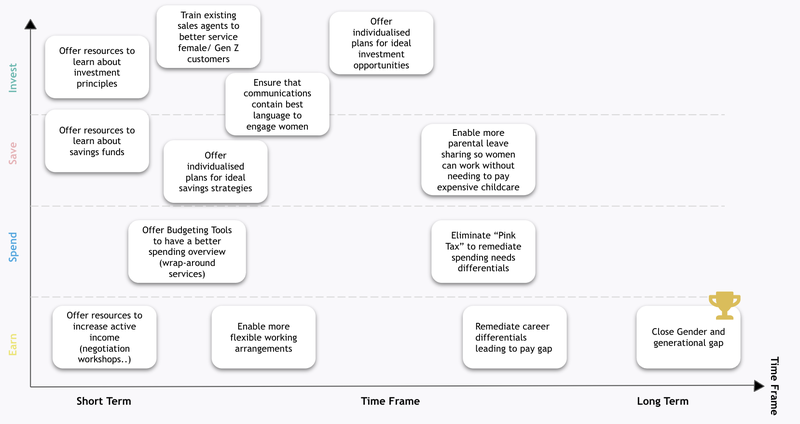
We see financial literacy being dependent on four main pillars:
  1. Earn: referring to active income. The greater the active income of the individual, the more money they will have to spend, save, or invest.
  2. Spend: referring to budgeting skills. A financially literate person understands that you can’t spend more than you earn.
  3. Save: affecting individuals’ long-term view. Individuals will often have a set percentage of their remaining income put into retirement funds, emergency funds, or funds for some specific usage in the future.
  4. Invest: moving from the concept of active income to passive income. Key financial concepts like compound interest, money multiplier, and the entire baseline idea of generating wealth through wealth come into play.
Hence, what skills and abilities are desired in a financially literate individual? It is important for them to understand that their active income provides them with the choice to either increase their spending, save more, or invest further. Moreover, they should recognize that investing allows their money to generate greater returns over time.

Autonomous vehicles: Who are we selling insurance to?

How can we provide solutions to enhance individual well-being when customers are incredibly diverse and fragmented? Customer clusters can be pulled in various directions. By focusing on primary factors such as age and gender, numerous opportunities emerge.
Younger individuals express concerns about the rising cost of living and often find themselves living paycheck to paycheck. However, their outlook on life is remarkably beautiful. They value experiences and memories and possess a lesser materialistic mindset compared to older generations. This may be a way of accepting the escalating cost of living amidst stagnant salaries. Additionally, discussions around health and mental well-being are more open among the younger generation, aiming to eliminate any lingering taboos. Hence, the well-being of Gen Z depends on finding a balanced mix between freedom and maintaining a sufficient financial buffer to protect against unforeseen circumstances.
 
The older generation proves difficult to generalize. On one end, there are individuals with high purchasing power, while on the other, some face old-age poverty. Many of them experienced the 2008 financial crisis and were dismayed by the meager retirement savings that followed. Social inclusion and protection against sudden health changes are primary needs within this segment, overshadowing financial concerns. This insight is crucial for the insurance industry, as it indicates that financial literacy alone does not guarantee economic well-being for everyone.
The experience of well-being and the impact of financial literacy differ significantly based on gender. Women and gender-fluid individuals often face more obstacles in acquiring financial knowledge compared to cisgender men. Discussing financial matters with women can sometimes lead to a sense of intimidation and imposter syndrome, resulting in a lower likelihood of seeking financial advice.


“While financial education isn’t a cure-all, eliminating the gender gap that persists in financial literacy will almost certainly help broaden opportunities for women and improve their overall financial well-being — an effective way for insurers and others in financial services to make a positive impact while adding trust-building strategies to their value chain.”
— Sibylle Fischer, Director of Strategic Venturing at Baloise Group


There is a strong correlation between wealth and confidence in handling financial affairs. In Germany alone, the gender pay gap of 18% and the gender pension gap of 60% highlight the unfortunate impact of gender on financial well-being. Bridging this confidence gap is crucial, and our insurtech ventures team firmly believes that the insurance industry, acting as a "trusted assistant," is best positioned to address this specific issue in a meaningful way.

Here’s how Gen Z is getting financially literate

Gen Z's financial literacy could be observed in their savvy usage of social media: following influencers that add value, using innovative means like budgeting tools, and filtering out information on the internet to know the difference between scams and legitimacy. On top of that, age and education level are now less important because of two key reasons. First, the internet has no age barrier, so anyone who attracts and retains an audience can make money. Secondly, since Gen Z is one of the most educated generations yet, education level has lost value as a distinguishing factor. Another interesting point is that making $50k a year seems to be a line of difference between a young individual that wants to invest some time to think about what to do with their money and a similar person who doesn’t have much interest.

What is the importance of financial literacy for insurers?

Financial literacy is crucial for the insurance industry. When individuals possess financial knowledge, they’re able to make informed decisions about insurance coverage that suits their needs. Understanding policy terms and coverage limits helps avoid disputes when filing claims. Financial literacy also highlights the importance of insurance in managing financial risks and protecting assets. Knowledge of deductibles, premiums, and exclusions allows individuals to manage costs effectively. Prioritizing financial literacy empowers consumers to optimize their insurance experience and secure the right protection.

Ways the insurance industry can offer assistance

The insurance industry is embracing collaboration with startups and harnessing digital tools to revolutionize financial literacy. Corporations can adopt a holistic approach with various short- and long-term strategies to address these issues. This may involve tackling factors that contribute to the status quo, such as gender underrepresentation in certain positions and industries or addressing disparities in childcare responsibilities between genders. Simultaneously, corporations can focus on enhancing financial education initiatives.
Despite the challenges, there are abundant opportunities for corporations in this domain. By promoting financial literacy among customers, incumbents can generate positive financial returns. Individuals with higher levels of financial knowledge are more inclined to own financial assets, leading to increased business prospects for insurance companies. Furthermore, prioritizing the well-being of customers by offering services for their future security demonstrates trustworthiness and goodwill, especially given the emotional dilemmas faced by the Gen Z generation — balancing financial security with present enjoyment and being perceived as a company that values individuals holistically rather than merely as revenue units resonates positively with this generation's values.
importance of financial literacy_journal and calculator on marble table
It is worth noting that there is still significant untapped potential for collaboration between startups and established corporations in this space, presenting additional avenues for innovation and growth.

Preparing for the future of financial literacy in the insurance industry

In the multifaceted world of insurance, financial literacy holds immense significance. As individuals gain knowledge and understanding of financial concepts, they become empowered to make sound decisions for their future. Financial literacy encompasses the pillars of earning, spending, saving, and investing, allowing individuals to navigate their financial journeys with confidence and resilience.
Addressing the diverse needs of customers is a key challenge for the insurance industry. Younger individuals, driven by experiences and a desire for financial security, seek a delicate balance between living in the present and planning for the future. The older generation, marked by varying economic circumstances, prioritizes social inclusion and protection against health changes. Moreover, gender plays a crucial role, with women and gender-fluid individuals often facing unique obstacles in acquiring financial knowledge.
Download our ebook: Japan Insurtech Report 2023
For insurance companies, promoting financial literacy offers numerous advantages. By collaborating with startups and leveraging digital tools, they can revolutionize financial education and provide tailored solutions to diverse customer segments. Financially literate customers are more likely to own financial assets, leading to positive financial returns for insurance companies. Moreover, by prioritizing the well-being and trustworthiness of their customers, insurers can build long-term relationships and attract the Gen Z generation, which values holistic experiences and support. While challenges persist, the potential for collaboration between startups and established insurers in this space remains untapped.
By embracing innovation and focusing on customer-centric approaches, the insurance industry can unlock new opportunities for growth and contribute to the overall well-being of individuals. Financial literacy is not just a matter of personal empowerment; it is a vital component for the insurance industry to thrive in a rapidly changing world. By championing financial education, insurers can enhance customer experiences, foster financial well-being, and establish themselves as trusted partners on the path to a secure and prosperous future.

GET IN TOUCH

Ready to start your innovation journey?