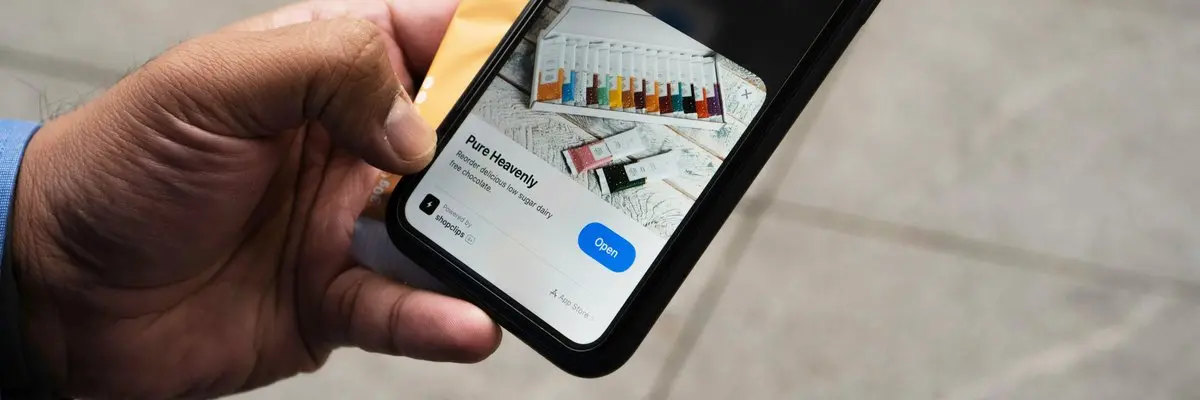
As brands increasingly incorporate direct-to-consumer strategies into their distribution channels, the role of mobile apps in data collection and loyalty program promotion becomes pivotal. Traditionally, spikes in mobile app downloads occur during promotional periods like Black Friday or Christmas, with major multi-brand retailers such as Amazon and Walmart dominating this trend. However, the saturation of the app market has led to user fatigue, with consumers feeling overwhelmed by the multitude of applications on their devices. The simple act of downloading an app has become a friction point for customers.

To enhance user experience while mitigating low download rates, Apple introduced App Clips in 2020, following Google's launch of a similar feature in 2017 for Android. While the Android version primarily focused on showcasing game demos or previews before full app downloads, Apple expanded the functionality of App Clips by integrating them with scannable codes and NFC technology.
With the introduction of App Clips in iOS 14, it became evident that this feature held significant potential. With their lightweight design offering users a glimpse of an app's capabilities without requiring a full download or onboarding process, App Clips presented an enticing opportunity for growth. However, the anticipated boom in App Clips usage did not materialize as expected, as they introduced new challenges such as size limitations and data gathering issues. This article explores both the advantages and obstacles associated with App Clips, shedding light on the reasons behind their slow adoption and the prospects they offer for brands and retailers.
Additionally, this article features insights from Reactiv, a mobile app builder empowering e-commerce businesses to deliver superior mobile experiences. Reactiv's unique framework has supported App Clips since its inception and tackles size limitations that competitors encounter.
We wanted to thank our Brand & Retail corporate partners and Reactiv's founders for their excellent insights into app clips and customer conversions.
What are App Clips?
App Clips are a revolutionary feature introduced by Apple in iOS 14. They offer users a seamless and lightweight way to access specific app functionalities without downloading the entire application. Essentially, an App Clip is a miniature version of an app optimized for quick access and designed to be downloaded "on the go."
Unlike traditional apps, App Clips are limited to a maximum size of 15MB (for comparison, Shopify's "Shop" app is 116MB), ensuring a swift download experience. They cannot be found or downloaded from the App Store; instead, they are "invoked" through various actions such as scanning a QR code, tapping an NFC tag, clicking a link in Messages, or interacting with a Smart App Banner on a webpage. Once invoked, iOS prompts the user to open the App Clip, simultaneously downloading its binary in the background for instant launch.
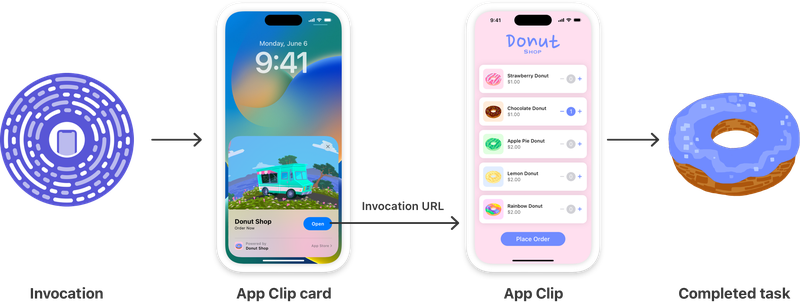
Credits:Apple
This unique approach provides users with a convenient "Try Before You Download" experience, allowing them to quickly access the functionality they need without the commitment of installing a full-sized app. With App Clips, users can seamlessly perform specific tasks or transactions as required, making them most useful for on-the-spot actions and particular tasks. For example, the user might launch an App Clip to locate their seat in an arena and order drinks directly from their seat. Similarly, at a coffee shop, they could use it to pay for a drink or at a museum to reserve a book.
Behind the scenes, every App Clip is invoked via a URL, presenting users with a card describing its functionality and offering the option to open it. App Clips can be tailored for specific moments or experiences, providing contextual relevance based on location or interaction. Key features include frequent use, automatic data clearing after usage, notification privileges for up to eight hours (or up to a week with extended permissions), and compatibility with all iPhones running iOS 14 or later. However, NFC tag interaction may vary based on the device model.
Overall, App Clips redefines the app experience, offering a lightweight and convenient solution for users to access app functionalities whenever and wherever they need them.
Exploring the multifaceted benefits of App Clips
App Clips offer numerous novel benefits to brands and retailers, including driving organic growth, seamless integration, and enhanced visibility — building trust and loyalty, cost-effectiveness and data insights, boosting conversions and sales, elevating customer engagement, and unlocking ease and accessibility.
-
Ease of use and accessibility: As mentioned earlier, they are streamlined versions of full apps, offering users a hassle-free way to access specific functionalities without needing a full download. This approach saves users valuable time and storage space and gives retailers a direct channel to engage with potential customers effortlessly.
-
Enhanced customer engagement: App Clips serve as a powerful touchpoint for customer engagement, allowing retailers to interact with users in novel ways. For example, a restaurant can offer a preview of its menu through an App Clip, enabling customers to place orders swiftly without needing a full app download.
-
Improved conversion rates and sales: App Clips facilitate smoother transactions and purchases by simplifying access to app functionalities, thereby increasing conversion rates. Whether a retail store enables quick purchases or a service provider streamlines bookings, the convenience offered by App Clips translates into tangible business growth.
-
Cost-effectiveness and better data tracking: Developing an App Clip is often more cost-effective than creating a full-fledged app, requiring fewer resources and development time. Additionally, App Clips provides retailers with robust data tracking capabilities, furnishing valuable insights into user behavior and preferences for informed decision-making.
-
Building trust and loyalty: App Clips serve as a bridge between retailers and potential customers, offering a risk-free opportunity for users to explore the brand's offerings. This fosters trust and confidence, paving the way for increased app downloads and long-term customer loyalty.
-
Seamless integration and increased visibility: App Clips seamlessly integrate into various touch points such as QR codes, NFC tags, messages, and maps, ensuring accessibility across diverse contexts. Moreover, their prominent placement in the App Library, Maps, and Safari enhances a retailer's visibility, expanding their reach to a broader audience.
Despite these many advantages, the usage of App Clips is still limited and hasn't met the expectations of success. The reason lies in the many drawbacks and limitations that App Clips still have.
Navigating the challenges of implementing App Clips
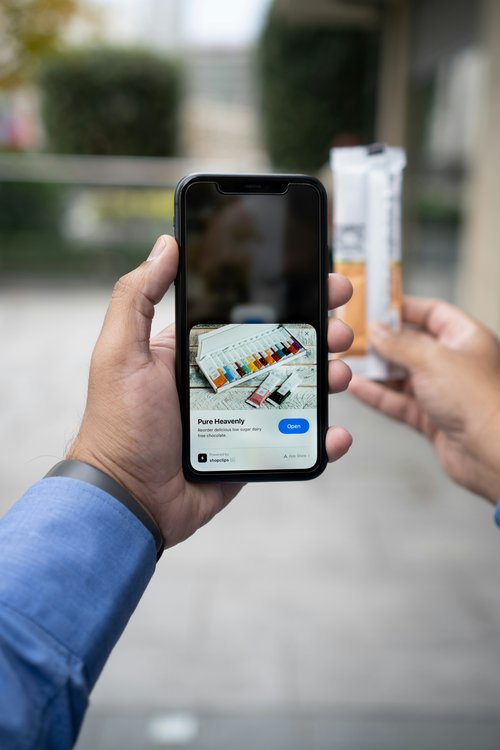
Although we believe App Clips will no doubt be successful in the months and years ahead, some drawbacks have prevented users from utilizing and integrating them.
-
Size limit: Apple initially set the size restriction for App Clips at 10MB but later increased it to 15MB. This limitation may constrain the features and functionalities that can be included.
-
Data gathering limitation: For security and privacy reasons, App Clips cannot access certain user data or personal information, potentially limiting their functionalities.
-
iOS exclusivity: Though Android's Instant Apps offer similar functionalities, App Clips users are limited to iOS users if they're added through a QR code or NFC console in a museum, retail store, or restaurant.
-
Discouragement in downloading the full application: App Clips are perfect for brands aiming to generate revenue and speed up transactions. However, App Clips are limited if the brand is looking for repeat customers, as they disappear from smartphones after eight hours.
RELATED EBOOK: The Future of Retail Banking — Gain access to essential insights into how banks are evolving, what’s driving this change, and how you can stay competitive in this dynamic environment.
Looking ahead: Future opportunities for brands and retailers
As mentioned in the paragraphs above, App Clips are a game-changer for mobile apps, bringing significant future opportunities for brands and retailers. As mobile technology continues to evolve, we expect App Clips to play an increasingly important role in the future of mobile apps.
Some of the use cases for brands and retailers include:
-
Adding products to a wish list: When in-store, shoppers can add products to their wish list and revisit it later to make purchases on the go or find items again when they return to the store. Users can share their wish lists via App Clips, which can be sent through Apple Messages and opened in Safari.
-
Showcasing product information: Upon arriving at the store, shoppers can scan a QR code to access instant product information such as price and stock availability. They can then add items to their wish list and view all their selected products on a map inside the store.
-
Product pairing recommendations: When scanning a QR code, shoppers receive suggestions on how to pair items together.
-
Joining loyalty programs: At a physical point-of-sale or event, consumers can join a loyalty program by answering key questions directly from a Clip.
App Clips insights from Zack Elias and Ross Correia, co-founders of Reactiv
Emerging tech companies are leveling up to navigate the complexities of the App Clips development process, and Reactiv stands at the forefront of this digital revolution. "For App Clips to work, you must already have an app in the App Store. Apps, in general, are seen as time-consuming and expensive to build. We're starting by addressing this." Reactiv isn't stopping there. Despite their App Clips feature being in development stages, they've proactively organized their infrastructure to support it from the get-go.

Moreover, Reactiv foresees a shift in the landscape of mobile transactions. No longer will they take place in conventional web browsers. The future lies in apps and App Clips. "There are a few factors that contribute to this," Reactiv notes. "With the rise of 5G, apps take no time to download, and App Clips can stream without delays. At the same time, Apple continues to double the minimum storage of the iPhone every three years, making other communication methods increasingly difficult: one-click email unsubscribe, SMS spam filters, and phone call screening. This is all in favor of mobile apps and push notifications. After all, we live in Apple's walled garden, and they couldn't send a louder message to developers year after year than adding more functionality to App Clips.
Why do we all use apps in the first place? They're snappy, media-rich, fully optimized for mobile, and offer personalized, timely content. Even the best mobile websites can't compete; would you rather use Google Maps or LinkedIn in Safari or the mobile app? Exactly.
The issue with mobile apps has always been the friction of installing them. No one wants to download every app for every brand they interact with. App Clips solves that—customers can now open links, scan QR codes, or tap an NFC tag to invoke these app experiences rather than visit a clunky website."

According to Reactiv, part of the reasons why App Clips usage hasn't found its ground yet can also be attributed to the time of its launch and how they are challenging to integrate into already existing apps
"App Clips launched in the summer of 2020, at the peak of COVID. To make matters worse, Apple positioned App Clips around travel and used examples like being able to book a Lime Scooter within an app clip by scanning a QR code. Apple has since added more and more features every year at WWDC, now allowing the file size to be 4x as much and providing more push notification functionality. With that said, App Clips are difficult to build. They're not just a feature existing apps can enable — apps need to be categorized and built for App Clips from the beginning.
However, this appears to be changing. Just this month, we're seeing companies like Instagram, TikTok, Google Maps, and more all starting to leverage App Clips. On the brand side, you can now offer these experiences to everyone. On top of that, App Clips allows brands to send push notifications for up to 8 hours after launching an App Clip. With Apple and Google getting rid of cookies, brands can now retarget customers with intent without ever needing to ask for an email or phone number."
However, this appears to be changing. Just this month, we're seeing companies like Instagram, TikTok, Google Maps, and more all starting to leverage App Clips. On the brand side, you can now offer these experiences to everyone. On top of that, App Clips allows brands to send push notifications for up to 8 hours after launching an App Clip. With Apple and Google getting rid of cookies, brands can now retarget customers with intent without ever needing to ask for an email or phone number."
Navigating adoption challenges and discovering what are App Clips' prospects
The purpose of this article was to assess the potential of App Clips for brands and retailers, and we've concluded that this tool has the capacity to transform mobile app interaction by providing lightweight versions of apps that remove the necessity for full downloads. Furthermore, we've explored the significance of a user-centric launch experience that adjusts to context, accomplished through call-to-action URLs and localized implementation — illustrating their versatility by presenting various use cases.
While App Clips still faces obstacles to widespread adoption, such as size limitations and data access restrictions, we anticipate that advancements in mobile development and the emergence of new startups in this field could expedite the industry's transition to adoption. The prospects for brands and retailers utilizing App Clips are promising, offering opportunities to enhance customer engagement, drive sales revenue, and deliver a more convenient user experience.