Water in Arizona has always been a scarce resource. After nearly three decades of sustained drought, declining Colorado River allocations, and tightening groundwater constraints, the state has been compelled to view water not merely as an infrastructure concern but as a technological challenge. That shift is transforming Arizona into one of the most active proving grounds in the U.S. for next-generation water innovation.

Scarcity of water in Arizona as a structural driver of innovation

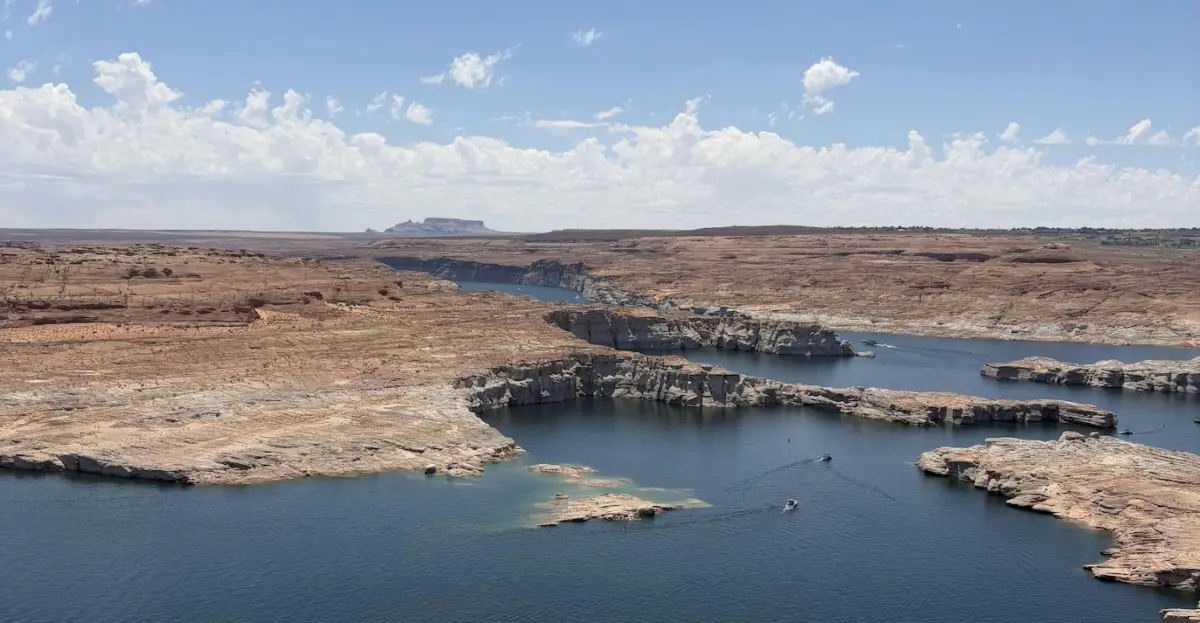
For many regions, innovative water resource management is an asset; in Arizona, it is essential. Driven by a sustained drought that began in 1994, and highlighted by the fact that 94% of the state was under drought conditions as of November 2025, the urgency is undeniable. This strain can be partially attributed to the dropping water levels of the Colorado River and Arizona’s status as a Lower Basin state, resulting in increasingly limited annual water allocations. This pressure has forced Arizona to move faster than most states in rethinking how water is sourced, reused, treated, and monitored, particularly in urban growth corridors such as Phoenix, Tempe, and Mesa.

Arizona has responded to this challenge with expansive, decades-long efforts to protect its varied water resources. This commitment began formally in 1980 with the passage of the Groundwater Management Act, a foundational piece of legislation that led to the state-mandated 100-year assured water supply protection for current and future residents in major population centers like Phoenix.

Arizona's water supply relies heavily on four main sources. Groundwater and the Colorado River collectively provide approximately 80% of the state’s total supply, while the remainder comes from in-state rivers and reclaimed water. As Colorado River allocations continue to decline, reclaimed water, industrial reuse systems, and nontraditional sources such as atmospheric harvesting are becoming increasingly critical to maintaining regional growth.

The combination of mandatory water conservation requirements, coupled with concerted efforts from utilities, academic institutions, and corporate stakeholders over the years, has yielded a remarkable result: Arizona's overall water usage in 2019 was lower than it was in 1957, despite massive population growth. However, with limited long-term sources, there is increasing socio-economic pressure to find more innovative ways to add to this portfolio of smart water management practices.

However, limited long-term water sources and rapid population and industrial expansion are creating new socio-economic pressure to accelerate technology-driven solutions. Arizona is no longer asking whether innovation is needed, but how quickly it can be deployed at scale. ​​This urgency is amplified by the explosive growth of semiconductor manufacturing, data centers, and advanced manufacturing across the Southwest, all of which are among the most water-intensive industries in the world.

Arizona as a real-world testbed for water technology

This urgent need to scale next-generation solutions formed the core intent of the 2nd Annual  Water Technology Showcase, organized by Plug and Play, Arizona State University, and the NSF Southwest Futures Engine. The event aimed to cement the state’s emerging leadership in water technology and drew stakeholders from across the country and internationally.

Today, the state is increasingly viewed as a real-world testbed for water technology, with a focus on managing water in Arizona through industrial reuse, advanced filtration, atmospheric water generation, contamination remediation, and AI-enabled monitoring systems. Rather than piloting technologies in isolation, companies and utilities in Arizona are validating solutions in operational environments that mirror real-world conditions, reducing deployment risk and accelerating commercialization timelines.

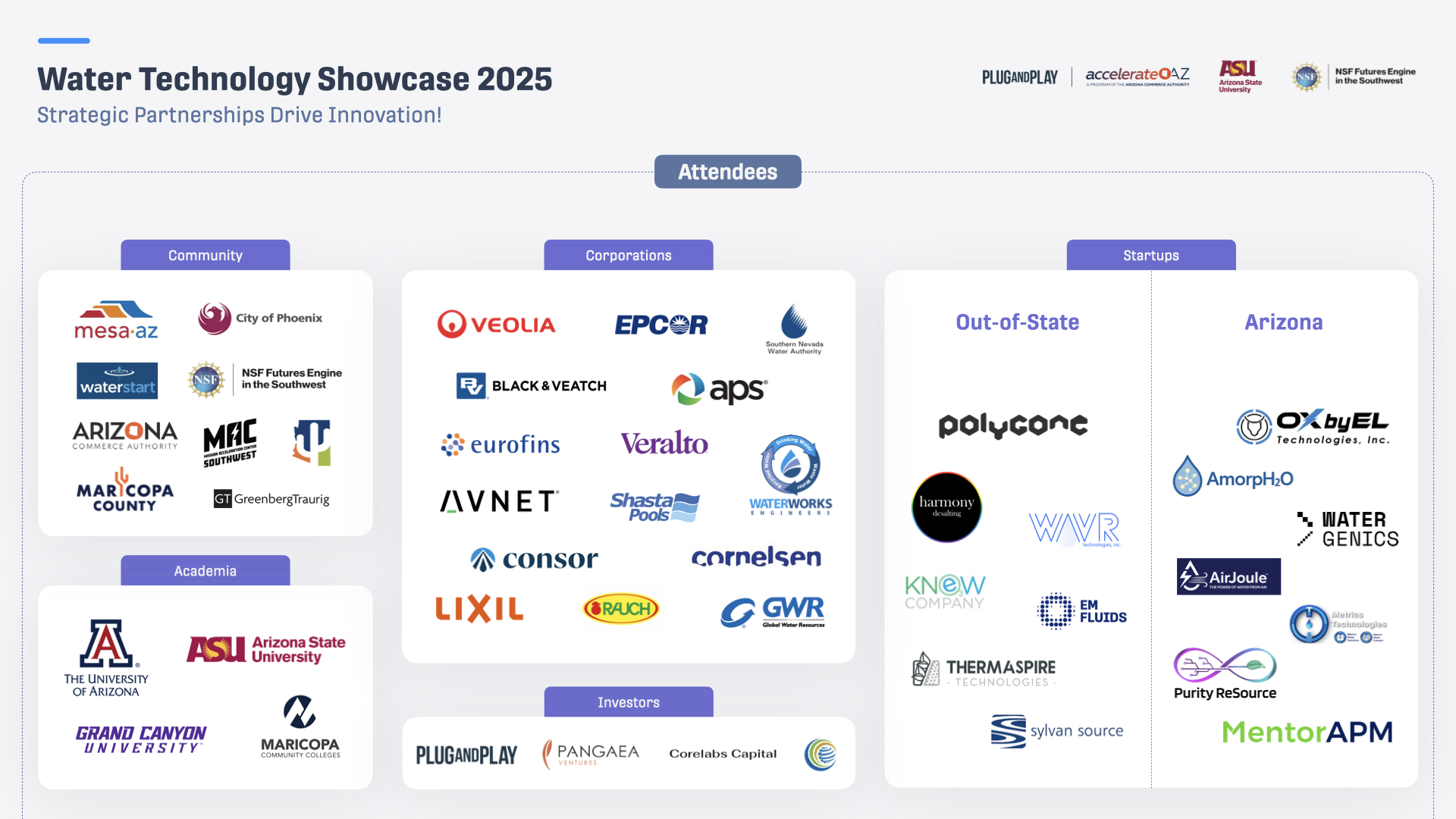
The guest list of over a hundred attendees spanned the entire water innovation value chain: startups and researchers, academics and thought leaders, multinational corporations, local business leaders, investors, and key municipal and city officials.

The future of water in Arizona & event highlights

The scope of the discussions was nearly as diverse as the attendee list. Key conversations spanned complexities of industrial water management, the mitigation and remediation of PFAS, innovative approaches to water reuse and municipal infrastructure, the water demands of data centers, and more. Crucially, dialogue also focused on the pivotal corporate role in pushing innovation forward, as well as the immediate collaboration opportunities between the assembled stakeholders. 

These focus areas reflect the technical backbone of Arizona’s emerging water ecosystem, where contamination destruction, circular reuse systems, and infrastructure modernization are no longer optional, but foundational.
GET IN TOUCH

Ready to start your innovation journey?

Corporate innovation insights


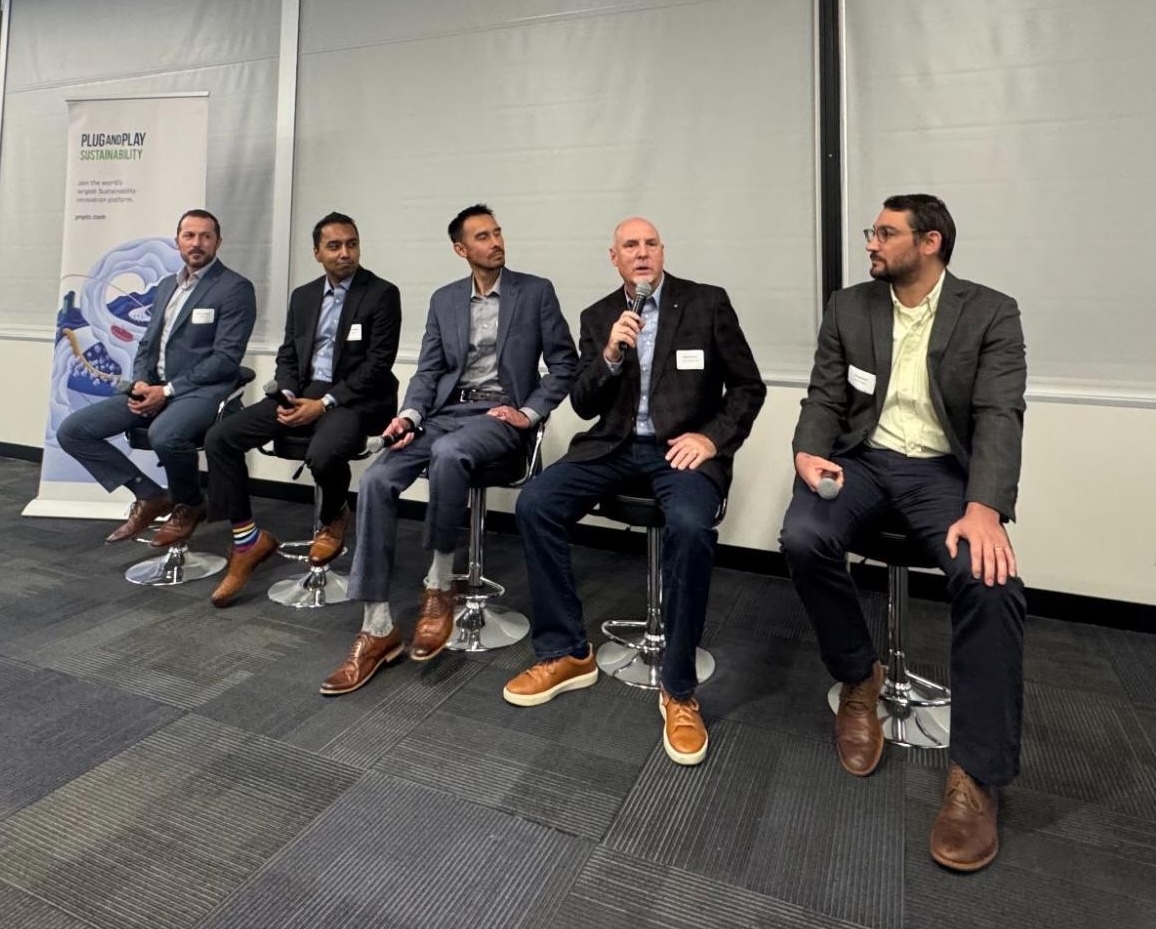
The corporate panelists outlined several critical challenges and forward-thinking efforts currently underway within their organizations to address water concerns. Unsurprisingly, a major focus was placed on PFAS management and remediation. The representatives unanimously agreed on the urgency of addressing these contaminants to safeguard the well-being of their customers and all Arizona residents, fully acknowledging their important role in driving this change through both internal research and external partnerships.


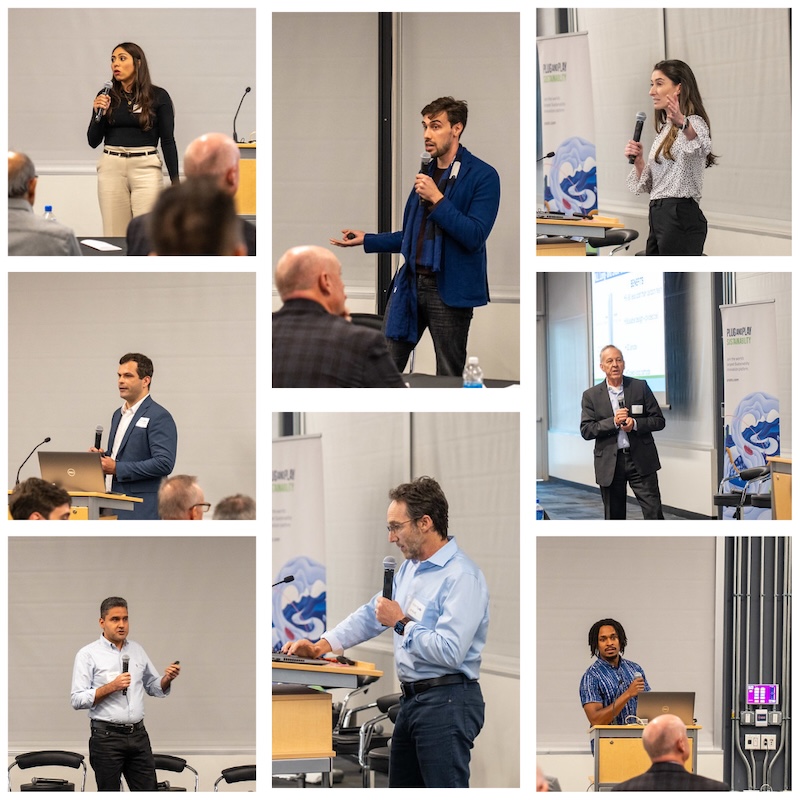
Leaders from EPCOR, Veolia, Eurofins, APS, and Black & Veatch shared their insights during the Corporate Innovation Panel

Another significant point of consensus centered on derisking capital-intensive technological interventions. Panelists agreed that independent testing grounds offer a crucial, neutral environment purpose-built for technology observation and data collection. Such facilities allow for the close replication of real-world conditions, mitigating risk before new systems are deployed in actual utility infrastructure. 

Other key areas of interest included the future of workforce development, the critical role of AI in emerging water technologies, and strategies for navigating complex regulatory compliance requirements. AI is increasingly being used to extend filtration membrane life, detect micro-fluctuations in dissolved oxygen, predict system failures, and optimize chemical dosing in real time.

Another panel on scaling water solutions featuring Mentor APM and Veralto featured incredible back-and-forth between the similarities and difference between scaling hard-tech and software solutions in the water sector

Revealing the Water & Energy Consumption of Data Centers
Read Now

Startups in the spotlight


Eight startups pitched, and several more exhibited their unique solutions at the Water Technology Showcase

Filtration & advanced treatment

The field of water purification featured several exciting innovators. Polygone Systems (Seed, 2021, NJ) is focused on the critical environmental challenge of removing microplastics from waterways. Addressing another severe contamination issue, OxByEl Technologies (Seed, 2018, AZ) uses electrochemical treatment technology to destroy PFAS and co-contaminants. Local ASU startup, AmorpH₂O (Pre-seed, 2025, AZ), translates amorphous metal oxide science into practical filtration media. Lastly, Harmony Desalting (Seed, 2022, MA) is advancing the state-of-the-art in water treatment through a combination of new processes, membranes, and insights.

Industrial water management

Another group of featured startups were focused on optimizing water usage within complex industrial and manufacturing sectors. Watergenics (Seed, 2019, Germany / AZ) is revolutionizing industrial water management with cutting-edge technology to solve water challenges in production and treatment. Purity ReSource (Seed, 2021, AZ) provides technology solutions to advance sustainability specifically in semiconductor manufacturing. Focusing on energy-intensive applications, Thermaspire Technologies (Pre-seed, 2024, Canada) offers zero-waste industrial cooling for data centers via advanced wastewater reuse and filtration.

Atmospheric resource generation

Representing a unique approach to water sourcing, WAVR Technologies (Seed, 2024, NV) is developing high-yield, low cost-per-gallon atmospheric water harvesting solutions. Atmospheric harvesting offers a promising supplement for arid regions where traditional surface and groundwater sources are increasingly constrained.


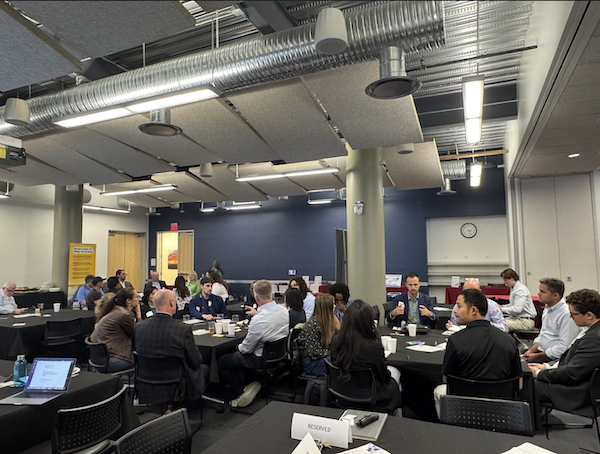
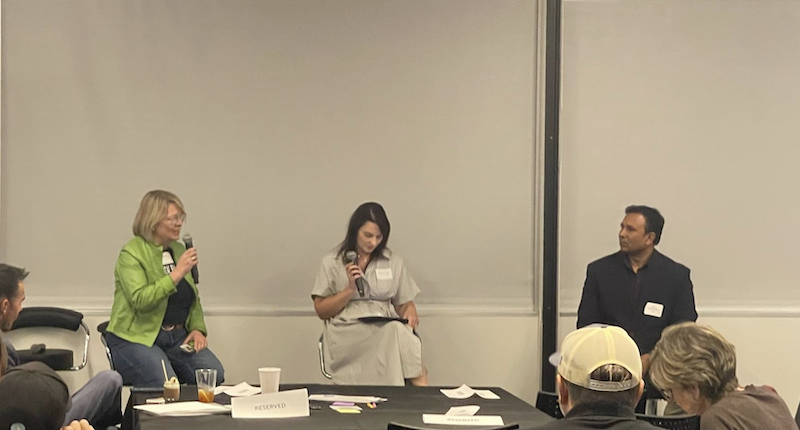
Interactive community roundtables gave everyone in the room an opportunity to share their thoughts on the AZ water ecosystem

The overwhelming sentiment echoed by attendees was one of unified purpose and collaboration. From startups seeking pilot opportunities to corporations and municipalities needing scalable solutions, the event demonstrated a shared understanding that solving Arizona’s, and the world’s, most pressing water challenges requires collective action. 

Rather than approaching water innovation as isolated pilots, Arizona is beginning to treat it as a coordinated economic development strategy that links research, commercialization, workforce development, and public infrastructure.
This crucial commitment to collaboration is consistent with the foundational philosophy Plug and Play leverages to build innovation ecosystems worldwide. Our Arizona team is excited to continue the momentum established at this event and to accelerate innovation in collaboration with startup, industry, academia, and government stakeholders, making Arizona a center of excellence for global water technology development.

GET IN TOUCH

Ready to start your innovation journey?
PLUG AND PLAY AROUND THE WORLD

Discover our global locations

We have a community of experts all over the world. We work as a bridge between Silicon Valley and the rest of the world, making innovation open to anyone, anywhere.

Sign up for our global newsletter