The Japan and Taiwan relation is increasingly evolving into a mutually complementary partnership in deeptech, particularly in the fields of semiconductors and electronics. Amid shared social challenges and a shifting geopolitical landscape, the importance of strategic technological collaboration between the two countries is greater than ever before. This article analyzes the collaboration potential in the deeptech sectors between Taiwan and Japan and outlines the international support framework driven by Plug and Play Japan.
articleAug 2, 2025
Deeptech
Semiconductors
The Japan & Taiwan Relationship Driving Deeptech’s Future
As Asia’s innovation landscape continues to evolve, the Japan and Taiwan relationship is emerging as a powerful force in the global deeptech arena. From semiconductors and AI to space and next-gen computing, this article explores how the two countries are forging strategic partnerships to tackle shared challenges and drive breakthrough innovation, supported in part by Plug and Play Japan’s cross-border initiatives.
Complementary supply chain collaboration
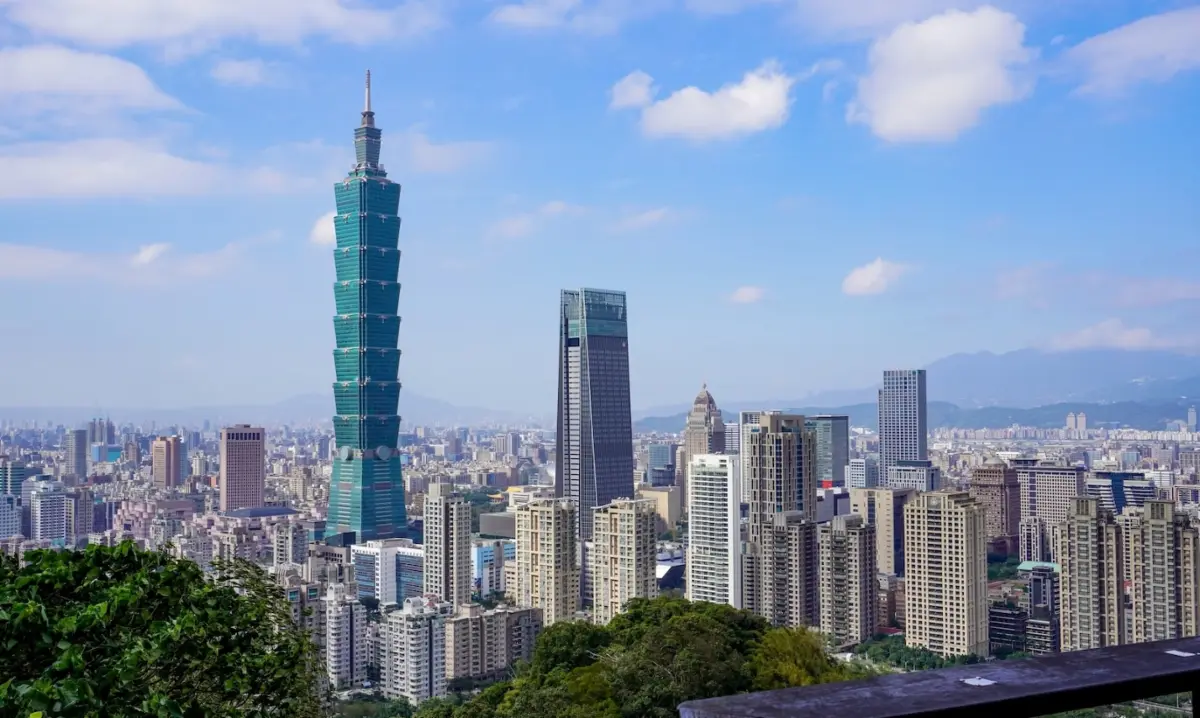
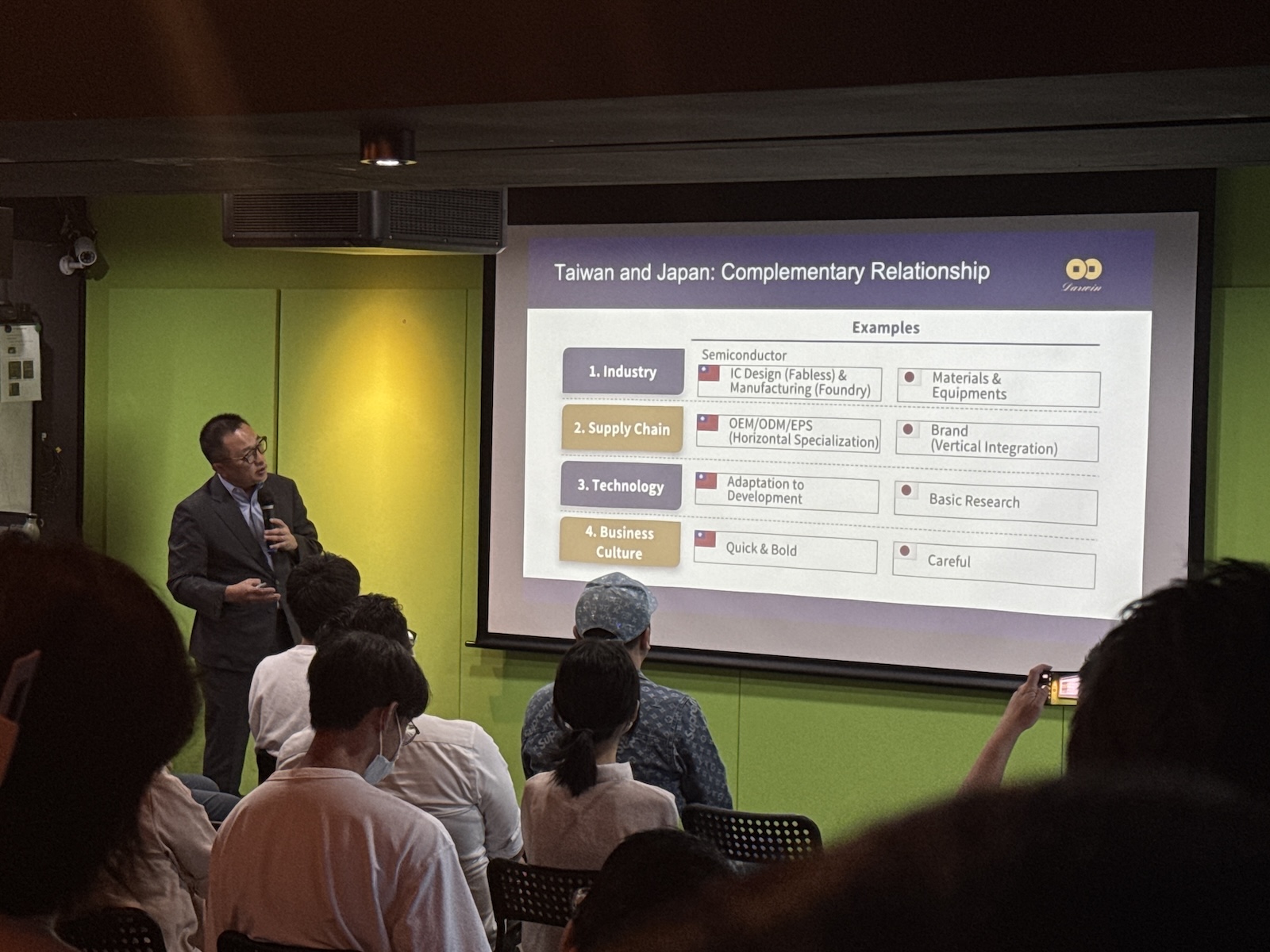
Taiwan and Japan possess distinct strengths in various areas of deeptech, making them ideal partners for building complementary supply chains. Taiwan leads semiconductor manufacturing, while Japan excels in semiconductor materials and equipment. This synergy presents numerous opportunities for high-value collaboration. Plug and Play’s recent expansion into Taiwan further supports this vision by strengthening startup–corporate connections across the region — watch the Taiwan launch video to see how innovation is unfolding on the ground.
Addressing shared social challenges
Both countries are facing some of East Asia’s most serious demographic challenges, including declining birthrates and aging populations. Taiwan’s birthrate has remained lower than Japan’s for over a decade and is expected to continue on this trend. In 2024, Taiwan’s crude birth rate is 7.3 births per 1,000 population, while Japan’s is even lower at 6.9 — ranking them 220th and 225th globally. These figures reflect a long-term trend of population decline, as both are far below the replacement fertility rate of 2.1 children per woman, which is considered necessary to sustain population levels in developed countries.
East Asia is also a region prone to frequent natural disasters. Japan experiences around 1,500 earthquakes annually and an average of 2.6 typhoons per year across its main islands. Taiwan records about 20,000–40,000 earthquakes per year, though most are minor, and is struck by an average of 6 typhoons annually. Both countries have accumulated extensive experience in disaster risk management. Through technological collaboration, both countries can contribute to strengthening regional disaster resilience.
Security & technological cooperation in East Asia
As geopolitical tensions rise and technology continues to evolve rapidly, the security landscape in East Asia is becoming more complex. A surge of joint initiatives among Japanese and Taiwanese companies in fields such as space, semiconductors, and quantum technology is already underway. Notably, a “Taiwan-Japan Semiconductor Technology Promotion Association” is set to launch in 2025, with participation from over 50 companies
Complementary deeptech fields for collaboration with Taiwan
AI sector
In 2024, OpenAI established its first Asian office in Tokyo, significantly impacting Japan’s AI industry. The launch of a Japanese-optimized GPT-4 model attracted strong domestic and international attention. Japanese startup Sakana AI secured approximately ¥30 billion ($200M in USD) in Series A funding from leading corporations such as NEC, Fujitsu, and NVIDIA. The shared goal of boosting productivity through AI has created a promising opportunity for collaboration between Japan and Taiwan. By merging Japan’s advancements in AI development with Taiwan’s expertise in semiconductor manufacturing, this partnership holds immense potential for innovation and growth. Taiwan AI startups also see increasing opportunities to enter the Japanese market.
Materials & chemistry
Japan commands approximately 50% of the global market share in essential semiconductor materials and holds the second-largest presence in semiconductor manufacturing equipment after the United States. Conversely, Taiwan dominates over 60% of the global foundry market, led by TSMC. The complementary nature of Japan’s materials/equipment and Taiwan’s manufacturing capacity makes for an ideal partnership in the deeptech supply chain.
Next-generation computing
Japan has long invested in supercomputing R&D through institutions like RIKEN, Fujitsu, and NEC. As of June 2025, the Fugaku supercomputer ranks 7th in the TOP500, 2nd in HPCG, and 6th in HPL-MxP. Japan deeptech is also accelerating innovation in quantum computing, including developing a 256-qubit superconducting quantum computer. Taiwan deeptech leads the manufacturing infrastructure for classical computing, such as GPUs and data centers. The partnership between the two nations in hybrid computing promises groundbreaking advancements and endless possibilities.
Space sector
Japan is one of Asia’s most active investors in space development. In 2024, the country launched a ¥1 trillion “Space Strategy Fund,” aimed at boosting private space initiatives and startup IPOs over the next decade. While Taiwan currently lacks commercial launch facilities, it possesses world-class manufacturing capabilities for satellites and precision components. One example is Tensor Tech, a startup specializing in satellite guidance, navigation, and control systems. The company offers a suite of space-qualified products, from flight-proven subsystems to modular components, customizable to meet diverse mission needs. Japan’s ArkEdge Space also co-developed ONGLAISAT, a high-resolution microsatellite, in partnership with Taiwan, demonstrating the region’s strength in optical and subsystem manufacturing. Combining Japan’s national policies with Taiwan’s manufacturing expertise could unlock new growth opportunities for both.
RELATED CONTENT: Achieving Circular Economy through Open Innovation in Japan — As the search for a sustainable economy continues, the circular economy is attracting a great deal of attention as a new economic model. While circular economy policies have found strong footing in Europe, Japan is at the cusp of a pivotal shift.
Case studies showcasing how the Japan & Taiwan relations are advancing deeptech collaboration
Profet AI × BIPROGY: A cross-border partnership in Japan & Taiwan’s deeptech ecosystem
BIPROGY Inc. signed a reseller agreement with Taiwan’s Profet AI to introduce its AI platform for manufacturing to the Japanese market. Profet AI established a Tokyo office in October 2024.
More Info
ITRI × TopoLogic: Strengthening the Japan & Taiwan relationship in materials innovation
Taiwan’s Industrial Technology Research Institute (ITRI) and Japan’s TopoLogic Inc. are jointly validating the implementation of topological sensing technologies in clean production environments to accelerate commercialization.
More Info
TiSPACE × Taiki Town: Expanding Japan & Taiwan’s deeptech cooperation into space
Taiwanese rocket company TiSPACE and Hokkaido’s Taiki Town are collaborating at Hokkaido Spaceport (HOSPO) for technical exchange and launch experiments. This could mark Japan’s first-ever rocket launch by an overseas company.
More Info
Plug and Play Japan’s activities to facilitate Japan & Taiwan collaboration
Promoting inter-agency cooperation
Plug and Play Japan co-hosted the Cross-Border Deeptech Mixer: Japan × Taiwan with Taiwan’s Garage+ and Darwin Ventures. The event brought together over 55 participants, including 17 corporations and 14 investors, fostering collaboration between the deeptech ecosystems of both countries.
Presenting Japanese startups: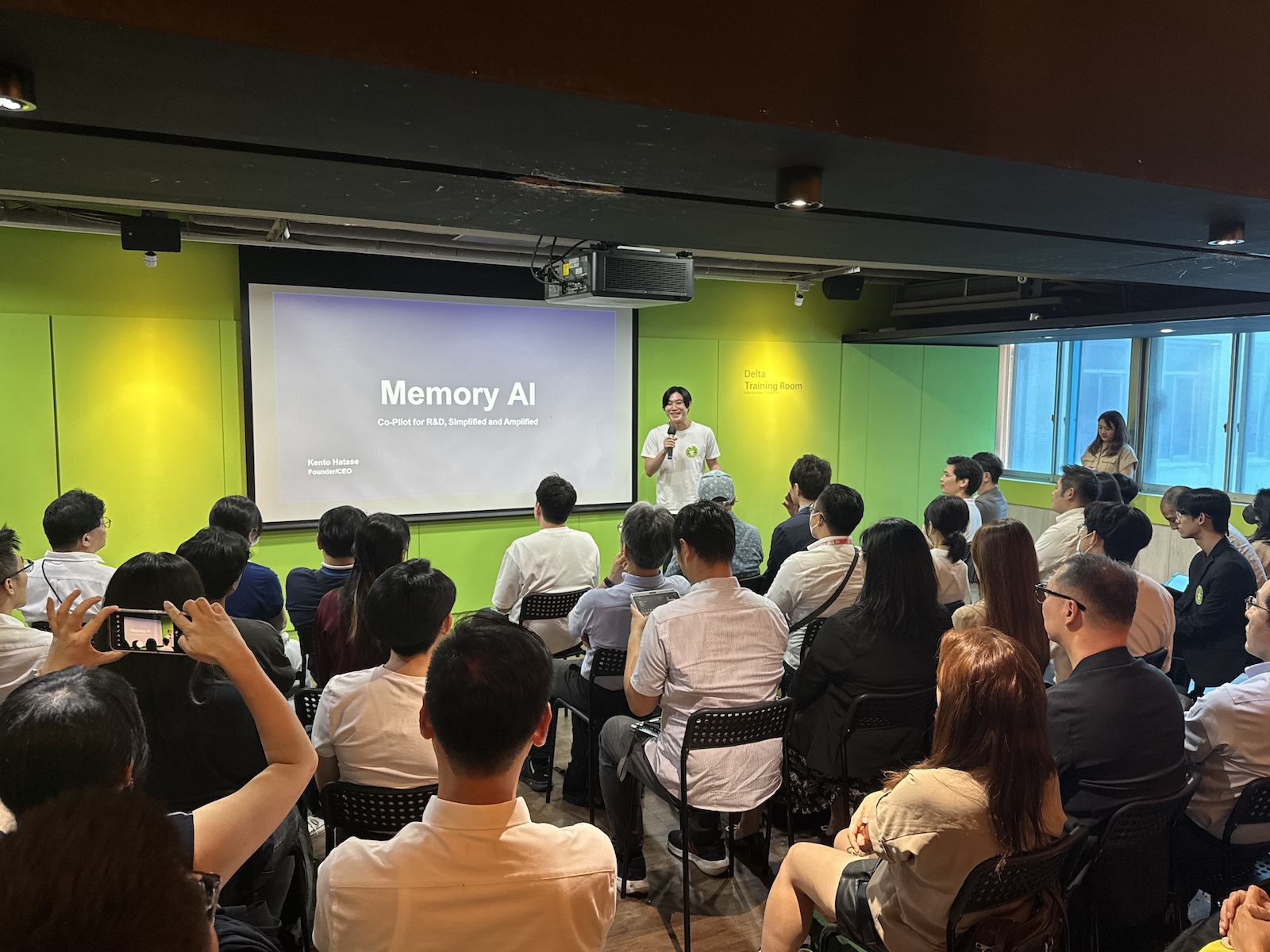
- MEMORY LAB (AI): Developer of “MEMORY AI,” focused on corporate innovation and R&D using natural language. The platform allows teams to extract, organize, and reuse knowledge from patents, documents, and internal data, making it easier for enterprises to drive innovation by tapping into their own intellectual capital. Learn more.
- Premo (Next-gen Computing): Creator of “Dualibus,” a wireless inter-chip communication technology that eliminates the need for wiring or circuit boards. This breakthrough allows for higher data transfer speeds, reduced energy loss, and smaller form factors, paving the way for more compact and efficient chip architecture in next-generation electronics. Learn more.
- U-MAP (Materials): Developer of fibrous aluminum nitride crystals and high-performance thermal interface materials. These advanced materials significantly enhance heat dissipation for power electronics and semiconductors, supporting industries like electric vehicles, telecommunications, and aerospace, where thermal reliability is critical. Learn more.
- Greenphard Energy (AI): Builder of intelligent IoT control systems for HVAC. Their AI-powered platform helps optimize heating, ventilation, and air conditioning systems by analyzing real-time environmental data to improve energy efficiency, reduce operational costs, and lower emissions in commercial buildings. Learn more.
Hands-on support for startup business development & fundraising
Plug and Play Japan facilitates one-on-one meetings between startups and major Taiwanese corporations such as Formosa Plastic, UMC Capital, Mighty Net, and Foxconn. It also strengthens connections with Taiwan-based innovation hubs like ITRI, Startup Island Taiwan, and One & Co, offering access to networks that include TSMC-related entities. These engagements provide startups with meaningful opportunities to expand into Taiwan’s deeptech ecosystem and explore collaboration across advanced manufacturing, semiconductors, and AI-driven applications.
Get a closer look at how Plug and Play Japan drives cross-border innovation and support deeptech startups through our open innovation platform:
Plug and Play Japan has also partnered with leading Taiwanese EMS company LITEON to support the company’s innovation strategy, startup scouting, and co-creation efforts with internal business units. Through this collaboration, Plug and Play helps LITEON engage with global startup technologies that align with its strategic goals — fostering agile product development, sustainability solutions, and digital transformation across its business lines. Plug and Play Japan serves as a crucial link in the Taiwan–Japan innovation ecosystem by providing support in fostering startup growth and facilitating corporate innovation.
In the next installment, we will highlight Japanese deeptech startups expanding their collaborations with Taiwanese companies.
If you're interested in exploring cross-border collaboration opportunities or want to connect with leading startups and corporates in our ecosystem, reach out to our team or learn more about Plug and Play Japan’s programs.
Related Insights

Ebook
Sustainability
Achieving Circular Economy through Open Innovation in Japan
Apr 14, 2024
Ebook
Insurtech
The Uniqueness of the Japanese Market in the Context of Global Insurtech Trends
Feb 4, 2024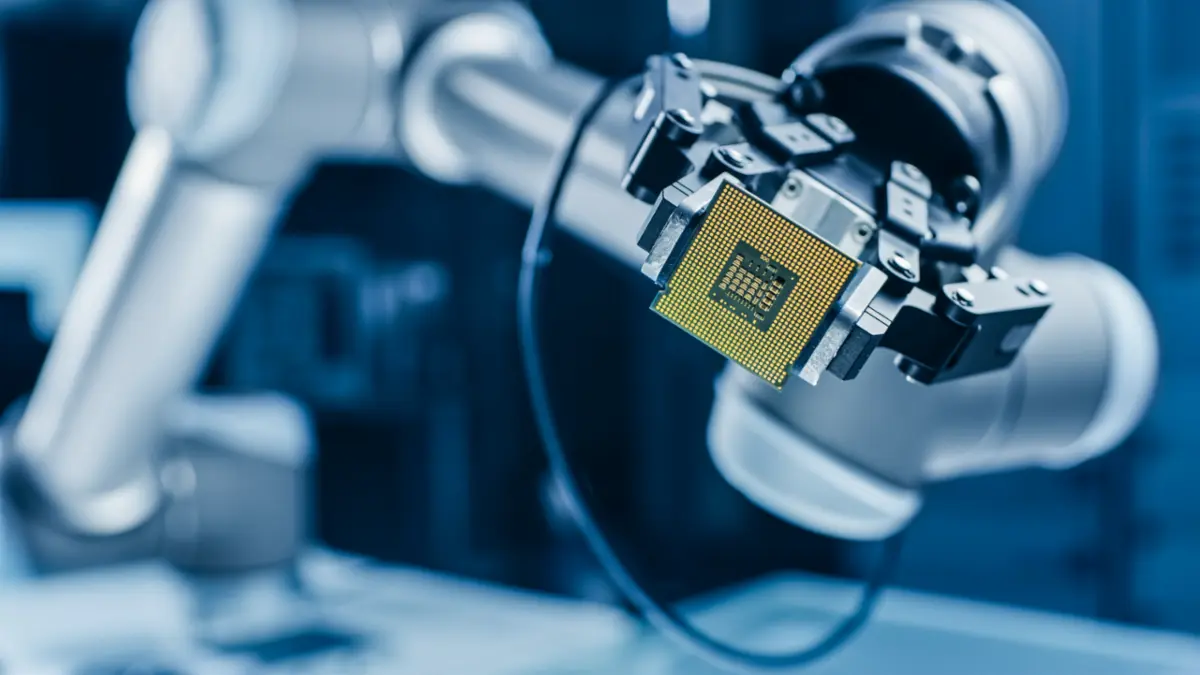
Ebook
Advanced Manufacturing
Building Smarter: Exploring Advanced Materials & Automation in Manufacturing
Daniele Quadrani, Emelie Stark and Timo Linnemann