articleMay 28, 2026

Startup Proof of Concept vs Pilot: Is Your Enterprise Ready?


Startup proof of concepts for corporations: What’s inside?


  • How to distinguish a proof of concept (PoC) from a pilot
  • The PoC & pilot readiness conditions most corporations overlook 
  • Real-life examples of startup PoCs and pilot projects from Plug and Play ecosystem

The differences between a startup proof of concept (PoC) and a pilot may seem clear in theory, but they often blur when innovation teams face real decisions. 

The stakes around getting PoCs and pilots right have never been higher: a widely circulated report by MIT’s Media Lab found that 95% of corporate innovation initiatives around AI are showing zero return on investment. The organizations behind it typically share a common failure point: they deployed too fast, validated too little, or conflated testing a concept with testing a solution.

Getting the sequence right, knowing precisely when a proof of concept ends and a pilot begins, is one of the most consequential decisions an innovation leader makes. It determines whether stakeholder trust survives the process, whether budget is spent on proof or on recovery, and whether the startup relationship advances toward a commercial outcome or stalls in ambiguity.

The hesitation is understandable. In Plug and Play’s Innovation Assessment Report, nearly 29% of respondents (the single largest group) expressed interest in engaging with startups but have not yet taken that step. But success is within reach for corporations that execute their innovation projects with precision, and our extensive library of successful case studies proves it.

This guide is built from PNP’s experience facilitating corporate-startup engagements across industries and geographies. It is designed to answer two questions that precede every successful POC and pilot: does the moment call for one or the other, and is the organization actually ready to run it?

When to run a PoC vs. a pilot program

You know the theory: the difference between PoC and pilot comes down to purpose and proximity to launch. While Proof of Concept projects with startups test whether an idea or technology can work at all, a pilot tests whether it works in your environment, with your users, at your scale, and it takes place right before full implementation. 

In practice, the decision on which one to put in place becomes less clear. And this uncertainty reflects a broader pattern of hesitation: over 60% of organizations occupy a “middle zone”: they are motivated to innovate but lack the processes and support to execute at scale. There’s a gap in practical tools and methods for advancing ideas, with 38% of innovation leaders citing the need for faster, lower-risk ways to pilot new ideas as their top priority.

The intent is present, but the operational foundation is not. And, among these obstacles, one of the most common mistakes we see is treating startup Proof of Concepts and pilot projects interchangeably. 

But the right approach makes all the difference. At PNP, we’ve seen what happens when pilots are designed for success. Take our Kajima and Archetype AI case study as an example: the corporation meets the startup through our Plug and Play’s IoT Selection Day in September 2023; then, they follow up with a structured, focused pilot project that allows for a quick measure of the solutions’ potential impact.

Drawing from our experience helping corporations achieve innovation success, here’s a look at the signals that indicate which stage matches the corporation’s current needs:

The Ultimate AI Playbook: 10 Enterprise Deployments Boosting ROI
Read Now ->

Signals that indicate a PoC is the right move

Running a startup PoC is useful if you need to:

  • Validate technical compatibility. For instance, for an IT team that needs to know if a new AI-powered analytics tool can integrate with their legacy systems, a PoC is a great option to test the connection without disrupting current operations or requiring full deployment budgets.

  • Test emerging technology with limited exposure. Picture a company exploring a new technology for analytics, but it isn’t sure if it delivers on the hype. Here, a PoC lets you experiment in a controlled environment before betting the entire network.

  • Move forward even with constrained resources. If your innovation budget is cut but you still need to evaluate three vendors, a PoC lets you test all three with minimal investment.

  • Settle internal debates about feasibility. If stakeholders are divided on whether a proposed solution can actually deliver, a PoC provides concrete evidence beyond opinions in a conference room.


Signals that indicate a pilot is the right move

It may be time to run a pilot if you find your project needs to:

  • Test real-world performance before enterprise rollout. A PoC confirmed the technology works; now, the pilot will help determine whether it holds up when hundreds of employees across different regions use it daily with live customer data. Having proven a solution is viable, the pilot tests whether it scales, answering questions like “do support tickets spike?” “Can your team handle the operational load?”, etc.

  • Gather authentic user feedback from actual workflows. Pilots are unique in their ability to capture friction points that emerge only during actual use. This is key because you need to know how real users respond when a solution becomes part of their real lives, moving beyond how expert testers respond in a sandbox environment.

  • Identify operational integration challenges. A PoC is limited in that it is built to run in isolation. On the contrary, a pilot reveals if something breaks when the solution touches real-life conditions (how it interacts with security protocols and existing technologies, what its training requirements are…). Here are some questions the pilot can help answer: “How long does onboarding and setup actually take?” “Can this scale across the organization without breaking?” or “What operational hurdles will emerge once this goes live?”


PoC vs. pilot: Decision reference


  Proof of Concept Pilot
Purpose Tests whether the technology works at all Tests whether it works here, at scale, with real users
Environment Controlled environment, limited functionality Near-production environment, real workflows
Core Question Answers: Can this work? Answers: Will this work for us?
Timeline Typically 4-12 weeks Typically 3-6 months
Investment Level Lower budget commitment Higher budget, measurable ROI targets
Stakeholder Scope Limited stakeholder exposure Cross-functional involvement, executive visibility
Output Go / no-go decision on technical feasibility Scale / iterate / terminate decision based on the operational performance data

Assessment checklist

For leadership teams that need to move quickly, this checklist helps identify the likely steps based on the organization’s current position and needs:

  • If you need to prove technical feasibility before investing significantly, start with a PoC.

  • If you’re testing unproven technology or unfamiliar vendors, start with a PoC.

  • If you have a limited budget and need validation before scaling, start with a PoC.

  • If you need stakeholder buy-in before moving forward, start with a PoC.

  • If you’ve already validated core functionality through a PoC, move to a pilot.

  • If you need real-world performance data from actual users, move to a pilot.

  • If you’re ready to test scalability and operational integration, move to a pilot.

  • If you have training and support infrastructure in place, move to a pilot.

If pilot criteria cannot all be confirmed, the organization is not yet pilot-ready. Advancing anyway is where most costly failures can originate.


GET IN TOUCH

Ready to start your pilot project with a startup?

Startup PoCs & pilot projects

PNP has facilitated hundreds of PoCs and pilot engagements between corporations and startups across industries, proving innovation processes offer value when provided with the right structure.

From healthcare to energy to aviation, these partnerships follow a common pattern: clear problem definition, structured matching, a framework for successful collaboration, and defined success criteria from day one. 

The following cases serve as illustrations, but feel free to browse the rest of the success stories available in our innovation library:

Examples from our ecosystem

undefined

Roche

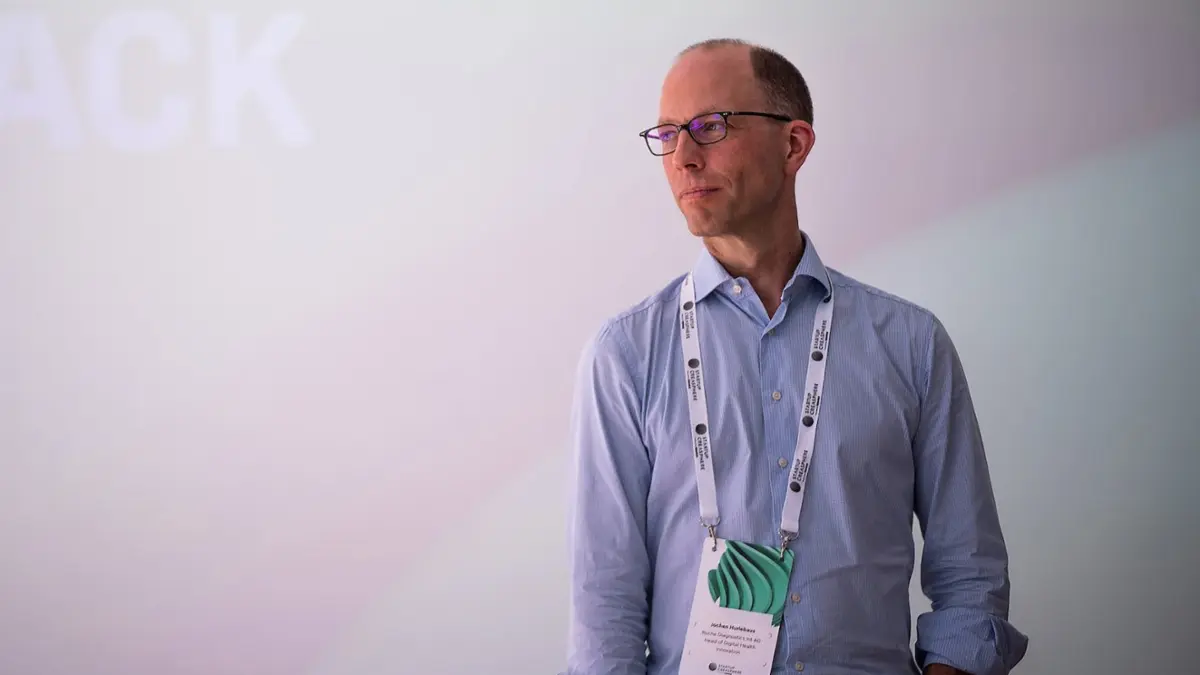
Roche began collaborating with PNP in 2018 and, together, built the world’s largest innovation platform for digital health solutions, Startup Creasphere, with offices in Munich, Silicon Valley, and Singapore. The program completed over 110 pilot projects across these locations, with more than 50% of participating startups embracing long-term collaborations.

undefined

Lake Nona

A three-year partnership established a continuous pipeline for innovation within the Lake Nona district in Florida, with multiple startups actively testing solutions on-site. A standout example is Aquaria’s, which piloted atmospheric water generation technology.

undefined

Vienna Airport

In collaboration with PNP, Vienna Airport met with nearly 40 selected startups and conducted eight PoC projects to automate operations and enhance the passenger experience. 

undefined

Enerjisa

Working alongside Plug and Play, Enerjisa connected with 33 startups, initiated five pilot programs, and successfully completed three.

undefined

Vienna Airport // DAAV

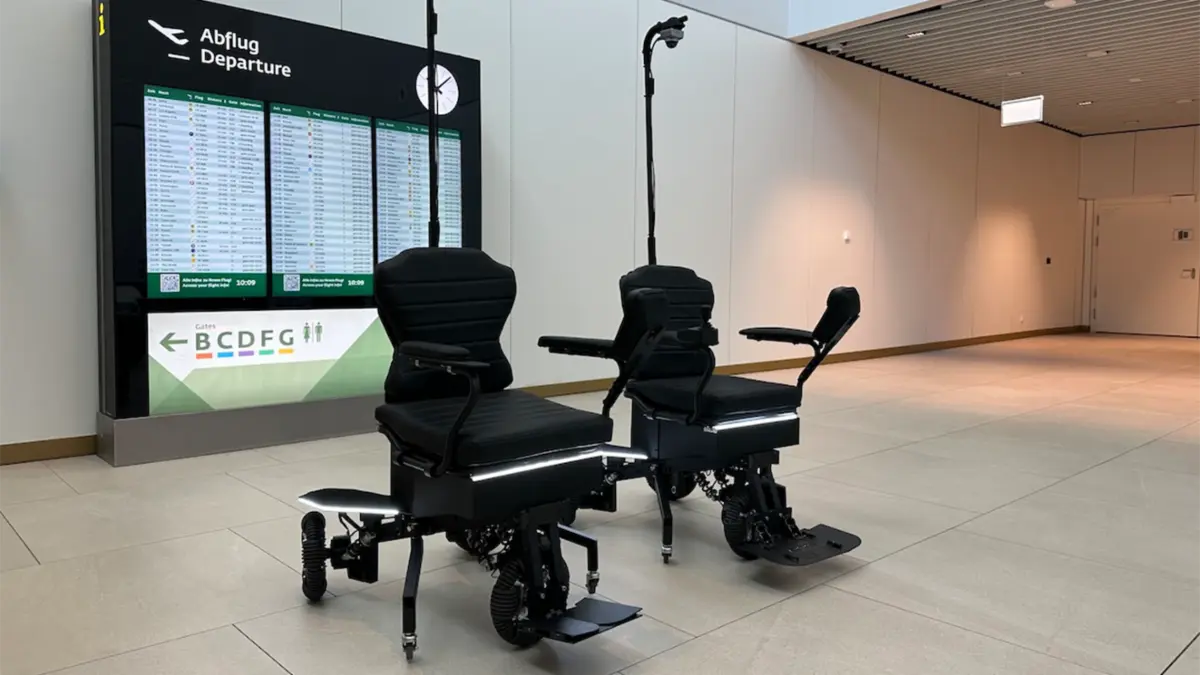
Vienna Airport needed to improve passenger services for those with reduced mobility without stretching staff resources. PNP connected them with DAAV for a six-month autonomous wheelchair pilot. High passenger satisfaction led to continued collaboration and further testing in 2025.

undefined

Kajima // Archetype AI

Kajima needed remote oversight capabilities for a large-scale project. Through their collaboration with PNP, they connected with Archetype AI and started a pilot project. The partnership enabled Kajima to gain real-time visibility and explore new possibilities for the AI-powered construction management they sought.

Our most recent case studies

What do you need before starting a proof of concept vs. a pilot with a startup?

Across the corporate-startup engagement PNP facilitated, one of the most common mistakes we see is assuming that momentum alone justifies advancing to the next stage. Corporations advance to the next phase before they have defined what success looks like, before compliance questions are resolved, before the right internal champions are secured. The result is projects that stall under budget pressure, and startup partners that cannot survive the delay. Your corporation needs to be PoC and pilot-ready before either launch. 

The following checklists separate the must-haves for each stage, drawing from patterns observed across hundreds of corporate-startup engagements.

PoC Corporate Readiness: What Needs to Be in Place

  • You have anchored the PoC to a specific business problem and ensured executive backing. One business unit can commit to clearly defining the issue the project aims to solve; then, leadership sponsorship must step into the project and see it through. Without these two elements, even promising PoCs stall.

  • You have identified the right startup partner for your challenge. It’s a mistake we see often: corporations pairing with startups that look promising on paper but lack the operational readiness to deliver results. Evaluating startups means having visibility into their actual product maturity and team capacity. A step facilitated by structured innovation programs like the one at Plug and Play, which specializes in matching corporations and startups.

  • You have established partnership procedures that match startup timelines. Onboarding shouldn’t take months, because startups cannot survive that timeline. Accelerator programs and corporate innovation platforms, such as those run by Plug and Play, are also crucial to achieving this, providing template frameworks that help corporate teams adapt their processes without compromising their own needs (for instance, compliance).

  • You can define the end state before launching. The path forward must be clear before launching the PoC, whether that means a commercial partnership, investment, or acquisition. External partners often bring clarity here as well, having guided hundreds of similar engagements and knowing which outcomes are realistic at each stage. 

Pilot Corporate Readiness: What Needs to Be in Place

Before moving on to the pilot stage, there are a few things projects should have figured out: 

  • You can point to specific business outcome metrics before launch. You’ve identified success criteria tied to operational impact, so that it’s possible to prove just what the pilot has improved or whether scaling is justified. 

  • There’s a technical blueprint of the requirements for the pilot. It should map out how the solution connects to your existing systems, and what data flows where, among other project-specific needs.

  • You’ve built an environment configured for live use. For pilot projects, sandbox setups just aren’t enough.

  • There’s training and support documentation available. Pilot users and support teams should not struggle to learn the system during testing. 

  • You’re able to integrate the solution into existing workflows. Your pilot users should be able to adopt the tool within their daily routines rather than stepping outside normal operations to test it. If a solution requires people to change how they work just to validate it, the organization is still in PoC territory. 

  • You have data governance and compliance foundations in place. Audit trails exist, and regulatory requirements are mapped so that the pilot can operate under production standards. If compliance questions remain unanswered, the pilot will surface them at the worst possible moment. 

  • You have assembled a cross-functional team with active executive sponsorship. Pilot-ready organizations involve representation from diverse teams (IT, legal, business units, end-users) and have decision-makers in the room from day one, ready to approve scale or termination when results arrive.

Closing the gap between a pitch and successful innovation can be tricky. At Plug and Play, we’re here to help.

If you’re ready to move beyond the theory and put in place a startup PoC and pilot project that actually leads to successful innovation, get in touch with us to start your innovation journey.


GET IN TOUCH

Test your pilot project with a startup developing solutions

FAQs about startup proof of concepts

What is a startup proof of concept?

Let’s turn to Plug and Play’s innovation glossary for a brief, clear definition: a proof of concept is “a prototype or demonstration that validates the feasibility and potential of a new idea, product, or technology before committing to full-scale development.”  

In corporate innovation processes, a PoC exists to answer the uncomfortable questions early, when changing course still costs time instead of millions. Think of it as a first, necessary reality check for ideas or technologies that may sound brilliant on paper but remain unproven in contact with reality. 

What does a PoC with a corporation mean for a startup?

For a startup, a corporate PoC is one of the most valuable and demanding engagements it can pursue, and PNP is here to enable it. A successful PoC provides what investors prize most: validated evidence of your product’s performance within a real enterprise environment. By running a PoC with a partner from our network, you can demonstrate that your solution meets the complexity, security, and operational demands of a major organization. This validation, facilitated by PNP, carries significant weight with future customers and institutional investors.

Is proof of concept the same as pilot?

No, but Plug and Play helps corporations and startups navigate both. A PoC tests a core concept’s feasibility in a controlled setting ("Can this work?”). A pilot tests a near-final solution with actual users in a real-world environment ("Will this work at scale with our team?”). We help our partners define the scope for each stage, ensuring startups can first prove their technology through a PoC before committing to the larger investment of a pilot.

What comes first, a PoC or pilot?

The PoC always comes first, as it allows for validating technical feasibility before testing real-world implementation through a pilot. Skipping this sequence means discovering deal-breakers during pilots, when changes cost significantly more and stakeholder patience runs thin.

What comes first, a PoC or MVP?

PoC comes first because its goal is to determine whether a core technology or idea is feasible. An MVP (minimum viable product) comes later, being a functional version ready for real users.

What are the steps for a PoC?

  • Preparation: A phase to lock in the groundwork (scope, NDA, success criteria, team, timeline, and budget) so that the innovation Proof of Concept runs smoothly instead of spiraling into issues like scope creep or misaligned expectations.
     
  • Execution: This is where the idea meets the test environment, and data starts flowing, providing actual evidence about what works. Steps in this stage typically include a kick-off meeting, test execution, data collection, results analysis, and presentation of findings to stakeholders.
     
  • Validation: A phase designed to force the hard conversations, comparing results against success goals, and deciding whether to reject, iterate, invest, or move forward to implementation.

How to engage with an external partner to help you structure and guide your PoC or pilot?

At PNP, we help corporations find the right startups and bring their innovation projects to fruition through PoCs and pilots. With presence across 25+ verticals, we match you with relevant startups from the world’s largest startup ecosystem and help you structure a PoC and pilot that fits your timeline and goals. Explore our startup pilot enablement programs to see how partnerships begin.

PLUG AND PLAY AROUND THE WORLD

Discover our global locations

We have a community of experts all over the world. We work as a bridge between Silicon Valley and the rest of the world, making innovation open to anyone, anywhere.

Sign up for our global newsletter