Artificial intelligence has recently helped us make smarter, faster decisions behind screens, in the cloud, and through voice assistants and recommender systems. But in 2025, the frontier has shifted. AI is stepping out into the real world in a big way.
Physical AI, which is integrated into physical systems like robots, machines, infrastructure, and autonomous platforms, is no longer experimental. It’s being piloted in airports, construction sites, warehouses, and city ports. It’s helping humans do difficult, dangerous, or tedious jobs faster, with fewer errors, and at lower cost.
At Plug and Play, we’re accelerating this shift. From our global network of over 500 industry-leading corporations to a deep bench of AI and robotics startups, we are building the infrastructure for intelligent, embodied systems.
By 2030, the U.S. will be short 2 million workers. The caregiver gap alone is projected to reach 25 million by 2025. Across industries - construction, healthcare, manufacturing - the demand for consistent, skilled labor far outpaces supply.
2. Hardware costs have cratered
LiDAR: From $75,000 to under $1,000 (Source, Source)
Battery packs: 85% cost drop since 2013 (Source, Source)
Coreless motors: Now scalable at low unit costs
This economic shift makes deploying robots in real-world environments commercially viable.
3. AI is getting cheaper to run
The cost to serve inference for AI models continues to fall, enabling real-time decision-making on the edge, even in mobile or disconnected environments. With multimodal foundation models now being developed for robotics (e.g., NVIDIA GR00T), Physical AI systems are gaining generalizable skills.
Aviation 2.0: How Robotics is Redefining the Skies
Discover how robotics is propelling aviation into the era of innovation in our latest report.
Physical AI merges perception, reasoning, and action into a single system. These systems use sensors to perceive the world, AI to reason about what’s happening, and actuators to do something about it.
Examples include:
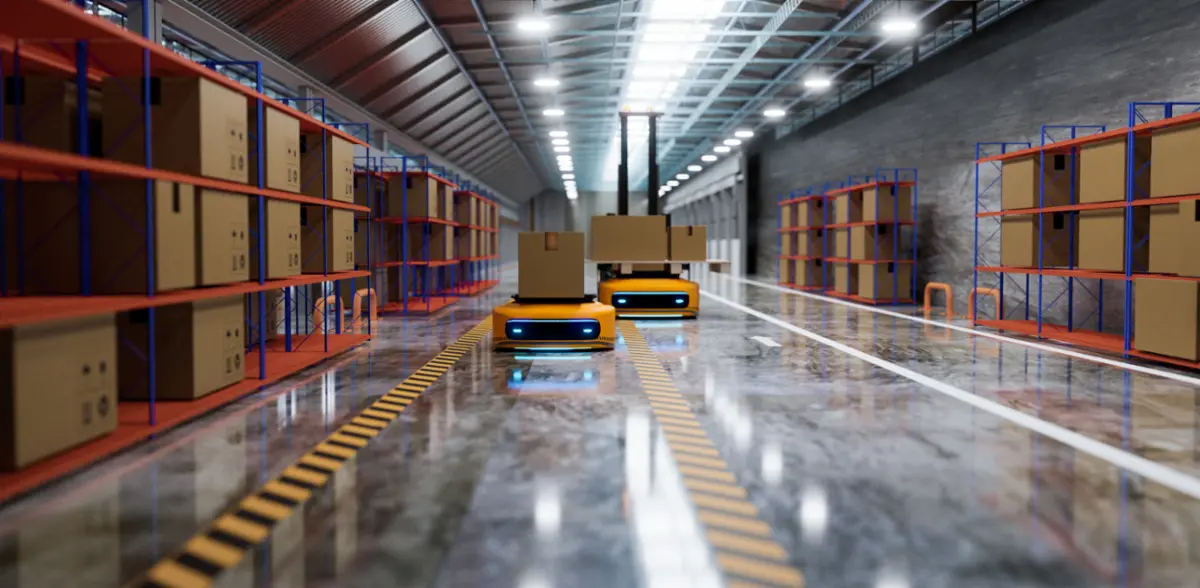
A robot navigating a warehouse floor without bumping into people.
A drone adjusting its flight pattern based on wind conditions.
A smart plug learning which office equipment can be powered down to save energy.
Learning in the wild: No ImageNet for robots
Unlike text or image AI, Physical AI has no massive, open, labeled dataset. Robots learn using a mix of techniques:
Simulation: Robots train in realistic digital twins before entering the real world.
AR-guided learning: Operators interact with environments using AR overlays.
Teleoperation: Humans directly control robots to teach them tasks.
Human demonstration: Robots learn by observing expert human behavior.
Startups building novel data pipelines and simulation platforms are winning here.
Meet the physical AI startups in Plug and Play’s ecosystem
We’re proud to back and accelerate some of the most exciting companies shaping physical AI:
Archetype AI: Turning real-world sensor data into insights for construction and infrastructure projects.
Ottonomy: Autonomous retail delivery robots deployed in airports and malls.
Intenseye: AI video analytics for workplace safety, integrated with legacy camera infrastructure.
Cartken: Sidewalk-scale robots for delivery, partnered with retailers and food service brands.
Sitemark: Drone-powered solar panel inspections for energy efficiency.
Blickfeld: Compact LiDAR for indoor-outdoor people tracking.
Sapient: Intelligent plug load systems for smart buildings.
Nexar: AI dashcams analyzing driver behavior to improve fleet safety
Awake.ai: Enabling ports to prepare for captain-less, autonomous shipping
Sensemore: Predictive maintenance for industrial machinery
Flyability: Inspection drones for confined and dangerous spaces
Greyparrot: AI for automated waste sorting and recycling facilities
These companies span industries from manufacturing and logistics to construction, energy, healthcare, and mobility.
Plug and Play case studies: When AI meets real world
1. Kajima x Archetype AI: Construction
A 184-year-old construction giant used Newton (by Archetype AI) to analyze 11,957 videos and 746 days of work to optimize canal expansion in Niigata, Japan, turning raw sensor footage into safety alerts, scheduling insights, and productivity benchmarks.
2. Fraport x Blickfeld: Airports
Frankfurt Airport installed Blickfeld’s LiDAR units to monitor passenger flow, reducing wait times and enabling better terminal management.
ZF used Intenseye’s AI video platform to monitor PPE compliance and reduce injury risks, leveraging existing security cameras without requiring new hardware.
4. Ottonomy x Aeroporti di Roma: Retail & robotics
Autonomous delivery robots served over 300 passengers, covering 400+ km inside airport terminals with an average delivery time of 3 minutes and zero incidents.
A full feasibility study helped the port plan for autonomous ships, analyzing gaps in infrastructure and digital systems for “captain-less” port calls.
Safety: Hallucinations are not tolerable when robots operate near humans.
Hardware: Motors, power, haptics, and edge compute must get better.
Data: Real-world, diverse, task-generalizable data remains scarce.
Unit economics: Costs must drop further to drive large-scale commercial deployment.
But these are solvable problems, and fast.
The takeaway: Physical AI is a momentum story
We are watching a platform shift unfold. What cloud computing was for the 2010s is what physical AI will be for the late 2020s.
At Plug and Play, we believe:
Owning data pipelines, synthetic or real, is the new moat
Hardware and software platforms will lead the way in verticals like logistics and construction
The winners won’t be the flashiest; they’ll be the most deployed
Ready to innovate and connect with new sustainable technologies? At Plug and Play, we fast-track innovation in the sustainability industry. Reach out to connectwith the most disruptive startups.