articleSep 10, 2026
Insurtech

From Loss Control in Risk Management to Risk Orchestration: How Insurers Can Shift from Reactive to Proactive

Learn about loss control in risk management with risk orchestration. Empower insurers to assess and thrive in even the most catastrophic environments.


What’s inside?
 

  • Portfolio architecture: Loss control in risk management over withdrawal
  • Underwriting transformation: From static models to adaptive intelligence
  • Pricing architecture: Dynamic risk adjustment replaces annual cycles
  • Claims management: Loss control in risk management through speed & precision
  • Reinsurance strategy: From passive capacity purchase to active capital orchestration
  • Customer engagement: Loss control in risk management through risk partnerships
  • Data infrastructure: The foundation enabling everything else
  • The path forward: Integration creates competitive separation

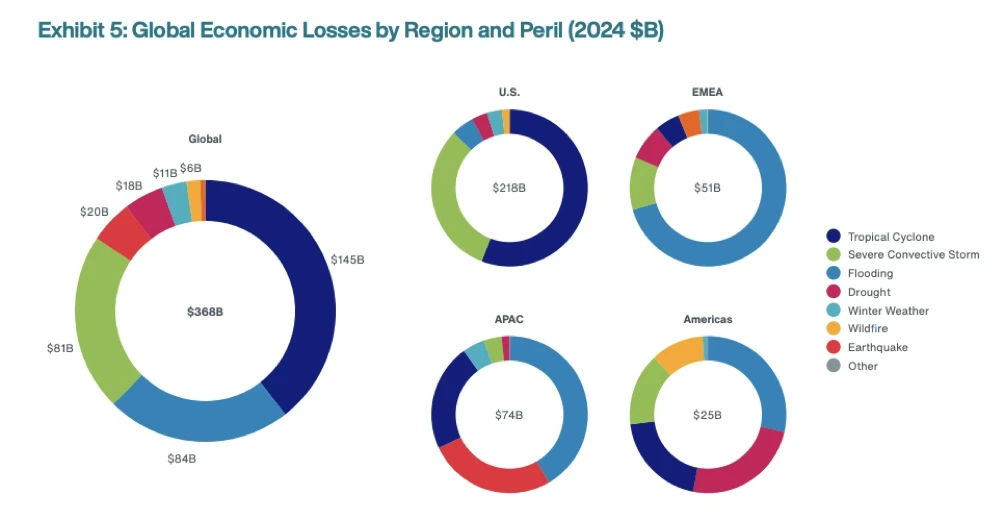
Economic losses from natural disasters totaled $368 billion in 2024, driven by 218 billion-dollar events in the U.S. alone. While this escalation intensifies pressure on insurers, it also creates an opportunity: carriers that transform from passive risk acceptors to active risk orchestrators can unlock sustainable growth, even as competitors face margin erosion. This shift depends on rethinking portfolio construction from first principles.

Portfolio architecture: Loss control in risk management over withdrawal

As climate volatility increases, sustainable growth no longer comes from retreating from exposed regions, but from managing exposure with far greater precision. Portfolio architecture has therefore shifted from blunt geographic withdrawal to dynamic concentration management.

Geographic concentration management now relies on real-time metrics that adapt to atmospheric conditions, building code enforcement, and mitigation rates. Beyond these macro adjustments, micro-segmentation leverages property-level risk scoring; for example, carriers using sealed roof-deck identification reduced adverse selection by 18%, as this single attribute prevents 30% of water-intrusion losses.

The strategic edge comes from pricing risk at a granular level to remain profitable where competitors withdraw. Achieving this requires continuous, rather than static, underwriting approaches, turning portfolio construction into an active, ongoing discipline rather than an annual exercise.

Underwriting transformation: From static models to adaptive intelligence

Granular portfolio construction is only possible if underwriting itself evolves. Traditional catastrophe modeling, designed for stable risk environments, has become structurally insufficient in a non-stationary climate regime.

Catastrophe models have evolved from annual exercises to continuous forecasting engines. AI-enhanced models that ingest real-time climate data enable weekly risk appetite adjustments rather than annual cycles. 

This shift toward real-time assessment extends beyond risk selection into claims settlement, where parametric triggers accelerate payment from months to days, reducing expense ratios by 15-20% while generating retention lifts of 25-30%. 

In a non-stationary climate environment, real-time, AI-driven underwriting and parametric claims are no longer optional; they are essential to maintaining portfolio resilience, profitability, and customer trust.

Pricing architecture: Dynamic risk adjustment replaces annual cycles

The continuous underwriting capabilities described above lose their value without equally dynamic pricing systems. Continuous pricing engines now adjust rates between renewal cycles rather than waiting 12–18 months. When neighborhoods implement FORTIFIED building standards (construction guidelines designed to strengthen homes against hurricanes), they reduce hurricane losses by up to 40%. Dynamic pricing systems can reflect that risk reduction immediately, rather than recognizing it 18 months later. Another good example is Delos, which uses AI to analyze over 200 wildfire risk factors, allowing it to provide coverage and dynamic pricing in high-risk areas where traditional carriers have withdrawn.

Beyond continuous pricing, behavioral pricing that monitors mitigation behaviors enables immediate premium relief: one carrier offering 15% wildfire mitigation discounts saw 47% adoption, compared with 12% for traditional programs. This responsiveness creates customer expectations that carry through to the claims experience, where speed becomes the ultimate differentiator.

RELATED READING

How New Insurance Product Categories Like AI Insurance Are Reshaping the Industry
Read Now ->

Claims management: Loss control in risk management through speed & precision

Just as pricing responsiveness shapes customer expectations, claims velocity determines whether carriers retain policyholders through their most vulnerable moments.

AI-powered triage using computer vision classifies damage severity within hours, reducing cycle times from 45 to 12 days while cutting adjustment costs by 35%. Customers receiving settlement within two weeks show retention rates 28 points higher than those waiting months. Alongside faster triage, predictive fraud detection at intake has reduced leakage from 8% to under 3%. As fraud resources shift toward legitimate claims, settlement speed improves further, compounding both financial and customer experience gains. Yet even the most efficient claims operation requires adequate capital backing, which demands strategic reinsurance optimization.

Reinsurance strategy: From passive capacity purchase to active capital orchestration

While claims efficiency protects margins, reinsurance strategy determines capital efficiency and catastrophe resilience. Increasingly, reinsurance is no longer treated as a standardized annual purchase, but as a portfolio design problem.

Layered capital structures that align transfer mechanisms with specific exposures reduce protection costs by 20-30% while maintaining equivalent coverage. One example is the catastrophe bond market, which exceeded $45 billion in 2024, offering pricing 15-25% below traditional reinsurance while providing multi-year committed capacity that insulates carriers from post-event market volatility. Sophisticated carriers now deploy parametric cat bonds for frequency layers, indemnity reinsurance for severity protection, industry loss warranties for tail exposure, and collateralized reinsurance for customized attachment points. This capital optimization creates pricing flexibility, enabling more competitive customer engagement strategies.

Customer engagement: Loss control in risk management through risk partnerships

Pricing flexibility and capital efficiency enable a broader strategic shift: moving from transactional insurance relationships to ongoing risk partnerships.

This shift matters because acquiring a customer costs 5x as much as retaining one, yet most carriers invest 90% in acquisition. Proactive engagement models deploying quarterly risk assessments, mitigation guidance, premium relief pathways, and pre-disaster preparation drive retention rates 15-20 points higher than industry averages. FM (Formerly FM Global) uses this approach by using a “Resilience Credit” to reward clients who invest in risk mitigation. For the 2026 renewal cycle, it is deploying an $825 million credit, equivalent to a 10% premium offset for eligible policyholders, alongside continuous risk assessment, hands-on mitigation support from field engineers, and pre-disaster preparedness measures that enable clients to recover about 30% faster after property losses.

Critically, transparency shapes trust. During wildfire-driven premium increases, carriers that provided clear, risk-based explanations maintained 75% retention, compared to 45% among those offering generic communication. However, none of these engagement mechanisms function without a robust data infrastructure supporting every touchpoint.

Data infrastructure: The foundation enabling everything else

The portfolio precision, dynamic pricing, claims speed, capital optimization, and customer engagement described above all depend on a unified data foundation. 

Property-level attributes, often 200+ per property, including roof age, defensible space, flood elevation, and electrical vintage, enable granular differentiation that is impossible with traditional data. Integrated platforms, like Zesty AI, then translate these insights into action by automatically adjusting pricing algorithms, triggering mitigation outreach, and updating underwriting guidelines when claims data show, for example, that impact-resistant roofing reduces hail losses by 65%.

External enrichment through weather forecasting, permit tracking, mitigation enrollment, and regulatory change monitoring transforms reactive monitoring into predictive intelligence. This same infrastructure increasingly determines how effectively carriers navigate complex and evolving regulatory environments.

The path forward: Integration creates competitive separation

While each mechanism above offers incremental value in isolation, their true power emerges through integration, where capabilities amplify rather than simply add to each other. Granular underwriting without dynamic pricing captures limited value, as competitors can eventually close the gap. Dynamic pricing without continuous customer engagement triggers attrition, as policyholders feel commoditized by algorithmic rate changes. Superior claims handling without reinsurance optimization leaves profit uncaptured, as capital inefficiency erodes the margin gains from operational excellence. Each lever amplifies the others, creating compounding advantages that widen the gap between leaders and followers.

This integrated operating model distinguishes carriers that achieve sustainable growth in catastrophic environments; they have shifted from risk-transfer businesses to risk-management platforms. These leaders collect more data, process it faster, adjust positions more fluidly, and engage customers more deeply than competitors still operating on annual cycles. Importantly, this transformation requires neither unlimited capital nor technological revolution, just disciplined execution across interconnected capabilities: data infrastructure enabling granular underwriting, continuous pricing reflecting dynamic risk, automated claims delivering speed, optimized reinsurance reducing costs, and proactive engagement building retention.

 

GET IN TOUCH

Ready to start your innovation journey?

FAQs about the origins & future of robotics

How does Plug and Play help insurance carriers modernize their underwriting and pricing capabilities?

Today’s catastrophic risk environment demands more than traditional underwriting approaches. Plug and Play’s Insurtech vertical connects carriers with startups at the forefront of data infrastructure, AI-driven pricing algorithms, and risk analytics. The result? Insurers gain access to granular underwriting and dynamic pricing tools that give them a real competitive edge.

How can insurers improve claims handling and reinsurance optimization through Plug and Play?

Plug and Play helps insurers tackle the financial strain of slow claims processing and inefficient reinsurance structures head-on. Our Insurtech program bridges the gap between established carriers and startups advancing claims automation, predictive analytics, and reinsurance technology. We help insurers build leaner, more efficient operating models that reduce costs and optimize capital.

How does Plug and Play support insurers looking to build a proactive customer engagement strategy?

Retaining customers in a world of algorithmic rate changes requires a shift from reactive to predictive engagement. Plug and Play’s Insurtech vertical partners with startups specializing in customer engagement platforms, mitigation outreach tools, and real-time communication solutions, giving carriers the tools they need to stay ahead of customer needs and reduce attrition.

PLUG AND PLAY AROUND THE WORLD

Discover our global locations

We have a community of experts all over the world. We work as a bridge between Silicon Valley and the rest of the world, making innovation open to anyone, anywhere.

Sign up for our global newsletter