articleOct 6, 2025
Travel & Hospitality

What is SAF? A Guide to Sustainable Aviation Fuel

What is sustainable fuel? Explore the benefits of SAF, the market outlook, and the companies pioneering new SAF technology to make planes eco-friendly.

The aviation sector is at a crossroads, facing the critical challenge of reducing its environmental impact. As air travel continues to connect the world, the industry’s carbon footprint, which accounts for 2-3% of global CO₂ emissions, is under intense scrutiny. The central question is no longer just "Can aviation ever be truly sustainable?" but rather, "How can we actually make it happen?" The answer may lie in a transformative innovation: sustainable aviation fuel (SAF).

This powerful alternative to traditional jet fuel is set to redefine the future of air transport. In this article, we'll explore what sustainable aviation fuel is, the benefits of SAF, the exciting SAF startups and investment trends driving the industry forward.

What is sustainable aviation fuel (SAF)?

So, what is SAF? Sustainable aviation fuel is an alternative fuel made from non-petroleum feedstocks that reduces emissions from air transportation. Unlike conventional jet fuel, which is derived from crude oil, SAF is made from a variety of feedstocks.

What is SAF made of?

Currently, the most common method uses waste fats, oils, and greases, a pathway known as HEFA (Hydroprocessed Esters and Fatty Acids). However, HEFA feedstocks are limited and in high demand from other sectors, prompting companies to invest in R&D to find alternatives.

There are currently several certified pathways to produce SAF; some companies are already betting on some of these solutions. Here are the three most relevant alternatives:

Alcohol-to-Jet (AtJ): This process converts low-carbon alcohols like ethanol and butanol into jet fuel, and is one of the most promising routes.

  • ​​Pros: Attractive option, especially for regions with ample ethanol infrastructure
  • Cons: Higher CapEx compared to HEFA

Startup highlight

Alcohol-to-Jet (AtJ)

Sustainable aviation fuel

Ready to start your innovation journey?


  • Gasification-Fischer Tropsch (G-FT): A chemical reaction in which a carbon-rich feedstock is first gasified into syngas (CO + H₂), then catalytically converted into liquid hydrocarbons that can be refined to jet fuel.
    • Pros: High Scalability
    • Cons: Complex Infrastructure

Startup highlight

Gasification-Fischer Tropsch (G-FT)

Velocys. The British company is one of the leading companies leveraging this technology and has collaborated with British Airways on an FT plant (Altalto Immingham) using household waste in the past.


  • Power-to-Liquid (PtL) E-Fuels: This cutting-edge technology uses renewable electricity, water, and CO₂ to synthesize jet fuel. A notable variation of these e-fuels, pioneered by Switzerland-based Synhelion, involves using concentrated solar energy to drive the fuel synthesis process.
    • Pros: Holds potential for large-scale SAF production
    • Cons: Highest CapEx

Startup highlight

Power-to-Liquid (PtL) E-Fuels

Arcadia eFuels. The Denmark-based company is planning a fully electrified e-fuel plant in Denmark. It targets 100 million liters/year of jet e-fuel by 2027, which would avoid ~250,000 tonnes of CO₂ annually.

Some scaleups and corporations are also working to improve the SAF supply chain. Notable examples include Singapore-based scaleup FlyORO, which develops a SAF blending system that can be deployed directly at airports, and Avfuel, which recently integrated Denver International Airport into the SAF supply chain.

On the policy front, rising SAF blending mandates, especially in the EU, UK, and US, are expected to be the main demand drivers in the near future.

The benefits of SAF

The push for SAF is driven by its significant environmental advantages. The primary benefit is its ability to slash lifecycle carbon emissions by up to 80% compared to its fossil-based counterpart. This reduction is calculated across the entire production process, from feedstock collection to its use in an aircraft.

By integrating SAF, airlines can immediately lower their carbon footprint without needing to invest in entirely new fleets. SAF is a "drop-in" fuel, meaning it is chemically identical to conventional jet fuel and can be blended and used in existing aircraft and airport infrastructure. This makes it one of the most practical and immediate solutions for decarbonizing aviation.

Challenges on the runway to SAF adoption

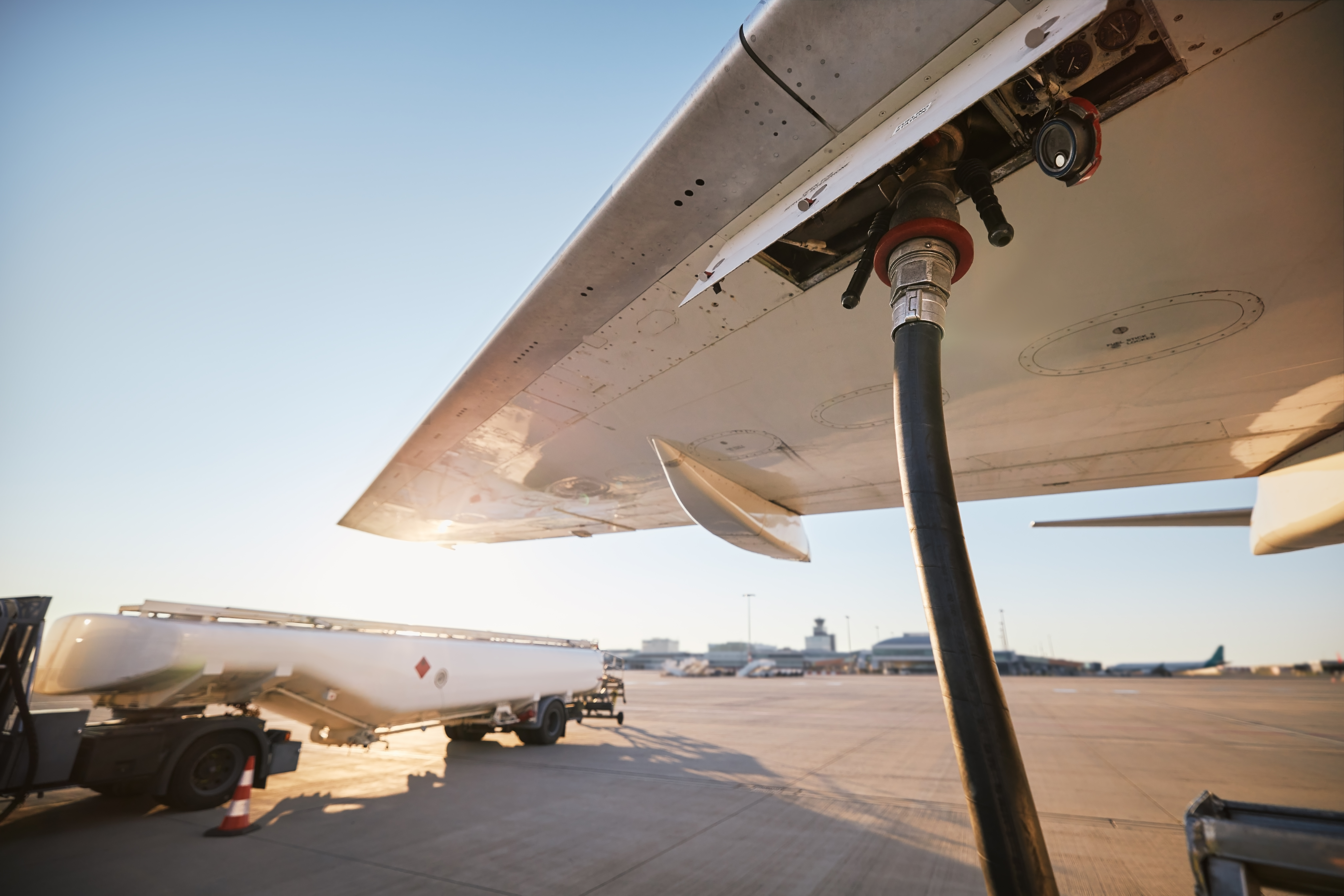
In 2024, global SAF output reached 1 million tonnes (1.3 billion litres) - double the 2023 volume, yet still only 0.3% of the total jet fuel supply. As shown, despite its benefits, SAF remains far from being widely adopted. This is due to three main reasons: cost, infrastructure, and production scale.
The cost factor

Currently, SAF can be two to seven times more expensive than traditional jet fuel. This price difference is a significant barrier for an industry with notoriously thin profit margins. Bringing this cost down through technological advancements and economies of scale is a top priority.

Infrastructure limitations

Most airports are not yet equipped to handle SAF. They lack the dedicated storage tanks, blending equipment, and pipelines needed to integrate it into their fueling operations. This necessitates costly infrastructure upgrades or complex off-site blending logistics.

Production method

Today, production relies heavily on waste fats, oils, and greases (HEFA feedstocks), which are limited in supply and highly sought after by other sectors.


Sustainable aviation fuel market outlook

The sustainable aviation fuel market outlook is projected for significant growth, driven by increasing blending mandates in the EU, UK, and US. These regulations require airlines to incrementally increase the percentage of SAF in their fuel mix, creating guaranteed demand.

Meeting this demand will require massive investment. The World Economic Forum projected SAF demand (~17 Mt/year by 2030) estimates that between $19 and $45 billion in capital expenditure globally will be required by the end of this decade. Both public and private sectors are stepping up to the challenge.

Beyond mandates, governments are also investing in and incentivizing the use of SAF. For example, the EU is offering purchase subsidies and funding research, while in the U.S., public support is focused more on grants and tax incentives. China is also making progress, with the Civil Aviation Authority of China launching the country's first technical center for sustainable aviation fuel (SAF) in July 2024.

Government highlight: The UK government recently awarded £63 million to 17 companies to accelerate SAF production, supporting around 1,400 jobs nationwide. This latest investment brings total UK government SAF funding to £198 million.


Sustainable aviation fuel companies and investments

Despite the broader global slowdown in cleantech investments, sustainable aviation has continued to gain momentum, particularly among European VCs. Its share of European aviation tech deals rose from under 10% in 2019 to nearly 40% in 2024 and has remained above one-third in the first half of 2025.

Scaleup highlight: Amsterdam-based SkyNRG recently raised €300 million from investors, including global pension asset manager APG (on behalf of Dutch pension fund APB) and Macquarie Asset Management.

Corporate highlight: United Airlines has been particularly active through its sustainability-focused investment fund. Earlier this year, the Chicago-based carrier partnered with Heirloom, a company specializing in direct air capture of carbon dioxide, and announced an investment in JetZero. United also invested in Twelve, joining an $85 million follow-up round after its landmark $645 million raise in 2024, one of the largest to date in the e-fuels space. With this backing, United is helping Twelve advance from pilot projects to commercial-scale production of its PtL e-fuel.

The future of sustainable aviation fuel

Sustainable aviation fuel is more than just an alternative fuel; it represents a fundamental shift in how we approach air travel. While significant challenges remain in cost, infrastructure, and scale, the momentum is undeniable. Through a powerful combination of government policy, corporate investment, and startup innovation, the industry is building a clear flight path toward a sustainable future.

The journey to decarbonize aviation is long, but SAF provides a critical, ready-to-deploy solution. As SAF technology advances and production scales, we can expect to see cleaner skies and a more responsible aviation industry for generations to come.

At Plug and Play, we connect airports, airlines, energy providers, and other travel leaders with the world's most promising startups to accelerate sustainable aviation fuel innovation. If your organization is ready to tackle supply, cost, and scalability challenges, join our platform and help redefine the future of fuel.

GET IN TOUCH

Ready to start your innovation journey?
PLUG AND PLAY AROUND THE WORLD

Discover our global locations

We have a community of experts all over the world. We work as a bridge between Silicon Valley and the rest of the world, making innovation open to anyone, anywhere.

Sign up for our global newsletter