articleJul 18, 2025
Health & Longevity

The Future of Healthcare: Why Technology Alone Isn’t Enough

AI is transforming the future of healthcare, but tech alone won’t solve its biggest challenges. Learn how equity, partnerships, and real-world integration are shaping what’s next.

The healthcare industry is changing fast. From AI to digital tools, new healthcare technologies are often seen as the future. But as recent industry events and expert insights make clear, technology alone won’t transform healthcare. What truly drives meaningful change is how we implement it, integrate it, and prioritize inclusivity from the start. 

From emerging startups to established health systems, the path forward demands a holistic approach — one that blends corporate innovation in the health industry with strategic collaboration, equity-focused design, and a mindset rooted in long-term, scalable impact.

At Plug and Play’s recent Health Expo in Silicon Valley, healthcare leaders, startup founders, and corporate innovators gathered to answer a critical question: What will genuinely move healthcare forward? The answer goes beyond AI and emerging technology. It lies in better execution, stronger partnerships, and equity-first innovation.

This year’s sessions showcased more than just innovative tools; they showcased transformative mindsets. From Dr. Matthew Lungren at Microsoft redefining AI adoption strategies, to Freenome and Biogen positioning health equity at the core of their design approach, to Wellstar and Venteur reimagining the dynamic between established systems and emerging startups, each conversation inspired a new way of thinking about the future.

In this article, we’ll unpack the most compelling insights from Plug and Play’s Health Expo: how organizations can operationalize innovation, build deep cross-sector partnerships, and embed AI and inclusive design into their core strategies. Because the future of healthcare isn’t just about what’s possible — it’s about how we choose to build it.

What is the future of healthcare and how AI will affect it?


To understand how AI will affect the healthcare industry, we must look at real examples of implementation at scale. AI in the healthcare industry holds huge potential — but only if it’s implemented wisely.

Dr. Matthew Lungren, Chief Scientific Officer at Microsoft, has spent years trying to bring AI into clinical settings, and he’s the first to admit it hasn’t been easy. Before joining Microsoft, much of his work centered on getting machine learning tools adopted inside hospitals. Most attempts failed. Now at Microsoft, Dr. Lungren focuses on bridging the gap between high-end innovation (from teams like OpenAI) and real-world healthcare delivery. His goal? Make it easier for everyone, from academic researchers to clinicians learning to code to build, test, and deploy AI tools without friction.

Literacy and usability are the missing links. If we don’t teach people how to use AI — or if we can’t trust it in real-world workflows — then innovation won’t scale, no matter how technically advanced the tool may be.

He emphasized that AI tools need to plug directly into current systems like EHRs, not operate in isolation or increase clinical burden. AI needs to fit into the larger healthcare ecosystem as a supporting tool, not a standalone solution.


Health equity: Why is it important for the future of healthcare?

During the fireside chat at the Health Expo, Riley Ennis, co-founder of Freenome, and Dr. Lauren Powell, head of health equity at Biogen, conveyed an important message: equity doesn’t happen by accident. It has to be intentional, starting from the design phase. They emphasized that even the smartest health tech solutions won’t improve outcomes if they’re built on non-representative data or without input from the communities they aim to serve. It’s not enough to build tools for underserved populations — we have to build with them. 

True health equity means designing with, not just for, underrepresented populations.

Both speakers advocated for bringing underrepresented voices into every step of the innovation process. This means engaging community groups in product design, running pilots in diverse environments, and using real-world evidence to ensure solutions are truly working for all patients and not just those in easy-to-reach settings.

Progress requires collaboration. No single startup or corporation can close equity gaps alone. True change comes from aligning efforts across biotech, payers, providers, and the public. 

So why is health equity important? 

Because without it, healthcare innovation risks reinforcing the very gaps it aims to close.

How corporate innovation in the health industry drives real change

Innovation takes on a new kind of power when corporations become co-creators instead buyers.

At the Plug and Play Health Expo, Wellstar Health System, a major not-for-profit healthcare organization serving communities in Georgia, and Venteur’s, a startup focused on modernizing employee health benefits, shared how they partnered to pilot a more flexible, employee-centric approach to healthcare coverage.

The project centered around implementing Venteur’s ICHRA-based platform (Individual Coverage Health Reimbursement Arrangements), a model that allows employees to select personalized health plans on the open market with support from employer-funded reimbursements. They both shared a goal: improve access, transparency, and satisfaction with healthcare benefits, particularly in an environment where one-size-fits-all plans often fall short of meeting individual needs.

What made this partnership unique was the level of collaboration. Instead of treating Venteur like a vendor, Wellstar joined as a partner and investor. Wellstar didn’t just adopt the technology — they co-developed it. As an early partner and investor, the company helped shape the product roadmap based on real-world challenges faced by its workforce. By aligning product development with real-world HR and clinical needs, they created a scalable, flexible solution that reflects how technology has changed healthcare, not by disruption, but by collaboration.

The result wasn’t just a stronger product; it was a blueprint for how healthcare systems can take a leadership role in shaping high-tech healthcare offerings that focus on human needs.

What makes startup-corporate partnerships work

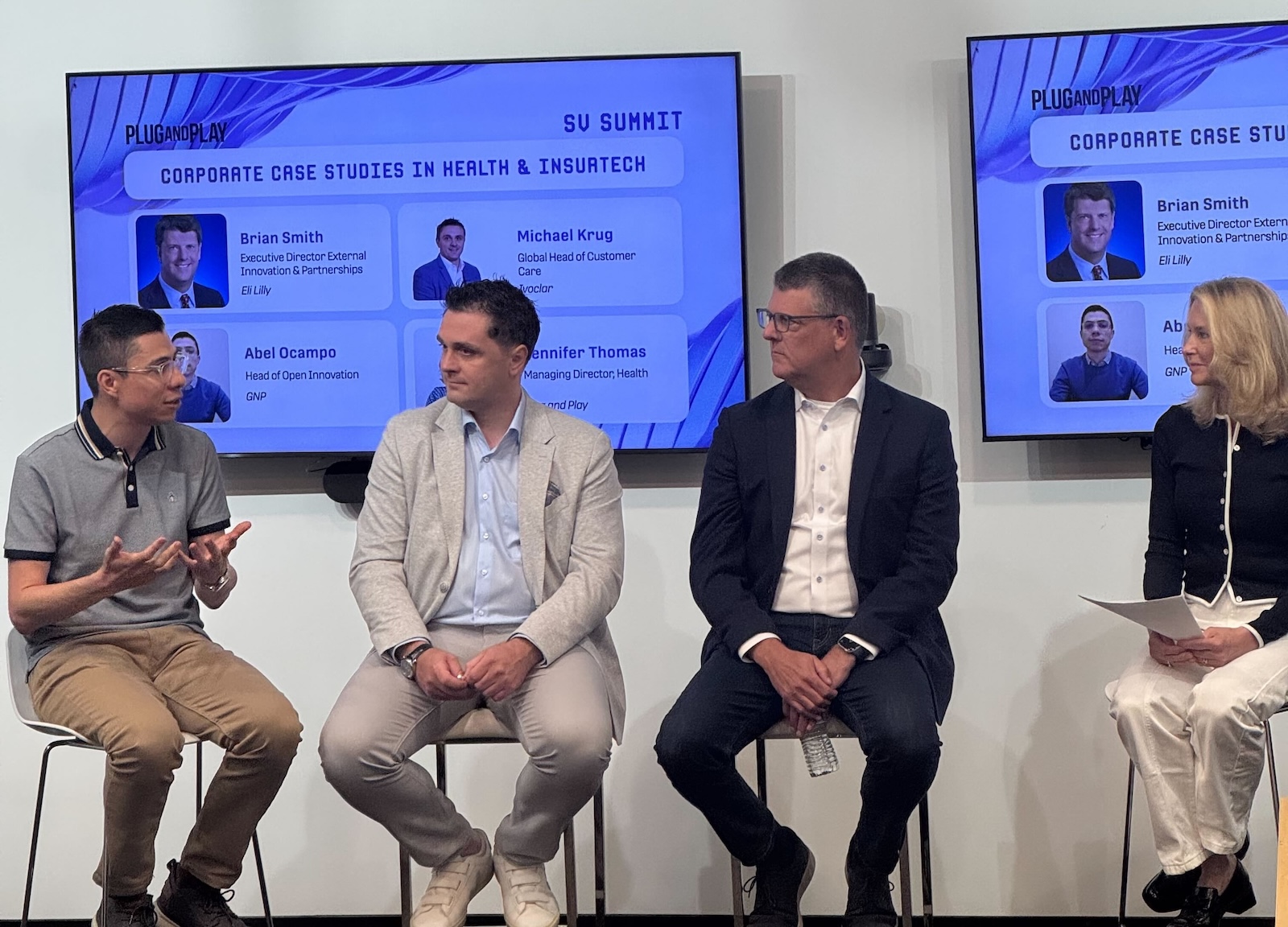
Behind every successful healthcare startup is usually a corporate partner who believed in them early and helped them navigate the complexities of scaling. At the Health Expo, three leaders with deep experience in innovation and partnerships shared what makes these relationships succeed:

  • Brian Smith, Executive Director of External Innovation & Partnerships, Eli Lilly
  • Abel Ocampo, Head of Open Innovation, GNP 
  • Michael Krug, Global Head of Customer Care, Ivoclar

The consensus was clear: these engagements don’t move fast, and they’re not supposed to. The most effective partnerships are built with patience, consistency, and shared goals.

One of the biggest insights is that startups can’t scale inside large organizations without someone on the inside. Corporate partners are essential for guiding startups internally. Their role extends beyond securing an initial project; they are important in helping startups navigate and succeed across various departments, including legal, compliance, and operations. They also emphasized that a real partnership goes far beyond a vendor contract. It’s about solving a problem together, where both sides benefit and grow. 

Whether it’s navigating procurement challenges or aligning priorities, the key is treating startups like collaborators, not contractors. The more energy invested in the relationship, the more likely it is to generate a lasting impact.

That philosophy is exactly what Plug and Play’s pilot model is designed for. Through strategic pilots, startups and corporations collaborate not just as vendors and clients, but as true partners. The result? Long-term impact across compliance, legal, operations, and more. See how this works in action:

Startups shaping the future of Healthcare with the help of AI

This vision of AI as a practical, integrated tool is already being brought to life by emerging startups shaping the future of AI in healthcare by focusing on real-world adoption and reducing friction at every step.

Outfox Health

Outfox Health leverages AI to make healthcare navigation easier for employees and their families. Seamlessly connecting with current health benefits, the platform offers around-the-clock, personalized guidance on insurance coverage, cost options, and provider choices without needing any personal health information.
Radicle Science 

The company conducts AI-driven virtual clinical trials to help wellness brands prove the effectiveness of their products, such as supplements and functional foods. Their platform offers a faster, more inclusive way to validate health claims, improve product formulations, and strengthen consumer confidence through reliable scientific evidence.

Lumiio

Lumiio collaborates with patient organizations, academic researchers, and pharmaceutical companies to develop advanced digital health programs that accelerate improvements in patient care. By specializing in real-world data collection, the startup brings together diverse stakeholders in health communities, aligning their efforts toward the shared goal of better outcomes. Their approach combines traditional social science methods with innovative digital technologies and data science to drive meaningful progress in healthcare.

Tabia Health

A digital health company that uses AI to improve care coordination and patient adherence for chronic conditions. Their platform automates care pathways by integrating data from electronic health records and remote monitoring, helping healthcare providers streamline processes and enhance patient engagement. By aligning treatments with evidence-based guidelines, Tabia Health aims to reduce costs and improve health outcomes for patients worldwide.


Wondering what the future of healthcare looks like? Check out real startup pitches from our SV June Summit — Health Expo and see innovation in action.

 
Download our ebook: Sustainable Solutions for a Healthier Healthcare System Report

The future of healthcare and the steps to take

Across all sessions at the Health Expo, one message kept surfacing: Technology alone won’t transform healthcare. It takes integration, inclusion, and collaboration to make innovation real.

The most impactful ideas weren’t just exciting, they were grounded in what’s actually needed to move healthcare forward in a way that’s scalable, equitable, and sustainable.

Here’s what the path forward looks like:

  1. Integrate AI into real workflows, not just prototypes.
    AI models are improving rapidly, but their impact will be limited unless they’re embedded into the day-to-day systems clinicians already use. It’s not enough to develop a cutting-edge model. The challenge is to make that tool accessible, intuitive, and compatible with things like electronic health records and hospital operations. 

  2. Prioritize health equity from the very beginning.
    From data collection to product testing, innovation needs to reflect the diversity of the communities it aims to serve. That means actively involving underrepresented groups in design conversations, gathering inclusive real-world evidence, and building with, not just for, communities that have historically been overlooked. If we want to reduce disparities, we have to start by including more voices at the table.

  3. Partner deeply to build solutions that reflect real needs.
    The strongest partnerships — between startups and health systems, between corporates and innovators — are the ones that treat collaboration as a long-term commitment, not a quick transaction. These relationships thrive when both sides see each other as co-builders, not just vendors or funders. Scaling innovation in complex systems like healthcare requires mutual trust, patience, and alignment on mission, not just milestones.

  4. Invest in education and digital literacy, not just development.
    Powerful tools don’t change anything if no one knows how to use them. A huge part of the innovation challenge today isn’t technical; it’s educational. That means supporting clinicians, administrators, and even patients with the resources and training to feel confident using new technologies. It also means building tools that reduce complexity instead of adding to it. 

How Plug and Play helps make the future of AI in healthcare innovation real

At Plug and Play, we don’t just talk about innovation — we build it.

We believe healthcare innovation should be measurable, scalable, and inclusive. That’s why we operate at the intersection of startups, corporations, governments, universities and investors to turn bold ideas into real-world solutions.

For many healthcare organizations, the path to innovation is complex. Regulatory hurdles, fragmented infrastructure, and shifting stakeholder needs can stall progress. We help cut through that complexity by curating tailored partnerships designed to solve the sector’s most pressing challenges. Whether it’s improving patient engagement, integrating AI into clinical workflows, or designing more equitable care models, our platform connects the right innovators with the right partners to accelerate outcomes.

Through Plug and Play, our partners can:

  • Collaborate with world-class startups
  • Test and scale new technologies through pilot projects
  • Address challenges in AI implementation, digital health, and health equity
  • Stay ahead of trends across biotech, payers, health systems, and beyond

Ultimately, our goal is to make healthcare innovation more accessible, sustainable, and human-centered, so the future of healthcare works better for everyone. 

The future of AI in healthcare is human-first, equity-centered, and collaboratively built. And the path forward is being paved right now — by startups, corporations, and changemakers alike.


Whether you're looking to pilot new technology or solve a specific challenge, we’ll connect you with the best-in-class innovators to match your needs. Contact us and start building what’s next.


GET IN TOUCH

Ready to start your innovation journey?