The funding landscape: Capital meets innovation
Florida’s early-stage venture capital ecosystem is exploding. According to recent data, South Florida alone saw $900 million in venture deals during the first quarter of 2025. Statewide, Florida ranked sixth nationally in venture capital activity with approximately $4.89 billion invested in 2024, behind only California, New York, Massachusetts, Texas, and Colorado.
The Florida Opportunity Fund, a state-created initiative launched in 2007, has been instrumental in providing early-stage venture capital to startups in life sciences, space technology, manufacturing, and clean energy. Since 2010, Florida has provided more than $202 million in loans and venture capital investments to 149 small businesses, stimulating over $769 million in private capital and creating or retaining nearly 4,967 jobs.
Lake Nona: The living laboratory where theory meets reality
While UCF technology provides the brains, Lake Nona, a 17-square-mile master-planned community in Orlando, serves as the testing ground where innovations prove themselves in real-world conditions.
Tavistock Development Company built Lake Nona as more than just a neighborhood; it’s a “living lab” for smart city technologies. Here’s what makes it exceptional:
Infrastructure that enables innovation:
-
5G Ultra Wideband coverage throughout the community
-
Network of sensors monitoring everything from traffic flow to parking availability
-
Autonomous shuttle fleet operating on fixed routes
-
Smart traffic management systems integrated with vehicle-to-everything (C-V2X) technology
Juan Santos, Vice President for Innovation at Tavistock Development, explains their approach: “We are able to take ideas and bring them into people’s lives in a real-life setting.” Companies wanting to test technologies or concepts can come to Lake Nona and put them in front of thousands of people, getting genuine user interaction that’s impossible to replicate in controlled environments.
The Verizon 5G Innovation Hub, officially unveiled in late 2021, has become a critical asset. With download speeds up to 100 times faster than 4G and latency measured in milliseconds, the facility enables startups to build and test solutions that require real-time data transfer, low-latency responses, and massive device connectivity.
Health tech firms explore remote surgery capabilities. Transportation companies study autonomous vehicle communication. Startups develop augmented and virtual reality tools for training, diagnostics, and design. Sports and fitness programs test wearable technologies that stream real-time biometric data over 5G networks.
The semiconductor connection: NeoCity’s deeptech ambitions
While Orlando focuses on smart cities, another Central Florida location is tackling a different challenge: semiconductor innovation. NeoCity, a cutting-edge technology hub in Osceola County, represents Florida’s ambitions in advanced manufacturing.
In September 2022, Osceola County and its Coalition partners secured a $50.8 million Build Back Better Regional Challenge Grant for NeoCity. These funds expanded the fabrication lab and its manufacturing capabilities, creating opportunities for high-wage technology jobs.
UCF’s involvement extends here as well. The university is a founding supporter of BRIDG (Bridging the Innovation to Development Gap), a state-of-the-art manufacturing facility making wafers used in advanced sensors, optics, photonics, and advanced-system miniaturization. As part of a 2022 Department of Commerce grant, UCF researchers are replicating the semiconductor production line at the Center for NeoVation, using digital twin technology to increase productivity and reliability.
Plug and Play launched its semiconductor accelerator in NeoCity in early 2024, designed to support startups in semiconductors, advanced packaging, and deeptech with strategic emphasis on national security-related initiatives.
The collaborative model: Why Florida’s approach works
What sets Florida university technology apart isn’t just the research quality, it’s the collaborative ecosystem surrounding it. Three key factors make Central Florida’s model successful:
1. Academic-Industry Integration
UCF doesn’t operate in isolation. The university actively partners with corporations like Siemens (implementing smart university infrastructure to improve building and energy grid performance), Duke Energy (collaborating on smart cities energy solutions), and dozens of others seeking innovation and startup partnerships.
2. Government Support
Orange County Government isn’t just a passive observer but is an active participant. The county partnered with Plug and Play to advance smart cities through public-private collaboration, providing regulatory support, infrastructure access, and real-world pilot opportunities that startups desperately need.
3. Private Sector Investment
Organizations like Tavistock don’t just provide funding; they provide physical environments where technologies can be tested at scale. Lake Nona’s investment in smart city infrastructure created the testbed that makes rapid innovation cycles possible.
Dr. Mubarak Shah, who leads UCF’s role in the $26 million NSF Engineering Research Center for Smart Streetscapes, emphasizes this collaborative advantage: “Building upon many years of research collaboration between UCF and Columbia University, we are pleased to be part of this NSF Engineering Research Center, where we will leverage our world-class research in Computer Vision to solve real-world problems related to smart, secure and private cities."
Real-world impact: Traffic that flows like schools of fish
Agarwal’s latest research at UCF provides a glimpse into smart city possibilities. 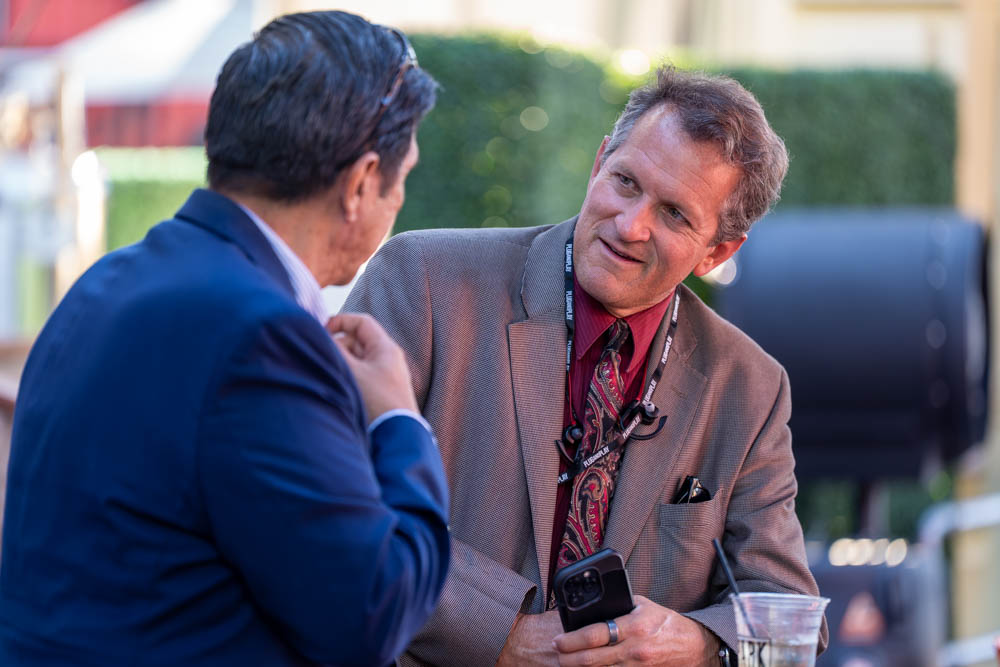 Imagine traffic moving with the harmonious speed and efficiency of a school of fish, rather than the stop-and-go crawl we experience today. In this vision, autonomous vehicles utilize sensors to exchange information with each other and with infrastructure, thereby creating coordinated movement patterns that reduce congestion.
This isn’t science fiction, it’s active research with real applications. The CS3 project focuses on developing streetscape applications to forge livable, safe, and inclusive communities. More than 80% of Americans and over half the world’s population live in urban areas. High-density cities are transforming how people live, work, travel, and manage infrastructure.
Understanding complex streetscapes in real time requires fundamental engineering advances. A smart streetscape can instantly sense human behavior and guide disabled pedestrians, collect refuse, control pests, amplify emergency services, and protect people against environmental and health threats. It addresses unmet needs in road and public safety, traffic efficiency, assistive technologies, outdoor work, and hyper-local environmental sensing.
The talent pipeline: Preparing tomorrow’s innovators
A distinct demographic is drawn to UCF's master's program in smart cities: a large number of students are working professionals who are retraining for the urban technology economy. Experienced professionals gain cutting-edge technical skills and return industry knowledge to academic research, creating a positive feedback loop.
The interdisciplinary nature of the program is essential. In addition to engineering, students also study public administration, transportation systems, environmental engineering, and water resources management. Graduates are better equipped to handle the complicated, multi-stakeholder environment that smart city projects necessitate thanks to this all-encompassing approach.
As Florida’s tech ecosystem continues maturing, the talent pipeline UCF is creating becomes increasingly valuable. Companies relocating to Central Florida find graduates who understand both the technical and practical challenges of urban innovation.
Looking ahead: Florida’s smart city future
The momentum building around Florida university technology and smart cities isn’t slowing down. Several trends point to accelerating growth:
-
Expanding research capabilities: UCF received a $1.155 million grant from the U.S. Department of Education in February 2024 to establish a new graduate certificate program focused on digital twin technology. The program, expected to launch in 2025, will strengthen the university’s talent pipeline to the rapidly growing digital twin industry.
-
Growing corporate presence: Major companies continue choosing Central Florida for innovation work. Siemens Energy recently announced the relocation of its Orlando offices to Lake Nona Town Center, occupying over 242,000 square feet in a new Class A office building.
-
Increasing venture capital activity: Florida’s startup ecosystem includes nearly 500,000 accredited investors at different stages. Angel and seed rounds account for 59% of all venture deals in Florida, providing crucial early-stage funding for university spin-offs and technology startups.
-
National recognition: The collaboration between UCF, Plug and Play, and regional partners is attracting attention nationwide. Startups from outside Florida are expressing interest in relocating after learning about the region’s technological capabilities through these programs.
Plugging into the innovation platform
For entrepreneurs, corporations, and researchers interested in smart cities, Central Florida offers a unique opportunity: a comprehensive innovation ecosystem where academic research, corporate partnerships, government support, and real-world testing environments converge.
UCF technology provides the foundation for world-class research programs, talented graduates, and faculty expertise in fields ranging from computer vision to transportation engineering. The early-stage venture infrastructure provides capital, mentorship, and business development support. Living laboratories, such as Lake Nona, provide testbeds where concepts can prove themselves under real-world conditions.
This isn’t just about building better cities; it’s about creating sustainable, equitable, and technologically advanced urban environments that improve the quality of life for everyone. From reducing traffic congestion and energy consumption to enhancing public safety and accessibility, smart city technologies developed through Florida university technology are addressing challenges that affect millions of people.
As Agarwal reflects on UCF’s smart cities work, his optimism is contagious: “These people have always had ideas, and now their ideas have the potential to be grown into startups, then incubated, and perhaps supported through Plug and Play’s network. It’s still early, but that’s what makes this an exciting time. We’re just getting started.”
For anyone watching the smart cities revolution unfold, Central Florida, powered by UCF technology and supported by a thriving early-stage venture ecosystem, has positioned itself at the center of this transformation. The question isn’t whether smart cities will reshape how we live, work, and move through urban spaces. The question is whether other regions can replicate the collaborative model that’s making Florida a national leader in this space.
The answer emerging from Orlando is clear: innovation happens fastest when universities, corporations, governments, and entrepreneurs work together toward shared goals. Florida university technology is proving that thesis every day, one smart city solution at a time.
Learn more about how Plug and Play is connecting startups, corporations, and universities to accelerate smart city innovation in Orlando.
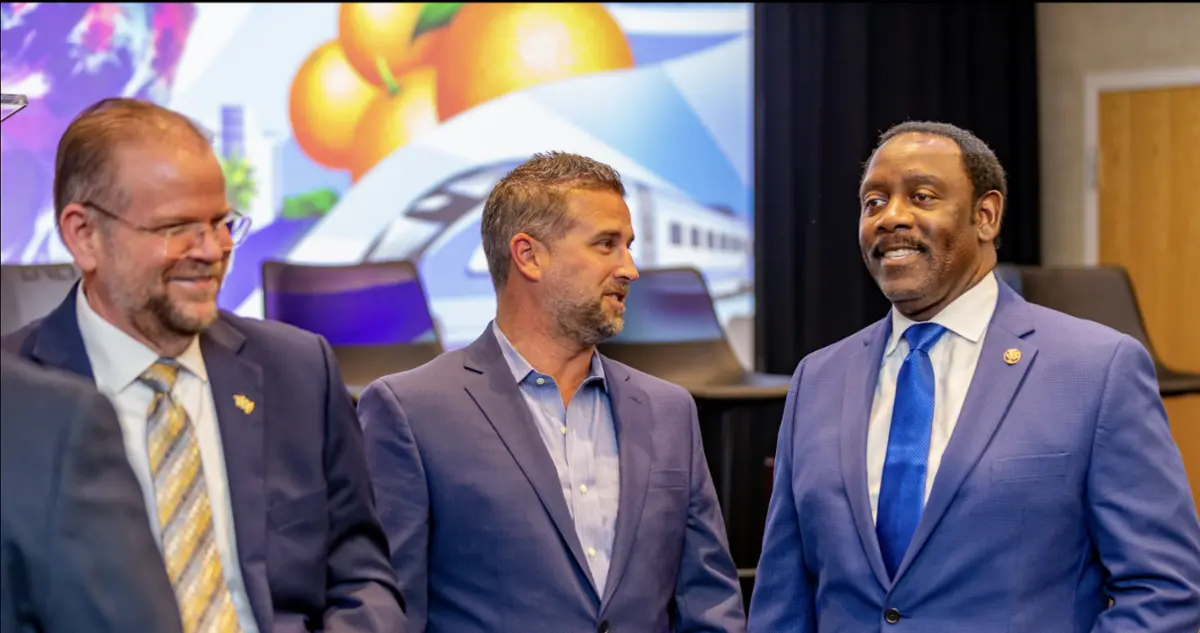
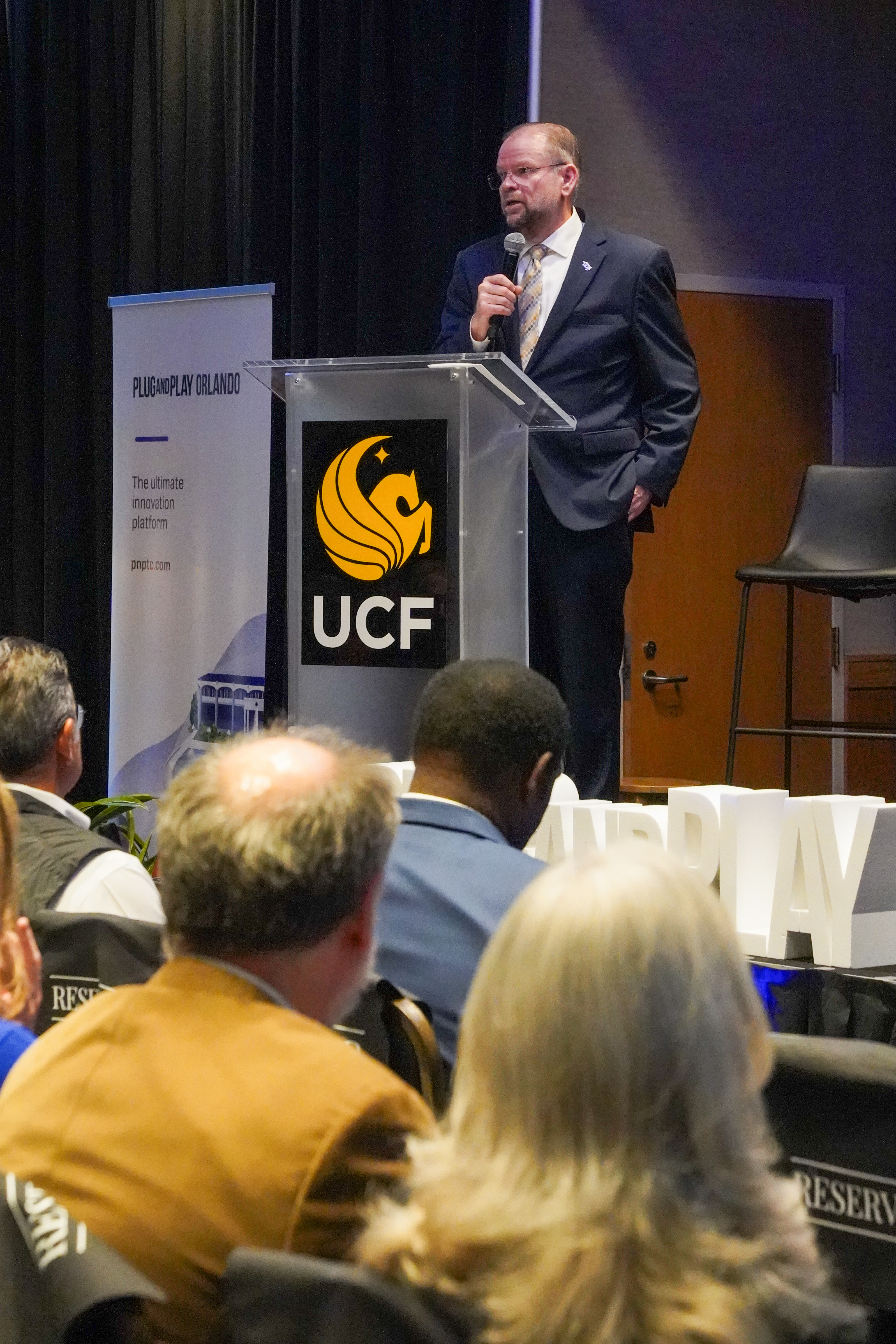 building them from the ground up. In a historic move, UCF launched the nation’s first smart cities master’s degree track within the engineering field. This program fuses cutting-edge technology with disciplines focused on water and air quality, transportation, land development, and public policy.