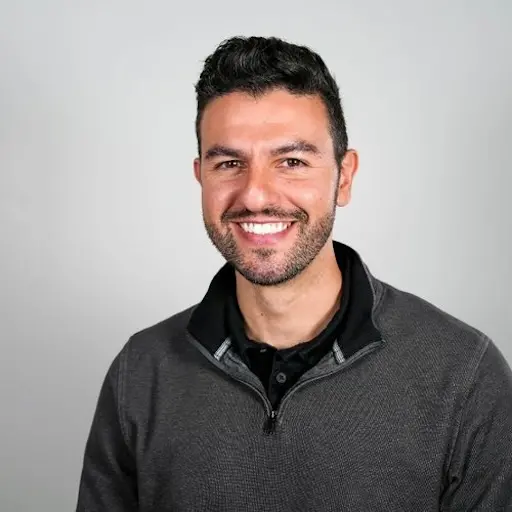
How BigID Became a Data Privacy Unicorn: An Interview with Co-Founder & CEO Dimitri Sirota
Learn how BigID became a data privacy unicorn in our chat with CEO Dimitri Sirota and how they’re reshaping data security and compliance.
At the Plug and Play Japan Summit in Tokyo, we had the opportunity to sit down with Dimitri Sirota, CEO of BigID, to discuss his company’s journey and insights into the evolving landscape of data security and compliance. Having grown from a startup backed by Plug and Play to a unicorn company with 600 employees, BigID has played a significant role in addressing the challenges of data privacy and sovereignty in today’s digital world.
Here’s how Sirota and his team built BigID from scratch and reshaped the future of enterprise data protection.
From startup struggles to industry leader
Q: Can you tell us about the story behind your company?
Dimitri Sirota: The company’s story revolves around identifying a problem. This is my third company — I’ve always been an entrepreneur, almost since I graduated from university with a degree in physics. It’s fun. I enjoy being an entrepreneur because every day is different.
After selling my last company, I worked for the acquiring company for a couple of years while obtaining my U.S. green card. Once I secured it, I resigned and started thinking about my next venture. I wanted to leverage my background in security, data security, and identity security. I noticed a growing opportunity driven by changes in regulations around data privacy, healthcare, and data sharing.
We saw a chance to reimagine data security and compliance for this new era, one in which privacy and data sovereignty had become top concerns. That idea became the foundation for what would eventually become BigID.
Q: You mentioned your company is solving a specific challenge in data security. Can you elaborate on that?
Sirota: We focus on data security but with a modern approach. A lot has changed since the first generation of security technologies emerged in the early-to-mid 2000s. By the time we started, nearly a decade later, several key factors had shifted.
First, new regulations, such as data privacy laws, introduced requirements that gave individuals more control over their data. Second, much of the data had moved to the cloud, unlike a decade prior when most data was stored in just a few on-premise sources. Finally, advancements in machine learning and AI provided new tools that didn’t exist when earlier security technologies were developed.
With these changes in mind, we built a platform that helps organizations not only understand their data but also take action — ensuring compliance and enhancing security.
Q: How does your company fit into the broader digital landscape?
Sirota: I wouldn’t necessarily call it creative, but our company is built around what I believe to be the digital lifeblood of an enterprise — data. Every company operates on the data they collect and process; it’s at the core of how businesses function.
The importance of data became even more evident during the pandemic when most of us worked remotely. Our only way to interact with colleagues, employers, and other businesses was digitally. This reinforced the reality that data is central to value creation but also a source of risk — both regulatory and security-related. Knowing where data is, whose data it is, and how it’s being used is critical for companies to both drive value and mitigate risk.
Q: What were some of the biggest challenges your startup faced in the early days?
Sirota: Raising money was our first major hurdle. Unlike some of the stories you hear today about founders securing $100 million based on just a pitch deck, that wasn’t our experience. We struggled. In fact, it was the very last investor we pitched who finally gave us a term sheet — for just $2 million.
Beyond funding, our next challenge was proving that what we were building mattered to customers. Securing those first customers took time — about two years. While that might not seem long in the enterprise space, proving product-market fit and getting customers to pay was critical.
Once we had initial traction, we had to demonstrate repeatability — showing that different companies across geographies faced the same problem and needed our solution. Finally, we had to scale — hiring leaders, expanding operations, and proving that our solution had global relevance.
Q: Was there a defining moment or turning point for the company?
Sirota: Every company faces multiple inflection points and near-death experiences. We were no different. In the early days, we nearly ran out of money, and I had to cold-call companies and negotiate aggressively just to generate $1 million in revenue within three months.
The biggest turning point, however, came when we moved from being considered a niche or peripheral player to being recognized as an industry leader. This shift happened when regulations like GDPR gained attention. In 2018, we were invited to present at the RSA Innovation Sandbox, and, against all odds, we won.
Winning that competition was a game-changer. The RSA Innovation Sandbox has a strong track record — past winners have gone on to become major companies like CrowdStrike. Our win validated our business, attracted financial interest, and increased visibility in the industry. It was a critical milestone that helped propel us forward.
Q: Can you tell us about your experience raising funding for BigID?
Sirota: It was tough. I had raised money for two prior companies in Canada, but as it turns out, what you do in Canada doesn’t always translate to credibility in the U.S. When we started, our pitch was simple — protection and privacy for personal information. However, the challenge was convincing investors that privacy could be a business rather than just a legal compliance issue.
We generated a lot of interest from investors, but none were willing to make that leap and invest in us. That made fundraising a real struggle. Even after securing some funding, we faced another hurdle — we didn’t have the revenue to validate our business model or thesis. At one point, I had to contribute personal funds to extend our runway and cover payroll, buying us enough time to win customers.
It became a mad rush, as I was the only person in the U.S., and we had to secure customers at all costs. Through a mix of luck and strong salesmanship, we managed to generate $700,000–$800,000 in revenue within a few months. That gave us the proof points we needed to secure our Series A. Winning the RSA Innovation Sandbox further helped, and after that, raising money became somewhat easier. For two years, we were raising funds nearly every six months, but it all started with a very difficult journey.
Q: When did Plug and Play get involved?
Sirota: Right at the beginning. Plug and Play participated in our original $2 million round. They understood the personal data protection problem and the changing privacy landscape in Europe, which many American investors at the time didn’t fully grasp. Their support was crucial. I was introduced to them by our lead investor, and we flew out from New York to meet them. The team was incredibly gracious and gave us a response within 24 hours. They’ve been fantastic partners ever since. The person who drove the investment, George, remains a close friend — we still text all the time.
RELATED EBOOK:The Future of Retail Banking — Gain access to essential insights into how banks are evolving, what’s driving this change, and how you can stay competitive in this dynamic environment.
“I like founders who deeply understand their market, and Dimitri was a thought leader in privacy and data protection. He wasn’t just pitching investors — he was teaching us. That kind of expertise and conviction is infectious, and it helps attract top talent, customers, and further investment. Even today, that same energy continues to drive BigID’s success.”
— George Damouny, Partner, Ventures, Plug and Play
Q: Did you celebrate when you secured funding?
Sirota: We were incredibly relieved when we closed the $2 million round. There were many hurdles along the way, including one investor who unexpectedly passed away, which complicated things. We also had a third co-founder who decided midway through that they wanted to stay at their current company. Nothing about getting BigID off the ground was easy. But once we closed the round, we were deeply grateful to Plug and Play and our other investors. We immediately moved on to the next phase of our journey.
Q: How does it feel to see BigID’s growth today?
Sirota: It’s incredibly rewarding. We’re proud to have reached unicorn status and to be recognized as a leader in the space, having surpassed $100 million in revenue. It wasn’t easy, and it didn’t happen overnight. We’re especially appreciative of investors like Plug and Play, who have supported us along the way and provided key introductions and guidance. Seeing where we are now is something we take a lot of pride in.
Q: What advice would you give to other entrepreneurs?
Sirota:
Forget business school — think like an immigrant. My family immigrated to Canada, and later, I immigrated to the U.S. Immigrants do whatever it takes to survive and provide for their families. That mentality — hustling and being resourceful — is critical for a startup founder.
Embrace experimentation. My background is in physics, so I value the scientific method. You won’t always have the right answer from the start. Test hypotheses, see what works, and be prepared to pivot.
Don’t be a jerk. This isn’t just your journey; it’s your entire company’s journey. Your team is making sacrifices alongside you. If relationships sour or you need to let someone go, do it with respect and empathy. A positive company culture is crucial for long-term success.
Q: What’s next for BigID?
Sirota: Right now, we’re focused on the operational metrics needed to prepare for an IPO. It’s not imminent — we’re likely three years away — but we’re investing in the necessary infrastructure now. That includes building out financial systems for audited financials, strengthening sales operations for accurate forecasting, and refining our product to be enterprise-ready. Our goal is to transition from $100 million in revenue to a scalable, repeatable business that can go public.