
THE LATEST UPDATES IN SUPPLY CHAIN

Chain Reactions

Chain Reactions is your go-to content feed, brought to you by Plug and Play Supply Chain & Logistics and Advanced Manufacturing. Our goal is to empower industry leaders, entrepreneurs, and supply chain professionals with timely insights and analysis to help navigate the changing landscape of policy, industry, and technological innovations.

November 2025

From Capital to Collaboration: Amazon’s $1B Push for Industrial Innovation

Summary

  • Amazon launched the $1 billion Industrial Innovation Fund in 2022 to support startups advancing automation, robotics, and AI.
  • The fund focuses on improving safety, efficiency, sustainability, and scalability across global operations.
  • In partnership with Plug and Play, Amazon runs Innovation Challenges to identify and pilot cutting-edge logistics technologies.
  • Over 20 investments have already been made in areas like packaging visibility, yard orchestration, and advanced robotics.
  • Amazon combines venture investment with collaboration, providing startups with access to its expertise and infrastructure.
  • The company prioritizes technologies that enhance employee experience, reduce risks, and support sustainability goals.
  • 700,000+ employees have been upskilled for new roles in robotics and automation since 2019.
  • Franziska Bossart shares insights on:
  • The value of external VC models for innovation
  • Differences between the U.S. and European tech ecosystems
  • The next decade of human–robot collaboration in warehouses


Introduction to Amazon’s Industrial Innovation Fund

Plug and Play: Amazon has been actively investing in new technologies to drive supply chain innovation. Could you tell us more about the $1B Amazon Industrial Innovation Fund and how it is designed to support emerging solutions?

Franziska Bossart: The Amazon Industrial Innovation Fund is a $1 billion venture investment program specifically designed to accelerate and support emerging technology companies through direct investments. Since launching in 2022, we've made over 20 investments in promising technology companies that are helping to transform warehouse automation and supply chain innovation.

What makes our approach unique is that we're not just providing capital, we're creating an environment for innovation. In 2024, we launched our Innovation Challenge program in collaboration with Plug and Play, which helps us uncover, elevate, and accelerate groundbreaking technologies. These challenges focus on specific operational needs, such as our Packaging Visibility challenge and our Middle Mile Yard Orchestration challenge, and provide selected companies with direct access to Amazon's resources and expertise.


Plug and Play: Can you elaborate on why an external VC model is critical to your long-term innovation strategy?

Bossart: The external venture capital model is fundamental to our innovation strategy for several reasons. First, it allows us to tap into a broader innovation ecosystem beyond our internal R&D efforts. While Amazon has robust internal innovation capabilities, we recognize that transformative ideas can emerge from anywhere, particularly from nimble startups focused on solving specific problems.

Additionally, the external model helps us identify diverse approaches to similar challenges. By investing in multiple companies addressing similar problems but taking different technological approaches, as we did in our Packaging Visibility Innovation Challenge with companies using everything from radio frequency sensors to X-ray CT scanners, we can compare solutions and identify the most effective technologies for different use cases.

Plug and Play: What prompted the decision to launch the fund last year — was there a specific motivation or timing behind it?

Bossart: The Fund was launched in 2022 as a strategic response to the acceleration of supply chain challenges and opportunities we were observing in the market. Several factors converged to make this the right time for such an initiative. We recognized that advancements in artificial intelligence, machine learning, robotics, and computer vision had reached an inflection point where they could deliver transformative value in industrial settings. The groundwork for this technology has been in development for decades, but now we’re seeing many pieces coming together to further drive innovation.

Plug and Play: Beyond operational efficiency, what are the key performance indicators for a successful fund investment? How do you measure success in terms of safety, employee experience, and sustainability?

Bossart: While operational efficiency is certainly important, our evaluation of fund investments extends to several other critical metrics that align with Amazon’s broader values and priorities.


  • Safety: The safety of our employees and partners is a paramount consideration. We look for technologies that can reduce workplace risks and repetitive motions.
  • Employee Experience: We measure success by how technologies enable our team members to take on more skilled, engaging roles.
  • Sustainability: We evaluate technologies that can help reduce waste, improve energy efficiency, or otherwise support our environmental goals. For example, technologies that optimize packaging or improve transportation efficiency can have significant sustainability benefits that we measure and track.
  • Scalability: We look at the scalability and integration potential of new technologies, how well they can be deployed across our global operations, and how effectively they integrate with existing systems.

Innovation Challenges

Plug and Play: Can you walk us through the journey of a startup in the challenge? What specific resources does Plug and Play provide that are invaluable to that process?

Bossart: The journey of a startup in our Innovation Challenge begins with our careful definition of specific operational challenges that we're seeking to address.

Once we define the challenge, we conduct global scouting to identify the most promising technologies addressing these specific needs. We evaluate companies based on their technical capabilities, team expertise, market potential, and alignment with our operational requirements. Selected companies are then invited to an in-person Innovation Day, where they have the opportunity to present their solutions directly to Amazon business leaders and technical experts. This is a crucial step in the process, as it allows for deep technical discussions and exploration of potential use cases. Following the Innovation Day, the most promising startups may receive investment from the Industrial Innovation Fund.

Throughout this process, we collaborate with Plug and Play, which provides several invaluable resources. They help expand our global reach in identifying promising startups, leverage their extensive network to surface innovative companies we might not otherwise discover, and provide logistical and organizational support for the Innovation Days.

Plug and Play: How do you surface use cases from the business units and decide which ones to prioritize?

Bossart: Surfacing and prioritizing use cases is a collaborative process that begins with close engagement with our business units across Amazon’s global operations. We maintain regular communication with operational leaders to understand their most pressing challenges and opportunities for innovation.

Market Outlook: Robotics, AI, & Technology

Plug and Play: How do you view the current market landscape? From your perspective, what is still missing, and where do you see the greatest opportunities for the future?

Bossart: The current market landscape for supply chain technology is extraordinarily dynamic. AI and machine learning algorithms have reached a level of sophistication where they can process vast amounts of data, make complex decisions, and learn from experience in industrial settings. This is enabling automation of increasingly complex tasks. Computer vision systems have made remarkable progress. Companies are demonstrating how AI-powered vision can accurately track and manage inventory with unprecedented speed and precision.

In terms of what’s still missing, several areas present significant opportunities:

First, we see great potential in more advanced robotic manipulation systems. While robots excel at moving standardized objects in predictable environments, handling the diverse array of items in e-commerce fulfillment remains challenging. Advances in gripper technology, tactile sensing, and AI-driven manipulation would unlock new automation possibilities.

Second, we see a need for better integration and orchestration systems that can coordinate different automation technologies across the supply chain. Siloed automation solutions often create bottlenecks rather than end-to-end efficiency.

Finally, we see tremendous potential in technologies that make automation more accessible and adaptable. Historically, industrial automation required significant capital investment and specialized expertise. Solutions that lower these barriers could democratize automation across industries and company sizes.

Plug and Play: As automation takes on repetitive tasks, what new roles are being created? How is Amazon investing in training and upskilling its employees to work with these new technologies?

Bossart: As automation technologies take on more repetitive and ergonomically challenging tasks in our operations, we're seeing the emergence of numerous new roles that leverage uniquely human skills and capabilities. Since introducing robotics into our operations in 2012, the company has created hundreds of thousands of new jobs and many new categories of new skilled roles within Amazon that didn't exist previously. These new roles include higher-skilled and higher-paying roles, such as Reliability and Maintenance Engineers (RME), who take care of the robots and Flow Specialists.

To support employees in transitioning to these new roles, Amazon has made significant investments in training and upskilling programs. We announced earlier this year that over 700,000 hourly operations employees have been upskilled since 2019. That includes education, skills training, and participating in apprenticeships like the Amazon Mechatronics and Robotics Apprenticeship program, which provides classroom learning and on-the-job training to prepare employees for technical maintenance roles in our robotics facilities.

These investments reflect our understanding that automation doesn’t simply replace jobs—it transforms them. By providing accessible pathways for employees to develop new skills, we’re ensuring our workforce can evolve alongside our technology and continue to build rewarding careers.

The U.S. & Silicon Valley vs. Europe

Plug and Play: Having worked across different geographies, how would you compare the innovation ecosystems of the U.S., particularly Silicon Valley, with Europe? What do you see as the main differences in terms of technology development, adoption, and long-term outlook?

Bossart: The innovation ecosystems in the U.S. and Europe each have distinctive characteristics that influence how technology development occurs across these regions.

Silicon Valley and the broader U.S. innovation ecosystem benefit from several structural advantages: deep pools of venture capital, a culture that celebrates entrepreneurial risk-taking, and strong connections between academic institutions, investors, and industry. This creates an environment where bold ideas can quickly attract substantial funding and talent.

The U.S. ecosystem also tends to emphasize rapid scaling and market dominance, with many startups pursuing aggressive growth strategies from early stages. This approach has led to the creation of numerous global technology leaders and platform companies.

Europe, by contrast, offers a more diverse innovation landscape with distinct regional strengths. For instance, Germany and the Nordic countries have particularly strong traditions in industrial technology, robotics, and sustainable innovation — areas highly relevant to our Industrial Innovation Fund.

European startups often demonstrate exceptional technical depth and efficiency in capital deployment. With historically less abundant venture funding than their U.S. counterparts, European founders typically develop business models that prioritize sustainable growth and profitability alongside scale.

The long-term outlook for both ecosystems is promising. At Amazon, we see tremendous value in engaging with both ecosystems. Our global approach to innovation investments allows us to tap into the complementary strengths of different regions.

Outlook for the Future

Plug and Play: How do you envision human-robot collaboration in warehouses and factories evolving over the next 5–10 years?

Bossart: Over the next 5–10 years, I envision human-robot collaboration in warehouses and factories evolving toward increasingly sophisticated partnerships that capitalize on the strengths of both.

First, we’ll see the rise of more intuitive and adaptive robotic systems. Rather than requiring humans to adapt to robots, next-generation systems will interpret human intent and adapt to human behaviors. Technologies like Amazon’s Sequoia system, which integrates multiple robot systems to containerize inventory, represent early steps in this direction, allowing us to identify and store inventory up to 75% faster than traditional methods.

Second, advances in perception systems will enable robots to operate safely in less structured environments. Current systems often require a clear distinction between human and robot workspaces, but improved computer vision and sensor technology will allow for more fluid collaboration without compromising safety.

Third, artificial intelligence will play an increasingly important role in orchestrating human-robot teams, dynamically allocating tasks based on the comparative advantages of each. Routine, predictable tasks will be handled by automation, while humans will focus on exception handling, quality control, and tasks requiring dexterity or judgment that robots cannot yet perform effectively.

Our vision is one where technology handles the routine, repetitive, and physically demanding aspects of fulfillment, freeing humans to apply their uniquely human capabilities — creativity, problem-solving, adaptation, and customer empathy — to deliver ever-improving experiences for customers. This collaboration will make operations safer and more efficient while creating more engaging and rewarding roles for employees.


September 2025

Apian’s Visit to Arkansas: A Plug and Play Portfolio Note

The Startup

Founded by a team of National Health Service doctors, Apian aims to integrate drones and autonomous delivery systems into healthcare logistics operations. Their platform connects healthcare systems with various robotics infrastructure to create a fully autonomous, on-demand delivery network that cuts down logistics time and costs. The goal is to get critical supplies where they’re needed faster, improving patient outcomes and reducing strain on staff.

Our Hypothesis

Our support began with market analysis to find regions in the U.S. where Apian can have the biggest impact. For Apian, our research pointed to Arkansas. A state often overlooked in the national healthcare conversation, Arkansas is ranked 47th out of 50 in healthcare outcomes. With nearly 40% of its population in rural areas and over 70% of its rural hospitals financially vulnerable, Arkansas provides a unique environment where innovative logistics have a profound potential to save lives. 

Alongside Arkansas, neighboring states like Mississippi also face significant healthcare challenges, ranking among the lowest in the country. However, we have a strong network in this region, supported by initiatives led by the Walton Family, who are actively funding initiatives to improve the healthcare system. This local presence and funding availability made Arkansas a perfect starting point for Apian to explore U.S. expansion.

The Visit

To support Apian’s U.S. market exploration, we brought their founder and CEO, Alexander Trewby, to Northwest Arkansas. We arranged meetings with decision-makers and folks involved in operations to help Apian pitch itself, better understand day-to-day healthcare logistics, and identify real healthcare logistics bottlenecks in Arkansas and beyond. These conversations provided practical insights to inform their expansion strategy. We also connected Alexander with regional investors, including Echo Health Ventures, 46VC, and Maniv, to open doors for funding and local partnerships.

This visit was structured to provide a complete picture of regional healthcare transformation. We carefully prepared each stakeholder by sharing Apian’s value proposition and visit details in advance, setting the stage for the crucial engagements that followed.

Walton Family Foundation Meeting: Philanthropic Mission & Systemic Gaps

Rationale: To understand how their philanthropic efforts and initiatives help address the persistent gaps in rural healthcare. Among many subjects, the foundation's focus is on improving healthcare access, supporting rural hospitals’ financial stability, and investing in community health programs that aim to reduce disparities in care.

Outcome for Apian: Through discussions with Foundation representatives, Apian gained a deeper understanding of the systemic social and infrastructure challenges impacting healthcare delivery in Arkansas. 

Northwest Arkansas Council: Market Navigation & Local Gateways

Rationale: To leverage the Council’s role as a regional connector and facilitator for new ventures, especially through their StartupNWA initiative, which supports early-stage companies with local resources, community connections, and talent acquisition.

Outcome for Apian: Apian gained direct insight into how local startups handle regulations, operations, and talent challenges, and understood the practical support available if they chose to expand there.

RZC Investments: Credibility & Influence

Rationale: To establish a relationship with one of the region’s most influential investment firms (Tom and Steuart Walton’s firm and Plug and Play’s limited partner).

Outcome for Apian:  The meeting put Apian on the radar of a key local influencer whose backing adds credibility and can shape regional priorities, making this connection a valuable asset for their U.S. expansion.

UAMS: Operational Realities & Decision-Makers

Rationale: To connect Apian with senior leaders at a major healthcare institution for an in-depth look at practical deployment challenges.

Outcome for Apian: This was a core session to understand what it would take to deploy drone logistics in a U.S. hospital. Discussions went beyond regulations and workflow, examining how Apian’s multi-operator drone platform experience in London could inform scalable solutions for the U.S. The focus was on adaptive change management, interoperability with legacy systems, and rigorous Health Technology Assessment. This was a systems-level exploration of how to engineer innovation for Arkansas, leveraging lessons from the UK.

Walmart Health & Wellness: The Collaborative Deployment Piece

Rationale: To assess Walmart as a potential partner for a meaningful, collaborative deployment.

Outcome for Apian: Discussions with the VP of Product Management & Executive Vice President focused on the technical and operational requirements for integrating Apian’s solution with Walmart’s infrastructure and regional hospital networks. Key considerations included regulatory compliance, interoperability with existing systems, and scalability across diverse healthcare environments. The meeting served as a litmus test for whether the partnership could drive systemic change. The outcome was a clear evaluation of whether the collaboration could serve as a reference for future healthcare logistics innovation.

Conclusion

Our work in Arkansas was an exploratory step to help Apian understand the U.S. healthcare logistics landscape and assess whether their technology could fit in this market. The visit focused on learning, building initial relationships, and identifying potential challenges, not on immediate deployments. While no pilots are launched as of now, Apian gained valuable insights and contacts that will inform their next steps as they consider expansion. This groundwork lays a solid foundation for future opportunities in a region with significant healthcare needs.

Founder’s Reflection

Below is a note from Alexander Trewby, Apian’s CEO, sharing his thoughts on the Arkansas visit:

“The initial meeting with the Walton Family Foundation inspired the possibility of funded collaborations with UARK’s Institute for Integrative & Innovative Research, as well as with Ryan Cork at the medical school. Serafina and Ron made me feel very welcome, and the three VC meetings were informative. Harry and I capped the visit off with a truly excellent meeting with Walmart’s EVP of Health & Wellness, who appeared keen to explore a partnership on drone delivery of prescriptions.

I’ll keep you posted as things progress. In the meantime, thank you all again for the incredible amount of work you put into making the trip such a success. As the state motto goes, the people rock!”

— Alexander Trewby, CEO, Apian

Praj’s Note

"For me, this Apian’s visit underscored the power of our platform. We systematically plan, research, and curate every meeting. This is how we gain crucial insights and build connections. It’s all about enabling our portfolio companies to identify challenges, forge partnerships, and refine their strategy through direct engagement with key stakeholders and investors."

— Praj Deshkar, Ventures Associate, Plug and Play 


Looking for more from Apian’s journey? Explore Alex Trewby’s perspective alongside other founders on growth, culture, and fundraising in health innovation.

May 2025

Tariff News, Trade Shocks, & the Steel Stress Test

Steel as a Strategic Indicator: What Tariff News Reveals About Industrial Vulnerability

As recent tariff news has shown, steel is not the only sector affected; it is one of the most strategically exposed. It is a foundational input across automotive, construction, defense, shipbuilding, and energy industries. Any disruption in steel pricing or availability can create significant downstream effects.

When the United States reinstated a 25% tariff on most foreign steel imports, citing national security concerns and the importance of maintaining domestic production capacity, Canada — one of the US’s top steel suppliers and a key ally under NAFTA/USMCA — swiftly responded. In retaliation, Canada imposed a 25% tariff on vehicles imported from the US that did not comply with USMCA regulations.

However, these tariffs don’t occur in isolation. They exposed deeper vulnerabilities in supply chain design, industrial capacity, and policy coordination.


The Steel Gap: Production vs. Consumption

The US produces about 80 to 90 million metric tons of steel annually, but it consumes closer to 110 million. That means 20 to 30 million tons still must be imported yearly, regardless of tariffs. Without significant investment in next-generation, low-emissions steel facilities (such as hydrogen-based DRI or EAF retrofits), the US will remain vulnerable to global price swings and political fallout.


Global Steel Market Dynamics


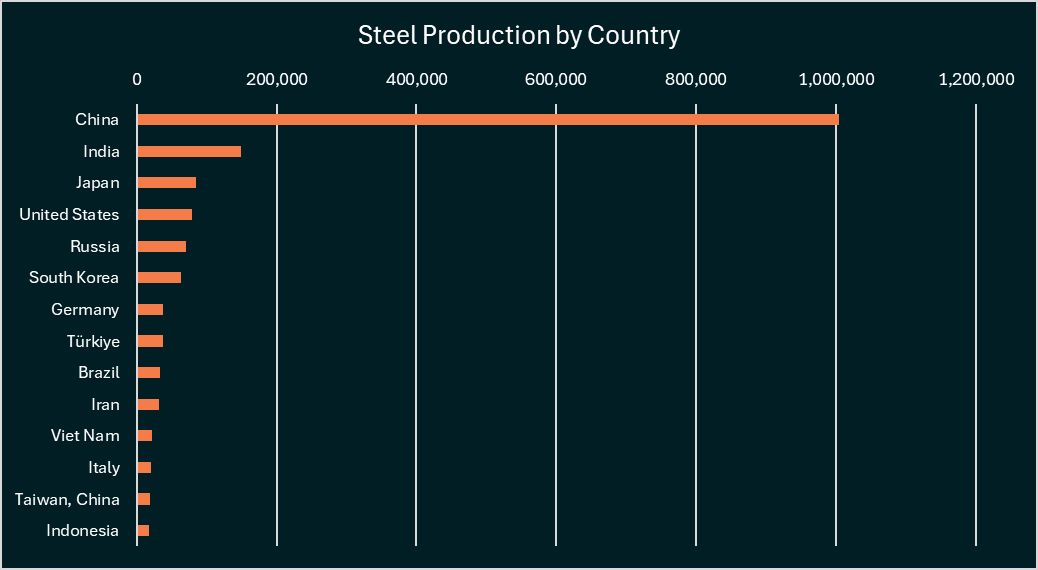
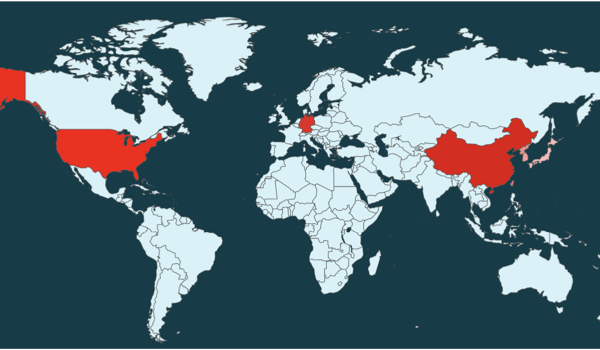
Chart 1: Global Steel Production by Country

China continues to lead global steel production, accounting for over 53% of the world’s output. Meanwhile, the United States relies on imports for more than 25% of its steel supply, with the majority sourced from neighboring countries like Mexico and Canada, as well as key allies in Asia and Europe, such as Japan, South Korea, and Germany. This dependency highlights vulnerabilities stemming from international competition, insufficient domestic investment, and inconsistent policy measures. The question remains whether current tariff policies are sufficient to restore America’s leadership in steel production.


Chart 1: Global Steel Production by Country (Ceres Technology)
This dependency makes the US vulnerable to foreign competition, policy misalignment, and underinvestment at home. As trade negotiations ramp up, it should become clearer whether the current trade policies will do enough to bring back and grow an industry they once dominated.


Market Signals and Futures Contracts

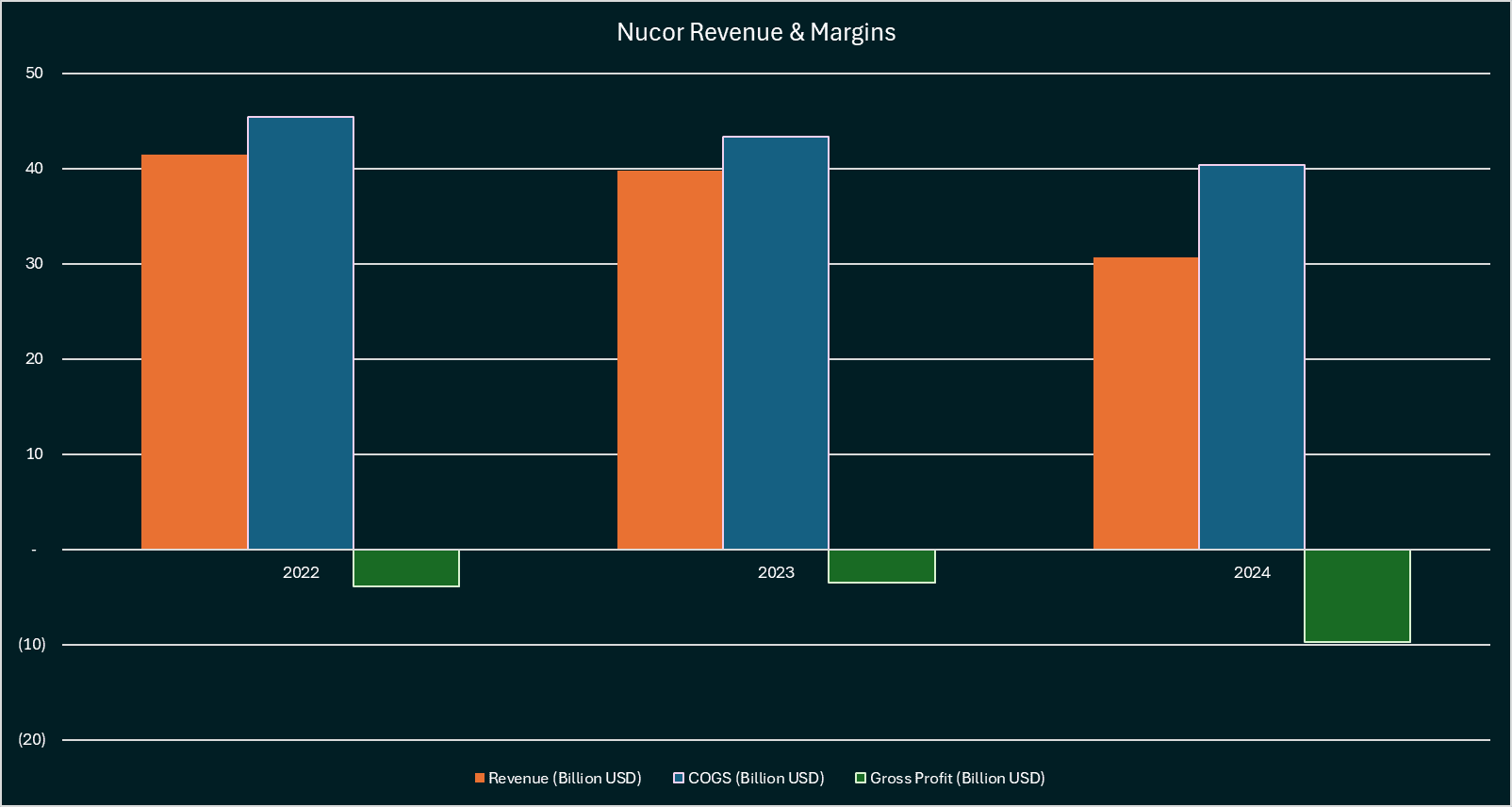
Even America’s largest steelmaker, Nucor, isn’t immune to the global tide. Despite tariff protection, its revenues and margins declined in 2024. Reasons for this decline can include:

  • Slowing nonresidential construction due to higher interest rates
  • A strong US dollar, making imports cheaper
  • Low global steel prices
  • An influx of imports from producers not covered by the tariff regime

Chart 2: Nucor Revenue & Margins (2022–2024)


The big picture: Tariffs may reduce foreign competition, but they won’t necessarily fix weak demand or cost pressures. Industrial competitiveness requires more than barriers; it needs innovation, capital, and policy alignment.

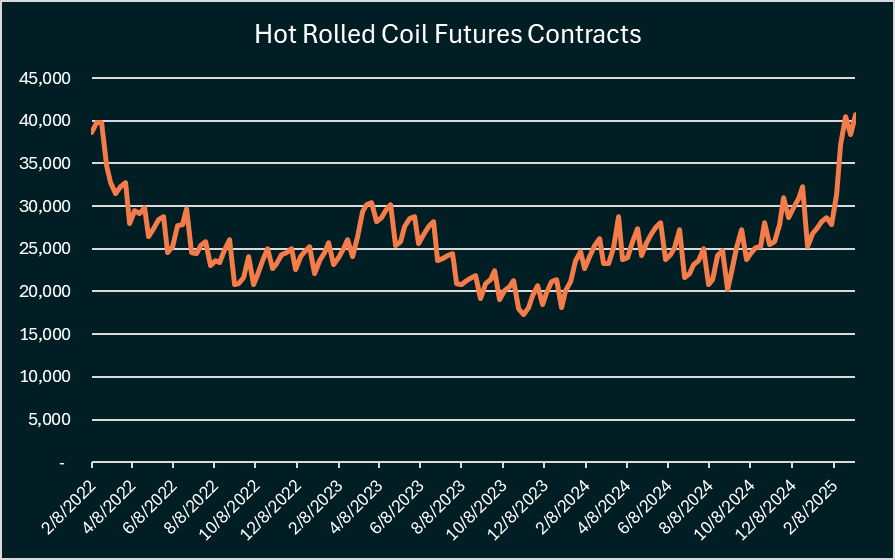
And despite flat spot prices, the futures market is signaling change.
 

Chart 3: Hot Rolled Coil Futures Contracts

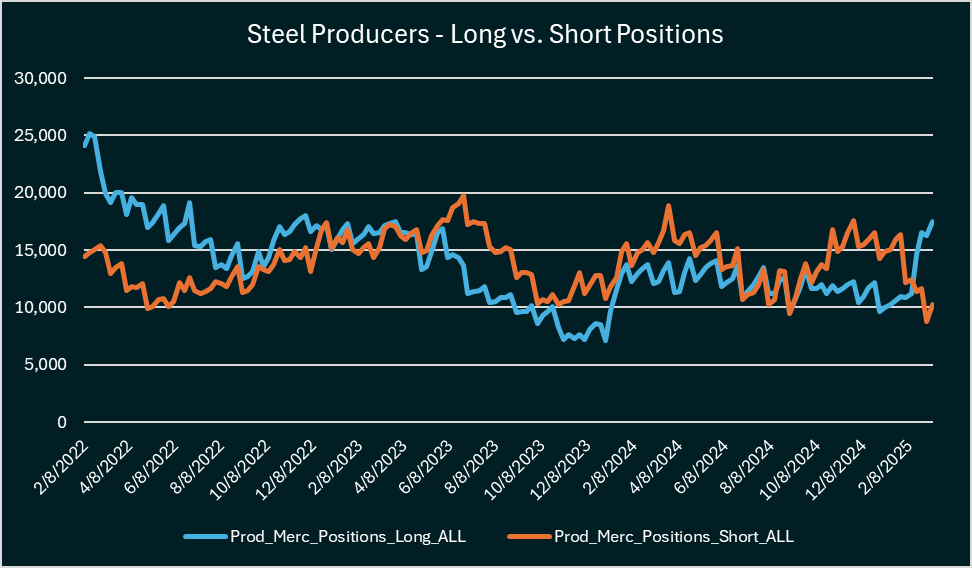
Meanwhile, steel futures markets suggest heightened uncertainty and anticipation of volatility, indicated by rising trading activity and shifts toward long positions (bets on rising prices). These market behaviors reflect expectations of persistent policy uncertainty, potential supply shortages, and increasing input costs.


Chart 4: Steel Producers — Long vs. Short Positions

This data shows a clear divergence:

  • Short positions (bets on prices falling) have dropped.
     
  • Long positions (bets on rising prices) have increased.


Interpretation: Producers are preparing for price increases in the near to mid-term, likely due to anticipation of continued policy uncertainty, supply constraints, and higher input costs.


Steel Is the Case Study — But Tariffs Are the Trend

Steel tariffs illustrate a broader shift in trade policy, where tariffs increasingly serve as tools of industrial strategy rather than merely reactive measures against unfair trade practices. This trend extends to sectors like semiconductors, electric vehicles, pharmaceuticals, and critical minerals. This represents a shift from solely focusing on efficiency toward adaptability and strategic risk management for supply chain leaders.


What Should Supply Chain Leaders Do About It?

1. Model Tariff Risk Like You Model Commodity Risk

Assume volatility is persistent, not episodic. Bake it into sourcing and forecasting frameworks.

2. Balance Physical Redundancy With Digital Flexibility

Backup suppliers are essential — but so is visibility, real-time routing, and digital risk modeling.

3. Use Market Behavior as a Strategic Input

Monitor futures contracts and hedging behavior. They’re early warning signals of pricing and supply shifts.

4. Engage With Industrial Policy Early

Incentives, tax breaks, and exemptions often go to companies that help shape policy, not those who wait for it.


Innovating for Long-term Resilience

The steel industry’s experience, as shown through recent tariff news, underscores a critical lesson: tariffs alone are insufficient for sustained competitiveness and industrial revival. Historically, after America’s early dominance, the US steel sector suffered significant declines due to a lack of innovation, failing to adapt swiftly to technological shifts and global competition. Thus, while protective tariffs can offer short-term relief, lasting resilience requires continuous investment in innovation, modernization, and strategic foresight. Companies that effectively combine intelligent policy navigation, supply chain flexibility, and ongoing technological advancement will be best positioned to thrive in the evolving global trade landscape.


References:

April 2025

Google’s $32B Wiz Deal: Analyzing the Cloud Security Shake-up
Implications for Cybersecurity Startups
The Google-Wiz deal significantly alters the environment for cybersecurity startups, creating both opportunities and considerable pressure.
  • Market Validation and Funding Dynamics: The acquisition serves as powerful validation for the cloud security market segment and Wiz’s go-to-market-intensive approach. Some founders view this validation as generating renewed hope, potentially easing fundraising pressures after a period of fewer exits. While there is a renewed investor interest in cybersecurity, it’s likely coupled with higher expectations.
  • Accelerated Consolidation and Competitive Pressure: The deal is widely expected to accelerate consolidation within the cybersecurity market. For standalone platforms, particularly those competing directly in the CNAPP space, the competitive pressure intensifies significantly against larger, integrated players like a combined Google/Wiz.
  • Raised Bar for Commercial Viability: A key implication is that this has raised startup baseline expectations. Beyond strong technology, there’s now an emphasis on demonstrating a robust go-to-market strategy, proven scalability, and strong commercial traction. As one founder noted, the minimum requirements have shifted: “Usability and efficacy; a wicked good marketing or sales engineering team... and a proven ability to sell stock should be table stakes now.” It’s becoming clear that startups increasingly emphasize business fundamentals earlier and more effectively.
  • Strategic Emphasis on Differentiation: Startups continue to face increased pressure to differentiate themselves clearly. This suggests a strategic shift towards targeting specific niche problems where larger platforms may be less focused — potentially making 2025, as one participant suggested, “the year of niche tech.” It also reinforces the importance of customers understanding their unique security vulnerabilities and leveraging inherent startup advantages like speed, focused expertise, and agility to solve problems effectively.
Implications for Corporations

For corporations reliant on cloud infrastructure, the acquisition underscores several critical points and necessitates strategic evaluation. 

  • Security Solidified as Core Infrastructure: The deal directly signals that robust cybersecurity is no longer an auxiliary IT function but a core, indispensable infrastructure for any organization operating significantly in the cloud. This implies a need for deeper integration of security into overall business strategy and operations.
  • Proactively mapping the digital supply chain: Identifying all software components, third-party vendors, and dependencies is increasingly crucial for organizations to assess their operational risk exposure accurately.
  • Potential for Integrated Solutions: Users may anticipate more tightly integrated multi-cloud security offerings from Google, potentially simplifying security management and aiming to reduce tangible risk.
  • Invest Now, Save Later: the United States accounts for 59% of all ransomware attacks, seeing a 28% increase in its average number of attacks per organization between Q4 2023 and Q1 2024. As previously stated, the average $9.3M cost associated with these indicates that growth in the SME market is expected to increase significantly as security becomes a necessity.
Implications for US Supply Chain Security
The transaction carries significant implications for the security of increasingly cloud-dependent supply chains, which are vital to national and economic interests.
  • Heightened Focus and Potential for Enhanced Visibility: The deal draws further attention to the importance of securing digital supply chains. Integrating Wiz’s capabilities within Google’s ecosystem presents the potential for enhanced visibility and more sophisticated risk management across these complex environments. This heightened visibility is crucial because ignoring potential vulnerabilities within this complex digital supply chain is perilous, as a single compromised component or vendor can trigger cascading failures, leading to significant operational disruptions and financial losses.
  • Reinforcement of Layered Security Strategies: This acquisition also underscores the reality that no single platform can be a silver bullet, suggesting a continued, perhaps even increased, need for organizations to adopt layered security strategies for robust supply chain defense. This includes vigilance against over-reliance on any single vendor and leveraging a combination of large platforms and specialized solutions, potentially sourced from innovative startups focusing on specific supply chain threats. One observer noted that such startups remain “essential partners in building resilient cybersecurity.”

Accelerating Change in Cloud Security

Google’s acquisition of Wiz aligns with ongoing shifts in the cybersecurity landscape, reinforcing existing trends and sparking new dynamics. Key implications include rising expectations and competitive pressures for startups, a growing view of security as integral to corporate infrastructure alongside strategic vendor choices, and an increased emphasis on securing supply chains across digital, physical, and operational realms. As this deal progresses, it underscores a critical juncture in cybersecurity, where innovation, corporate priorities, and supply chain resilience intersect to define a more connected future.


References:

February 2025

America First Investment Policy
 
America First Investment Policy: Key Takeaways
The policy framework blends existing U.S. foreign investment regulations with new, targeted measures aimed at mitigating emerging economic and security risks. It is structured around two central objectives: 
  • Encouraging investment from allied nations to strengthen U.S. industrial and technological leadership.
  • Restricting investment from foreign adversaries to mitigate economic vulnerabilities and national security threats.


References:

Encouraging Investment from Allied Nations

The America First Investment Policy encourages and facilitates investment from allied nations, establishing streamlined approval processes and targeted incentives designed to attract capital from trusted economic partners, particularly in critical sectors like technology, manufacturing, and infrastructure. By doing so, the U.S. seeks to strengthen strategic partnerships, enhance domestic innovation, and ensure long-term economic resilience in critical industries:

  • Streamlined Approvals: A fast-track process will accelerate investments from trusted economic partners in critical technology, manufacturing, and infrastructure. enforcement mechanisms.
  • Incentives for Large-Scale Projects: Investments exceeding $1 billion will qualify for expedited environmental regulatory approvals, reducing bureaucratic slowdowns.
  • Passive Investment Allowances: Foreign investors may continue to hold non-controlling stakes in U.S. businesses, ensuring capital inflows without compromising national security.


Ceres Technology Insights: Reinforcing the Need for Investment 

Key findings reveal:

While some policies face being held up in congressional debate, the administration’s approach to immigration will have far-reaching implications for the U.S. labor market and businesses that rely on immigrant workers.
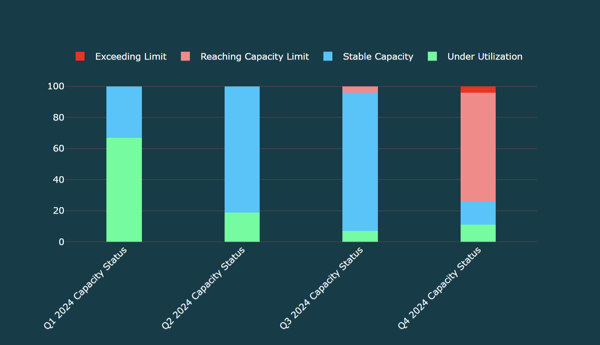
By Q4 2024, global semiconductor production had reached or exceeded operational limits, underscoring the urgency of expanding domestic capacity.
 
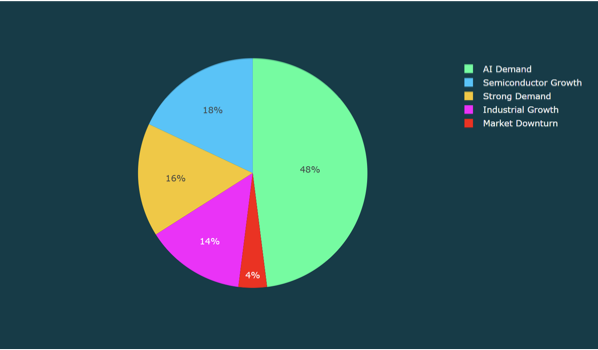
AI-driven semiconductors account for nearly 50% of current demand, suggesting future capacity constraints may limit this AI boom.
 

Semiconductor companies are addressing these constraints by investing in increased capacity CapEx for AI chip manufacturing.


Consumer demand for semiconductors will continue to be dominated by the U.S. and China. 


References:

Limiting Investment from Foreign Adversaries
America First Investment Policy also places limitations on investments originating from foreign adversaries. In response to growing threats to national and economic security, this policy broadens restrictions across key strategic sectors and strengthens the powers of the Committee on Foreign Investment in the U.S. (CFIUS). These measures are critical to safeguarding sensitive U.S. technologies, supply chains, and infrastructure, especially in vital industries like semiconductors, against potential exploitation by foreign adversaries:
  • Expanded Restrictions on Strategic Sectors: The policy prohibits foreign adversarial investments in:
    • Semiconductors and AI
    • Energy and Critical Minerals
    • Defense and Aerospace
    • Agriculture and Food Security
    • Ports and Shipping Infrastructure
  • Enhanced CFIUS Authority: The Committee on Foreign Investment in the U.S. (CFIUS) will have expanded oversight to:
    • Block greenfield investments (new business ventures from foreign adversaries).
    • Restrict foreign access to sensitive U.S. technologies and supply chains.
    • Prevent technology transfers through acquisitions, joint ventures, or third-party partnerships.
By restricting adversarial investments and expanding CFIUS oversight, the government aims to protect and grow its supply chain of critical technologies to maintain U.S. global leadership.


References:


Regulating Outbound U.S. Capital to Foreign Adversaries

The policy extends beyond restricting inbound investments by also placing tighter controls on U.S. capital flowing into adversarial industries. U.S. firms will face prohibitions on investing in adversarial industries, particularly in:

  • Quantum computing
  • Advanced biotech & pharmaceuticals
  • Hypersonic, directed energy, & aerospace technologies
  • Cybersecurity & AI-driven military capabilities
  • Institutional investment scrutiny: U.S. universities, pension funds, and institutional investors will face stricter regulations on investments in foreign adversary-linked firms.

As China heavily invests in AI, quantum computing, and advanced semiconductor manufacturing, the U.S. response of stricter outbound investment controls aims to prevent technology leakage and future advancement of the PRC’s national Military-Civil Fusion strategy.

The Office of Science and Technology Policy will continuously review and update sectors that fall within the scope of this new policy. This means that boundaries for outbound investment are subject to change and will require constant monitoring.

By closing investment loopholes and enforcing stricter regulatory oversight, the administration aims to ensure that U.S. innovation and technological advancements remain under domestic control.

Reference:


Implications for Startups, Industry, and Supply Chains

The America First Investment Policy signals a decisive shift in how the U.S. prioritizes national security over open-market principles. The long-term implications will depend on how effectively the government balances security with economic growth and potential retaliatory measures from China.

Industry Impact

Semiconductor & AI Manufacturing:

  • Domestic semiconductor fabs will continue to receive increased investment, creating new jobs and expanding production capacity to fulfill America’s pursuit of AI dominance.
  • U.S. companies may face higher costs due to limited alternative suppliers.

Computing & Energy Infrastructure:

  • AI-driven data centers and power grids will require significant investment, pushing the growth of energy and high-efficiency computing solutions.

Aerospace & Defense:

  • Expanded domestic semiconductor production will ensure supply chain security, preventing chip shortages from affecting critical defense applications.

Energy & Critical Minerals: 

  • Restricted investment in U.S. energy infrastructure and raw materials could impact the supply of lithium, rare earth elements, and other key inputs for EVs and batteries.

Ports & Shipping: 

  • Potential risk of raised costs for logistics companies dependent on global capital.

 Supply Chain Shifts

  • Nearshoring & Reshoring Acceleration:
    • US policy will continue to shift critical supply chains away from Asia-based suppliers, favoring U.S. and allied manufacturers.
  • Reduced Chinese Influence in U.S. Supply Chains:
    • Stricter CFIUS regulations will block adversarial investments in raw materials as well as the semiconductor, AI, and quantum computing sectors, potentially causing disruptions to global supply chain dynamics.

Startup & Investment Landscape

For startups, the America First Investment Policy introduces both challenges and opportunities. Key implications include:

  • Increased Investor Due Diligence: Startups must be more vigilant in vetting their investors to avoid potential regulatory scrutiny. Those with foreign capital, particularly from restricted entities, may need to restructure funding sources.
  • New Funding Avenues for AI & Semiconductor Startups: With adversarial investment blocked, venture capital will likely pivot toward domestic and allied startups focused on AI infrastructure, semiconductor design, and supply chain resilience solutions.
  • Regionalization of Investment Trends: The policy shift could accelerate the fragmentation of global investment landscapes, leading to greater regionalization of capital flows. Startups may need to align themselves with investors from trusted jurisdictions to secure funding.
  • Growth in Manufacturing & Automation: Robotics, automation, and advanced manufacturing startups will be key to scaling domestic semiconductor fabs efficiently.

Reference:


Strengthening U.S. Economic Security Across Critical Industries

The America First Investment Policy firmly establishes the U.S. perspective that strength in critical sectors like semiconductors and AI is no longer solely an economic imperative but a fundamental pillar of national security. This policy will likely have ripple effects across industries, supply chains, and investment landscapes, reshaping how businesses operate in the rapidly evolving geopolitical climate. However, restrictions outlined in this policy will continue to evolve, and companies that monitor these changes and adapt quickly will be better positioned for success.

Research Partner:

Ceres Technology
Read more ->

January 2025

America First Trade Policy
America First Trade Policy: Key Takeaways
The "America First" Trade Policy prioritizes domestic industry, national security, and a reassessment of trade fairness. The administration has made clear its intent to address trade deficits and perceived unfair practices by strengthening U.S. manufacturing and reducing reliance on foreign supply chains, especially those linked to China. Key actions taken in the first week include:
  • Trade Deficit & Currency Review: Initiating investigations into trade imbalances and alleged currency manipulation, potentially leading to new tariffs and stricter enforcement mechanisms.
  • Strengthening U.S. Industry: Expanding the scope of antidumping duties, promoting the reshoring of manufacturing, and restricting exports of sensitive technologies deemed vital to national security.
  • China Trade Crackdown: Reassessing existing tariffs on Chinese goods, intensifying enforcement of intellectual property protections, and taking steps to limit economic vulnerabilities associated with the U.S.-China trade relationship.
  • Supply Chain & National Security: Implementing measures to enhance domestic production of critical minerals, assessing controls on imports of steel, aluminum, and certain high-tech products.
  • Combatting Illicit Trade: Reviewing duty-free import exemptions to curb counterfeit goods and fentanyl trafficking.
This stance reflects the strong protectionist and national security-driven economic strategy of the Trump administration. While aimed at bolstering domestic industrial growth, it also introduces significant complexities and potential disruptions for businesses operating within globalized supply chains.


Discussion:

  • Industry: Industries heavily reliant on international supply chains, such as automotive and consumer electronics, could face significant headwinds. Trump has also ordered the review and potential withdrawal from existing trade agreements, such as the United States–Mexico–Canada Agreement (USMCA), which could significantly disrupt established trade flows and increase costs.
     
  • Companies: The USMCA public consultation process should be closely monitored leading up to its July 2026 review. Other sectors, such as advanced manufacturing, should see increased investment and demand due to reshoring initiatives.
     
  • Supply Chains: The emphasis on domestic sourcing and production could lead to substantial restructuring of supply chains. Companies may need to diversify their sourcing, explore alternative suppliers within the U.S. or in allied nations, and invest in technologies that enhance supply chain visibility and resilience.
     
  • Startups: Startups specializing in areas like advanced manufacturing, supply chain visibility, trade compliance, and export enablement technologies are well-positioned to benefit from the push of nearshoring/onshoring U.S. industries. These companies can offer flexible solutions that help businesses adapt to the changing trade and tariff landscape.


References:
America First Immigration Policy: A Tightening Labor Market
The administration has taken a strong stance on immigration, emphasizing strict enforcement, border security, and a reevaluation of long-standing immigration norms. Key actions include:
  • Declaring Illegal Immigration a National Emergency: Provides a framework for more aggressive enforcement actions.
  • Ramping Up Border Security: To secure the border, increased personnel, expanded physical barriers, and enhanced surveillance technologies are being deployed.
  • Ending Birthright Citizenship for Children Born to Non-Citizen Parents: This controversial move aims to reinterpret the 14th Amendment and significantly alter U.S. citizenship policy.
  • Rescinding Previous Policies: Reversed policies aimed at immigration integration and family reunification.
  • Prioritizing Deportation: Deportation of undocumented individuals is a stated priority.
  • Suspending Refugee Admissions: This action further restricts pathways to legal entry into the U.S.


Discussion:
While some policies face being held up in congressional debate, the administration’s approach to immigration will have far-reaching implications for the U.S. labor market and businesses that rely on immigrant workers.
  • Industry: With an already tight labor market, labor-intensive industries like agriculture, construction, and hospitality are likely to face severe workforce shortages. The reduction in both legal and undocumented immigrant labor could lead to increased labor costs, operational challenges, and potential delays in various projects. While the administration’s stance on illegal immigrants should come as no surprise, a strategy to supplement the estimated over six million undocumented workers remains unclear.
  • Supply Chains: Labor shortages could disrupt supply chains by affecting production capacity, transportation, and logistics. To mitigate these challenges, companies may look to invest in automation, explore alternative labor sources, or invest in robotics.
     
  • Startups: Startups that depend on H-1B visas or immigrant founders may face hiring difficulties, potentially limiting their ability to scale and compete globally. Conversely, startups focused on labor-saving technologies, such as robotics, automation, and workforce management solutions, may see increased demand. Startups focused on flexible labor scheduling, training, and worker retraining will receive significant tailwinds as more facilities will be looking to scale their internal workforce.


References:
America First Environmental and Energy Policies: Drill Baby Drill
To satisfy the future demand for AI infrastructure and reduce consumer costs, the administration has prioritized energy independence, renewing its focus on traditional energy sources by rolling back environmental regulations and speeding up project approvals. Key initiatives include:
  • Declaring a National Energy Emergency: This declaration provides the framework for expedited development of domestic energy resources.
  • Unleashing Alaska’s Resource Potential: Opening up vast untapped reserves in Alaska, including the Arctic National Wildlife Refuge, for oil, gas, and mineral exploration.
  • Critical Minerals Strategy: Enhancing domestic mining and refining of rare earth elements to strengthen supply chains and reduce reliance on foreign adversaries.
  • Simplifying Regulations: Streamlining permitting processes for energy infrastructure projects and scaling back climate-focused regulations.
  • Eliminating regulatory mandates: Favoring electric vehicles (EVs) and ensuring a level playing field for gasoline-powered cars.


Discussion:
These policies clearly demonstrate a major shift from the previous administration, which prioritized traditional energy dominance and secured domestic supplies of critical minerals.
  • Industry: The traditional energy sector (oil, gas, coal) is poised for significant growth to feed the exponential demand that will arise from AI. However, the renewable energy sector faces uncertainty and potential setbacks, risking long-term competitiveness in the global transition to clean energy. The emphasis on critical mineral production suggests that battery technology likely remains a manufacturing priority.
  • Supply Chains: The focus on domestic energy and mineral production could lead to shifting supply chains, with increased demand for mining equipment, transportation infrastructure, and related services.
  • Startups: While clean energy startups may face headwinds, other industries, such as logistics, advanced manufacturing, robotics, and monitoring/maintenance solutions for traditional energy and critical mineral extraction, are likely to see increased investment. We are bullish on exploration and extraction technology for the natural resource sector in the near future.


References:
America First International Engagements: A Shift Away from Multilateralism
The administration has signaled a reevaluation of U.S. participation in international agreements and organizations, particularly those perceived as imposing undue burdens on American taxpayers. Key actions include:
  • Executive Order — Putting America First In International Environmental Agreements: This order initiates the United States’ withdrawal from the Paris Agreement on climate change.
  • Executive Order — Withdrawing The United States From The World Health Organization (WHO): This order directs the cessation of U.S. funding and participation in the WHO.


Discussion:
These actions reflect a broader trend toward prioritizing bilateral relationships and reducing engagement in multilateral frameworks.
  • Industry: Industries that rely on international cooperation for research, development, and setting global standards could face challenges. The withdrawal from the WHO, for example, could impact the pharmaceutical and healthcare sectors. It remains to be seen how the U.S. will engage in international health and climate initiatives moving forward. This approach could unlock negotiating capital for future deals.
  • Supply Chains: Reduced international cooperation on issues like trade facilitation, regulatory harmonization, and pandemic preparedness could affect global supply chains.
  • Startups: While the administration has stated they will not be cutting programs that benefit Americans, universities and startups that rely on funding from international organizations like the International Climate Fund or the WHO could face future challenges. That being said, new funding opportunities will likely arise for startups focused on developing solutions that align with the administration’s priorities for bilateral engagement.


References:
America First AI Policy: A New Era of Innovation and Investment
On January 23, 2025, President Trump signed an executive order establishing the policy of the United States to “sustain and enhance America’s global AI dominance” in order to promote human flourishing, economic competitiveness, and national security. At a subsequent press conference, President Trump also announced a $500 billion project for the private sector to build out AI infrastructure. While the details remain nebulous, the “Project Stargate” announcement brought together key industry leaders, including Softbank CEO Masayoshi Son, Oracle co-founder Larry Ellison, and OpenAI CEO Sam Altman, who voiced their support for President Trump’s leadership and vision as the driving force behind this unprecedented commitment. Key elements of the AI executive order include:
  • AI Action Plan Development: A mandate to create a comprehensive national AI action plan within 180 days, setting a roadmap to ensure U.S. leadership in AI while promoting economic growth, national security, and human flourishing.
  • Revocation of Previous Barriers: The executive order revokes certain AI policies from 2023 that were perceived as barriers to innovation. By clearing these obstacles, the administration aims to foster a more competitive and flexible AI ecosystem free from ideological biases and social engineering agendas.
  • AI in National Security: The order places a strong emphasis on AI’s role in enhancing U.S. national defense and cybersecurity capabilities, ensuring that AI technologies are integrated into military systems to secure America’s strategic interests.


Discussion:
  • In establishing a Council of Advisors on Science and Technology, Department of Government Efficiency, and appointing AI & Crypto Czar David Sacks, the Trump administration is signaling that the U.S. is ready to make AI the next key driver of its economic and technological growth in the years to come. 
  • Foreign competitors like DeepSeek have developed efficient advanced AI models at a fraction of the cost ($5 million USD), which may raise questions about U.S. investments such as Stargate and nearshoring efforts. 
  • Industry: The private sector, particularly in AI infrastructure, machine learning, and cybersecurity, stands to benefit significantly from this policy shift. The $500 billion investment will likely accelerate innovation in AI technologies across all sectors, from healthcare and transportation to defense and financial services. Companies already invested in AI research and development, like OpenAI and Oracle, will continue to thrive with expanded access to resources and government contracts.
  • Supply Chains: As AI becomes more integrated into industries such as logistics, manufacturing, and supply chain management, expect transformative changes in how goods are produced, moved, and delivered. Automation and machine learning-driven optimization are set to streamline operations, improving efficiency and reducing costs across the board. This could lead to increased demand for AI software, robotics, and other tech infrastructure to support these new systems.
  • Startups: The U.S. market is now ripe for startups focusing on AI infrastructure, automation, and cybersecurity solutions. With federal support and private-sector investments around AI scaling, new ventures in machine learning, algorithmic design, and AI-powered tools for industry-specific needs will likely see significant growth. For startups focused on cutting-edge AI research or national defense technologies, the new administration presents a great opportunity for growth and collaboration with federal agencies. More so, after the recent successes of AI research companies like OpenAI, top talent is leaving, and most are starting or joining new startups. This, in turn, helps the AI-first ecosystem, as top researchers with applied experience will be building for the next wave of artificial intelligence.


References:

Exciting Opportunities Within the Supply Chain Industry

Plug and Play Supply Chain
Learn More ->
PLUG AND PLAY AROUND THE WORLD

Discover our global locations

We have a community of experts all over the world. We work as a bridge between Silicon Valley and the rest of the world, making innovation open to anyone, anywhere.

Sign up to our global newsletter