
Innovation in Health & Longevity
Health & Longevity
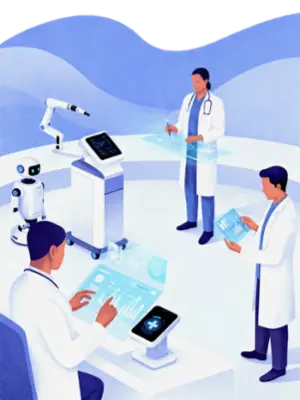
Innovation Designed for a Healthier Future
How can we help?
We connect the best startups in the world to corporations who want to disrupt the healthcare industry. Delve into digital health technologies that push the boundaries of clinical practices, elevate data analytics, and enrich the patient experience throughout the care continuum by joining our leading Health innovation platform.
Our Health & Longevity Innovation Partners




Health & Longevity Innovation
Our Focus Areas
- • Agentic AI systems increasingly handle multi-step administrative workflows end-to-end, like coordinating referrals or chasing down missing records, without a human triggering each step
- • Natural language processing pulls structured data out of physician notes and scanned records, cutting the manual chart review that used to take hours down to minutes
- • Predictive scheduling algorithms flag likely no-shows and rebalance appointment slots in real time, keeping exam rooms and equipment in use instead of sitting empty
- • AI-assisted imaging triage flags urgent scans (like a possible stroke or fracture) so radiologists review the most critical cases first
- • AI-driven risk-stratification models flag patients likely to be readmitted or to disengage from treatment, so care managers can prioritize outreach to the people who need it most
- • Remote monitoring tools like connected blood pressure cuffs and insulin pens flag out-of-range readings so care teams can intervene before a routine issue becomes an ER visit
- • Smart pill bottles and dispensers track whether doses were actually taken, and send reminders or alerts to caregivers when a patient falls behind on a regimen
- • Zero-trust architecture paired with AI-driven anomaly detection catches intrusions in real time, closing the gap that let past ransomware attacks shut down entire hospital systems for days
- • Encrypted data-sharing protocols let providers, payers, and pharma exchange patient data for research or care coordination without exposing identifiable records
- • Automated compliance tools track HIPAA and state privacy requirements across systems, flagging gaps before an audit instead of after a breach
- • Mobile health units and telehealth kiosks bring screenings and specialist consultations directly to rural communities that lack a nearby hospital or specialty clinic
- • Sliding-scale and value-based care models extend access to advanced treatments (like cell and gene therapies) for patients who couldn't otherwise afford them
- • Multilingual, AI-translated digital health tools reduce the gap in care quality and outcomes across diverse patient populations
- • Mining claims and EHR data to identify and geographically map rare disease populations, speeding up patient identification for treatments that would otherwise take years to find eligible patients
- • Machine learning models that flag likely trial candidates and referral patterns, cutting clinical trial recruitment timelines and reducing screen failure rates
- • Segmenting HCP and patient populations by prescribing behavior and disease markers to sharpen targeting for marketing and commercial launch strategies
- • FHIR-based APIs let a patient's records move seamlessly between hospitals, specialists, and payers, cutting the duplicate tests and delays caused by systems that can't talk to each other
- • Agentic AI is starting to handle prior authorization end-to-end, gathering documentation and submitting requests, cutting approval timelines from weeks to days
- • Risk-sharing and bundled payment models tied to outcomes data give providers a financial incentive to keep patients healthy, not just to deliver more billable services
- • Wearables and at-home biomarker tests, paired with AI-driven trend analysis, allowing end users to track things like sleep, glucose, and heart rate variability to add healthy years, not just lifespan
- • Genetic screening and imaging AI catch conditions like cancer or heart disease years before symptoms appear, when treatment is most effective
- • Apps and patient portals use AI to translate lab results and treatment options into plain language, so people can make decisions alongside their doctor instead of waiting to be told what to do
- • Wearables, such as continuous glucose monitors and smartwatches, feed real-time vitals to care teams, turning data into early alerts instead of a once-a-year snapshot at the doctor's office
- • Generative AI models design novel drug candidates and predict protein structures computationally
- • Cloud labs and robotic "self-driving" experimentation platforms run thousands of parallel assays overnight, turning benchwork that once took a research team months into an automated feedback loop
- • AI scientists analyze experiment data and suggest hypotheses
- • Multi-omics data (genomic, proteomic, metabolomic) combined with machine learning identifies novel disease targets and biomarkers that single-dataset analysis would miss
- • Digital twins and in-silico trial simulations model how a drug or therapy behaves in virtual patient populations, helping deprioritize failing candidates before costly human trials begin
- • Video visits and asynchronous messaging let patients in rural or underserved areas consult specialists without a multi-hour drive to the nearest major medical center
- • Remote patient monitoring links home devices to care teams, so a post-surgical or chronic care patient's recovery can be tracked without repeated in-person visits
- • Agentic AI assistants are starting to handle care coordination directly, like scheduling follow-ups or routing questions to the right specialist, keeping a patient's plan aligned across providers instead of fragmented
- • At-home rapid tests and connected diagnostic devices (like glucose meters and ECG monitors) return results in minutes instead of requiring a lab visit and days of waiting
- • AI-powered image analysis flags abnormalities in scans, pathology slides, and retinal images with a level of consistency that helps catch what a single reviewer might miss
AI-Powered Healthcare Infrastructure

Chronic Disease Management

Healthcare Cybersecurity & Data Privacy

Healthcare Everywhere and for Everyone

Market Insights & Patient Access

Payer/Provider Interoperability & Value-Based Care

Personalized Healthcare & Longevity Technology

Techbio

Tech-Enabled Care Coordination & Digital Diagnostics

Hear about how we help our Healthcare ecosystem:
Our Offices with Health & Longevity Programs







"With convenient access to wearable technology, such as smartwatches equipped with heart rate monitors, AI is making more accurate predictions about stroke/heart attack probabilities for its users."
Ayah Hamdan
Partner, Health & Longevity
Plug and Play
Experience our most recent Health & Longevity focused events:
Our Latest Insights

Redefining Urban ESG Value: How Haneda Innovation City & GOYOH Advanced Sustainable City Development
Jun 6, 2026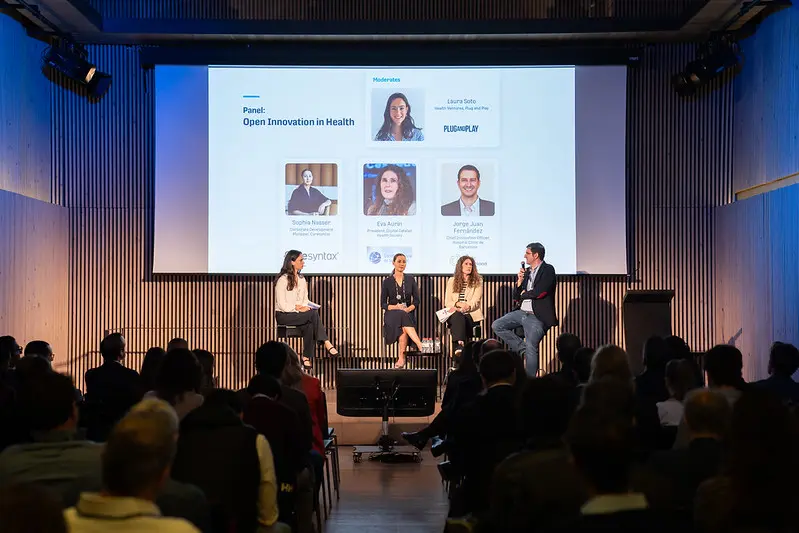
Spain’s Healthcare Is on Life Support. Can AI-Powered Open Innovation Revive It?
Laura Soto

5 Indiana Startups in the Life Sciences Industry to Watch
Karlens Joas
How we help our Health & Longevity partners innovate
Real Success Stories



Our Upcoming Events









Discover our global locations
We have a community of experts all over the world. We work as a bridge between Silicon Valley and the rest of the world, making innovation open to anyone, anywhere.